
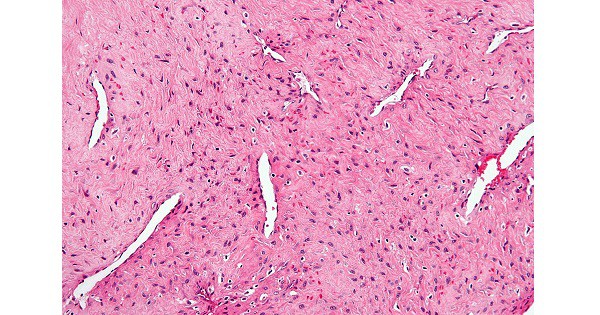
Nasopharyngeal Angiofibroma
NASOPHARYNGEAL ANGIOFIBROMA
- It is a histologically benign but locally aggressive vascular tumor that grows in the back of the nasal cavity.
- It is the most common benign neoplasm of nasopharynx.
- It is a highly vascular tumor.It consists of fibrous tissue and blood vessels,
- Blood supply of the tumor most commonly arises from the internal maxillary artery.
- The exact cause is unknown. As the tumour is predominantly seen in adolescent males in the second decade of life, it is thought to be testosterone dependent.
- Such patients have a hamartomatous nidus of vascular tissue in the nasopharynx and this is activated to form angiofibroma when male sex hormone appears.
- Most common site is posterior part of nasal cavity close to the margin of sphenopalatine foramen.
- It may expand into the surrounding areas like nasal cavity,sphenoid sinus,pterygopalatine fossa,maxillary sinus,orbit and cranial cavity.
CLINICAL PRESENTATION OF NASOPHARYNGEAL ANGIOFIBROMA
- Sex : Seen almost exclusively in males (testosterone dependent).
- Age : 10-20 years (2nd decade).
- Clinical features: – Most common symptom is profuse and recurrent epistaxis Progressive nasal obstruction
Other features depending upon the extension of the tumour:
- Denasal speech(Rhinolalai clausa)
- Conductive hearing loss and serous otitis media due to eustachian tube blockage
- Broadening of nasal bridge
- Soft palate may bulge due to a large mass in late stages
- Proptosis
- Frog-face deformity
- Swelling of cheek
- Involvement of cranial nerves II, Ill, IV, VI
INVESTIGATIONS IN A CASE OF NASOPHARYNGEAL ANGIOFIBROMA
- Radiography:it shows a soft tissue shadow in the nasopharynx.
- Lateral view shows forward displacement of the posterior wall of maxilla.
- Angiography and CT Scan with contrast deomonstrate the extent and vascularity of the tumor.
- Biopsy should never be attempted as it may lead to profuse bleeding.
- Instead,Excision biopsy is performed.
TREATMENT OF NASOPHARYNGEAL ANGIOFIBROMA
Surgery
- Surgical excision is the treatment of choice.
- Before surgery at least 2-3 liters of blood should be given.
- Preoperative embolization and estrogen therapy or cryotherapy reduce blood loss in surgery.
- Hypotensive Anesthesia in nasopharyngeal angiofibroma is/are given by Propofol and Phentolamine.
Approach
- Wilson’s Transpalatine approach—done for tumor confined to nasopharynx.
- Lateral rhinotomy approach—done for large tumors involving, nasal cavity, paranasal sinuses and orbit.
Other approaches:
- Sardana’s approach – Transpalatine + Sublabial.
- Extended Lateral Rhinotomy
- Intracranial combined with Extracranial.
- Infratemporal fossa approach.
Radiation
- It is sometimes advised to reduce the vascularity of the tumor.
- It may be considered in cases with intracranial extension.
Hormonal Therapy
- It is doubtful if tumour regression occurs with this therapy.
Exam Question
- Nasopharyngeal angiofibromas are most frequently seen in the second decade.
- Hypotensive Anesthesia in nasopharyngeal angiofibroma is/are given by Propofol and Phentolamine.
- Nasopharyngeal fibroma is the most common benign tumor of nasopharynx.
- Clinical features of nasopharyngeal angiofibroma are Adolescent male and Epistaxis and nasal obstruction is the cardinal symptom.
- A 14 years boy presented with repeated epistaxis, and a swelling in cheek.Diagnosis is nasopharyngeal angiofibroma and Contrast CT scan should be done to see the extent.
- Surgery is treatment of choice in juvenile Nasopharyngeal Angiofibroma.
- The most probable diagnosis in a 14-year old boy presenting with history of frequent nasal bleeding and Hb found to be 6.4 g/dL and peripheral smear showing normocytic hypochromic anemia is Juvenile nasopharyngeal angiofibroma.
- Most probable diagnosis in a child with unilateral nasal obstruction along with a mass in cheek and profuse and recurrent epistaxis is Nasopharyngeal Angiofibroma.
- Hormonal etiology in implicated in Nasopharyngeal Angiofibroma.
- Radiotherapy may be given in Nasopharyngeal Angiofibroma.
Don’t Forget to Solve all the previous Year Question asked on Nasopharyngeal Angiofibroma
