


Olfaction
OLFACTION
ODOUR RECEPTORS:
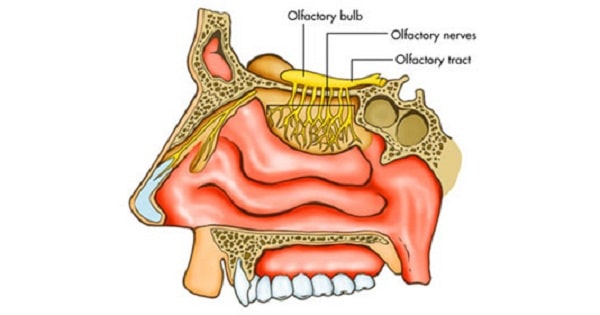
- Located in olfactory mucous membrane/neuro-epithelium, in roof of nasal cavity near septum.
- Protected location.
- Hence, not directly exposed to inspired air flow.
- Receptors are “Neuron” themselves.
- Main receptor part – “Projecting cilia” into nasal mucosa.
- Acts as dendrites of neruon/receptor cell.
- Axons form olfactory nerve → Pass through cibriform plate→ Terminates in olfactory bulb.


OLFACTORY BULB:
Inside bulb:
- Axons of olfactory N. synapse with dendrites of mitral cells forming “Olfactory glomeruli”.
Cellular content –
- Mitral & Peri-glomerular cells.
1. “Mitral cell” –
- Principal output neurons of olfactory bulb.
- Their axons form “Olfactory tract”.
2. “Peri-glomerular cells” –
- Inhibitory neurons & granule cells without synapse.
- Make reciprocal synapses with mital & tufted cells.
OLFACTORY TRACT:
- Olfactory tract projects to “Primitive brain parts” & “Neocortex”.
1. Pathway I (To primitive brain):
- Principally to,
- Pyriform area/olfactory cortex.
- Amygdala.
- Entorhinal cortex.
- In-turn to hippocampus.
2. Neocortex pathway:
- Relay in olfactory tubercle → Thalamus → Finally “Orbitofrontal cortex”.
OLFACTORY TRANSDUCTION:
- Odour receptors – Type of “G-protein coupled” receptors.
Receptor-ligand interaction:

- Activated by “Adsorption of odorant molecules to receptor cilia”.
- Opens Na2+channels via IInd messenger cAMP.
- Na2+influx → Generates AP.
Note: 2 different theories – Activates Calcium/Sodium channels.
Exam Question
OLFACTION
- Olfactory receptors are “Neurons” themselves.
- Main receptor part – “Projecting cilia” into nasal mucosa, acting as dendrites of neruon/receptor cell.
- “Peri-glomerular cells” – Are “Granulare type”.
- Pathway to neocortex involves a relay in olfactory tubercle to thalamus then & finally orbitofrontal cortex.
Don’t Forget to Solve all the previous Year Question asked on Olfaction