
Transfer of genetic information
Gene transfer
- Gene transfer refers to the process of genetic material (e.g. DNA) being sent and received among two organisms-* Donor sends and recipient receives the genetic material.
- There are two processes of gene transfer 😕
1. Horizontal gene transfer (HGT) or lateral gene transfer
- Horizontal gene transfer is the process by which genetic material is passed between two different organism,i.e. organism of different species.
- The recipient is not the offspring of donor.
- The most important example is gene transfer between the bacteria.
- The processes of horizontal gene transfer in bacteria are:
- Conjugation
- Transduction
- Transformation.
a. Conjugation
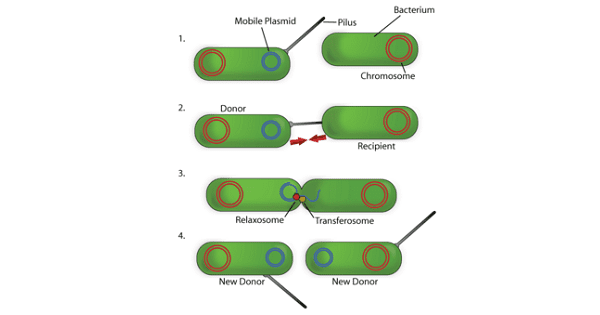
- Mating of two bacterial cells, during which DNA is transferred from the donor to the recipient cell
- The mating process is controlled by anF (fertility) plasmid (F factor), which carries the genes for the proteins required for conjugation.
- The role of plasmids in conjugation was first described by Lederberg and Tatum in E coli
- Donor status is determined by the presence of plasmid
- Sex pilus (conjugation tube) helps in transfer of genetic material from male bacterium to female bacterium.
- The plasmid is known as transfer factor (sex factor or fertility factor).
- Plasmid may be R factor, which codes for transferrable multiple drug resistance.

b. Transduction
- Transfer of cell DNA by means of a bacterial virus (bacteriophage, phage).
 c. Transformation
 - Transfer of DNA itself from one cell to another.

2. Vertical gene transfer
- Vertical gene transfer is the process of transferring genetic material to organism of same species, i.e. donor recieves genetic material from its ancestor, e.g. its parent or a species from which it evolved.
- This process is not important in bacteria.
Exam Important
Gene transfer
- Gene transfer refers to the process of genetic material (e.g. DNA) being sent and received among two organisms-* Donor sends and recipient receives the genetic material.
1. Horizontal gene transfer (HGT) or lateral gene transfer
- Conjugation
- Transduction
- Transformation.
a. Conjugation
- Mating of two bacterial cells, during which DNA is transferred from the donor to the recipient cell
- The mating process is controlled by anF (fertility) plasmid (F factor), which carries the genes for the proteins required for conjugation.
- The role of plasmids in conjugation was first described by Lederberg and Tatum in E coli
- Plasmid may be R factor, which codes for transferrable multiple drug resistance.
b. Transduction
- Transfer of cell DNA by means of a bacterial virus (bacteriophage, phage).
c. Transformation
- Transfer of DNA itself from one cell to another
2. Vertical gene transfer
- This process is not important in bacteria.
Don’t Forget to Solve all the previous Year Question asked on Transfer of genetic information

