

TRIGGER FINGER/ THUMB
TRIGGER FINGER/THUMB
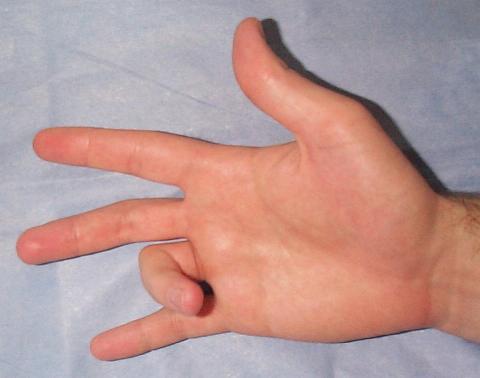
- A Trigger Finger is described as the catching or locking of a finger in a bent (flexed) position.
- Stenosing tenosynovitis, more commonly known as “trigger finger” or “trigger thumb”.
- Affecting the tendons that bend the fingers.
Caused by inflammation that prevents the tendon from gliding smoothly.

Mechanism:
- Tendons that bend the fingers pass through a series of loops, called “pulleys”.
If the tendon swells, or if the pulleys tighten, the tendon can get caught which limits smooth motion of the finger.

The pulleys are of two types:
- Annular [A] – These are composed of single fibrous bands. Thus these are ring-like structures
- Cruciate [C] – Cruciate pulleys consist of crossing fibrous bands.
- A1 – over metacarpophalangeal joints. It is the pulley where triggering phenomenon occurs.
- A2 – over proximal end of the proximal phalanx
- C1 – over the middle of the proximal phalanx
- A3 – over the proximal interphalangeal (PIP) joint
- C2 – over the proximal end of the middle phalanx
- A4 – over the middle of the middle phalanx
- C3 – over the distal end of the middle phalanx
- A5 – over the proximal end of the distal phalanx

Epidemiology:
- more common in diabetics
- More common in women
- ring finger most commonly involved
Associated conditions:
- diabetes mellitus
- rheumatoid arthritis
- amyloidosis
Symptoms:
- finger clicking
- pain at distal palm near A1 pulley
- finger becoming “locked in flexed position
Physical exam
- tenderness to palpation over A1 pulley
- a palpable bump may be present near the same location
Treatment:
Nonoperative
- night splinting, activity modification, NSAIDS
indications
- first line of treatment
steroid injections
indications
- best initial treatment for fingers, not for thumb
technique
- give 1 to 3 injections in flexor tendon sheath
- diabetics do not respond as well as non-diabetics
Operative
- surgical debridement and release of the A-1 pulley
indications
- in cases that fail nonoperative treatment
- release of A1 pulley and 1 slip of FDS (usually ulnar slip)
indications
- pediatric trigger finger
- presents with Notta’s nodule (proximal to A1 pulley), flexion contracture and triggering
- may need to release remaining FDS slip and A3 pulley as well
Exam Important
- Stenosing tenosynovitis of the flexor tendon sheath is also known as Trigger finger.
Don’t Forget to Solve all the previous Year Question asked on TRIGGER FINGER/ THUMB

