
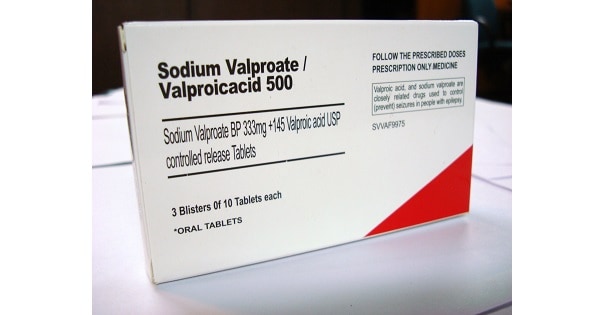
Valproic acid (Sodium Valproate)
VALPROIC ACID (SODIUM VALPROATE)
- Broad spectrum anti-convulsant
Chemical Structure:
- Branched aliphatic carboxylic acid.
Mechanism of action:
- Frequency-dependent prolongation of Na+ channel inactivation (Phenytoin-like).
- Attentuation of Ca2+ mediated transient current (Ethosuximide-like action).
- Augmented release of inhibitory neurotransmitter GABA either by,
- Inhibiting degradation (Blocking GABA-transaminase)
- Increasing synthesis.
- Increased GABA levels in blood.
Pharmacokinetics:
- Oral absorption
- 90% protein bound
- Metabolism in liver.
- Oxidative & glucuronide conjugation
- Urinary excretion
- Plasma t 1/2 – 10 to 15 hours.
- Yet long-lasting anti-convulsant effects
Indications:
- Highly effective and DOC:
- Absence seizure
- Myoclonic and atonic seizures
Alternative/adjuvant drug of choice:
- Generalised Tonic-Clonic Seizure
- Simple & Complex Partial Seizure
- Mania & Bipolar disease – Lithium alternative
Interactions:
With Phenytoin:
- Increase plasma levels of phenobarbitone
- Displacing Phenytoin from protein-binding site,
- Inhibiting its metabolism
- Resulting in “Phenytoin Toxicity”
Effects of concurrent usage:
- Mutual induction of metabolism
- Carbamazepine
- Concurrent administration
- Clonazepam contra-indicated
- Risk of absence seizures
- Fetal Abnormalities
Adverse effects:
Hepatotoxicity:
- Fulminant hepatitis.
- Rare yet serious effect.
- Asymptomatic rise in serum transaminase.
- Only in children (Mostly below 3 years).
Risk increased in:
- Known hepatic condition
- Intake of hepatotoxic drug & interaction with another anti-convulsant drug.
- Mitochondrial enzyme deficiency
- Metabolite “4-pantenoic acid” – causes hepatotoxicity
Treatment:
- Carnitine –ameliorate mitochondrial enzyme deficiency.
- Intake during pregnancy:
- Neural tube defects in offspring
Other adverse effects:
- Thrombocytopenia
- Rashes
- Alopecia
- Curling of hair
- Increased blood ammonia
Dose-related toxicity: Ataxia, drowsiness, vomiting & anorexia
Exam Question
VALPROIC ACID (SODIUM VALPROATE)
Mechanism of action:
- Augmented release of inhibitory neurotransmitter GABA,
- Increased GABA levels in blood.
Highly effective and DOC:
- Absence seizure
- Myoclonic and atonic seizures
Interactions:
Effects of concurrent usage:
- Mutual induction of metabolism – with Carbamazepine
- Administration with clonazepam contra-indicated
Adverse effects:
- Hepatotoxicity (Fulminant hepatitis):
- Asymptomatic rise in serum transaminase.
- Metabolite “4-pentanoic acid” – causes hepatotoxicity
Treatment:
- Carnitine – ameliorate mitochondrial enzyme deficiency
Intake during pregnancy:
- Neural tube defects in offspring.
Don’t Forget to Solve all the previous Year Question asked on Valproic acid (Sodium Valproate)
