Question
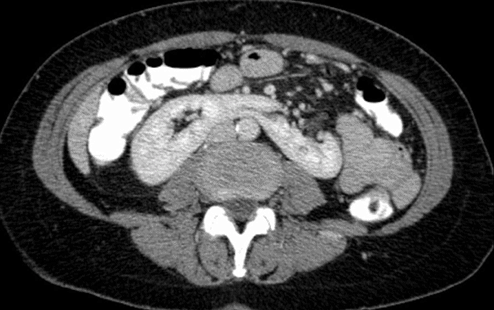
A 68-year-old woman comes to the emergency department because of abdominal pain for 3 days. Physical examination shows guarding and tenderness to palpation over the left lower abdomen. Test of the stool for occult blood is positive. A CT scan of the abdomen is shown. Which of the following mechanisms best explains the patient’s imaging findings?
| A. |
Failed neural crest cell migration
|
| B. |
Absent tissue differentiation
|
| C. |
Impaired organ ascent
|
| D. |
Incomplete organ fusion
|
Show Answer
|
Correct Answer � C
Explanation
|
|
Answer C) Impaired organ ascent
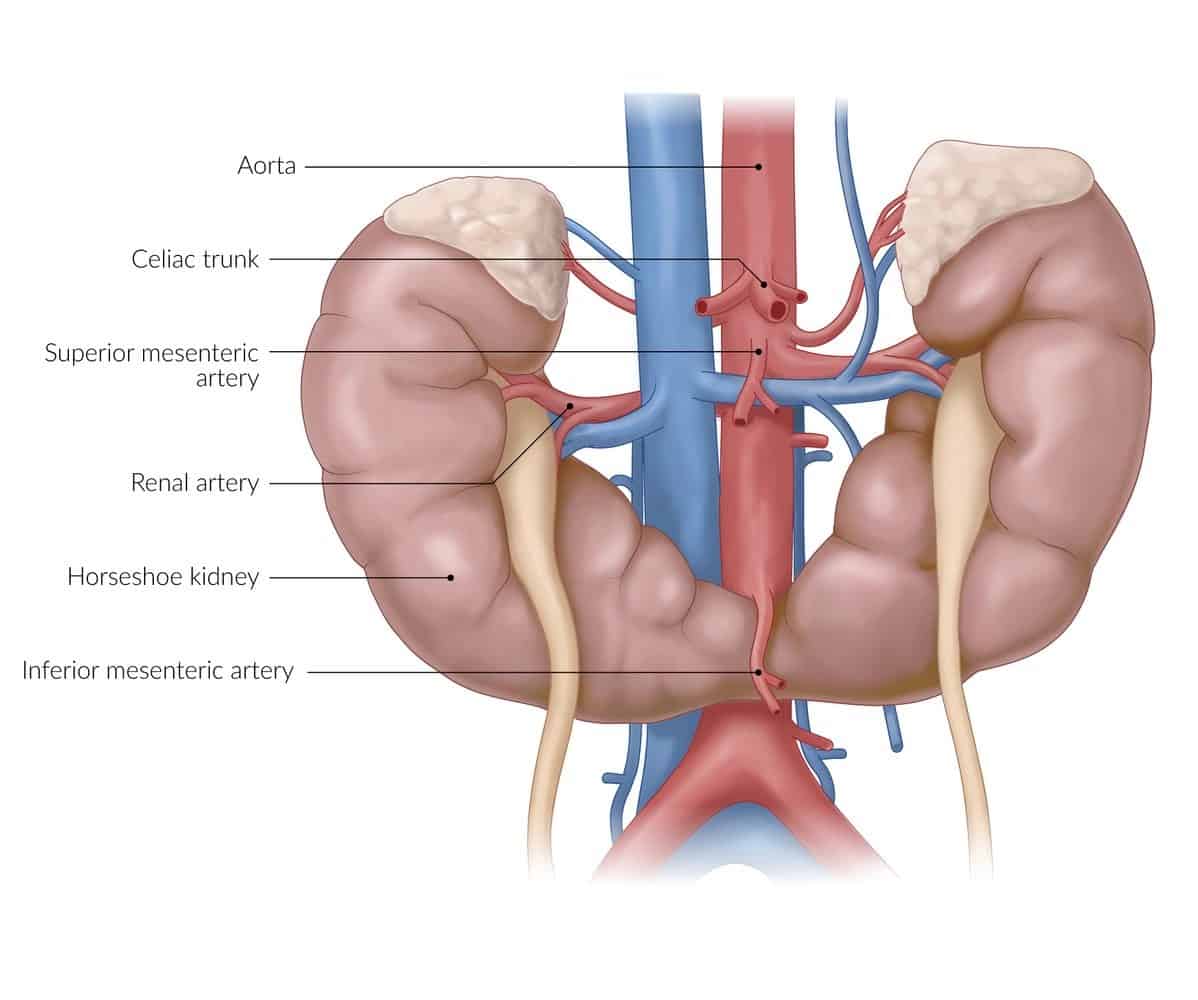
This patient’s CT scan shows a horseshoe kidney. Her abdominal symptoms are likely unrelated to the renal pathology as a horseshoe kidney is often an incidental finding.
Impaired organ ascent
-
Impaired organ ascent explains the presence of this horseshoe kidney at an inferior position relative to normal kidneys.
-
The fused inferior poles of the horseshoe kidneys get caught under the inferior mesenteric artery, impeding the normal ascension of the kidneys to their retroperitoneal locations.
-
However, this obstructed migration is generally benign, does not affect kidney function, and is not commonly associated with ischemia or abdominal pain.
-
This radiographic finding is most likely incidental and not associated with this patient’s current complaint.