
Question
| A. |
Cataract |
| B. |
Exposure Keratitis |
| C. |
Difficulty in eye movement |
| D. |
Glaucoma |

|
Correct Answer � B Explanation |
 |
The eyelids play a crucial role in protecting the cornea, maintaining its health, and ensuring clear vision. They help spread the tear film evenly over the cornea every time we blink, providing nourishment and lubrication. The tear film also contains antimicrobial proteins that help prevent infections.
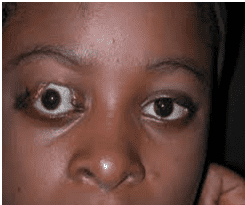
Exposure keratitis occurs when the cornea is not adequately protected by the eyelids. This can be due to:
Lagophthalmos: Inability to close the eyelids completely. This can be caused by various conditions such as facial nerve paralysis (Bell’s palsy), trauma, surgery, or other structural abnormalities of the eyelids.
Ectropion: Outward turning of the eyelid, usually the lower one, which causes the inner eyelid surface to be exposed and not in contact with the eyeball.
Entropion: Inward turning of the eyelid, which can cause the lashes to rub against the cornea, but can also lead to inadequate spreading of tears.
When the cornea is constantly exposed, it becomes dry and can develop epithelial defects. These defects can make the cornea more susceptible to secondary bacterial infections. If not treated promptly, these infections can lead to corneal ulcers, which can be sight-threatening.
• Management involves treating the underlying cause of the eyelid deficiency, lubricating the eye with artificial tears or ointments, and sometimes using protective eyewear. In cases of infection, antibiotic eye drops may be prescribed. Severe or chronic cases might require surgical intervention to correct the eyelid position or create a barrier to protect the cornea.
