Question
A 3-year-old child is brought to the pediatrician with complaints of developmental delay and intermittent episodes of lethargy. On investigation, an enzyme deficiency is suspected. A deficiency of which enzyme would result in the condition presented?
| A. |
Hyperargininemia
|
| B. |
Argininosuccinic aciduria
|
| C. |
Citrullinemia
|
| D. |
|
Show Answer
|
Correct Answer � C
Explanation
|
|
The correct answer is C. Citrullinemia.
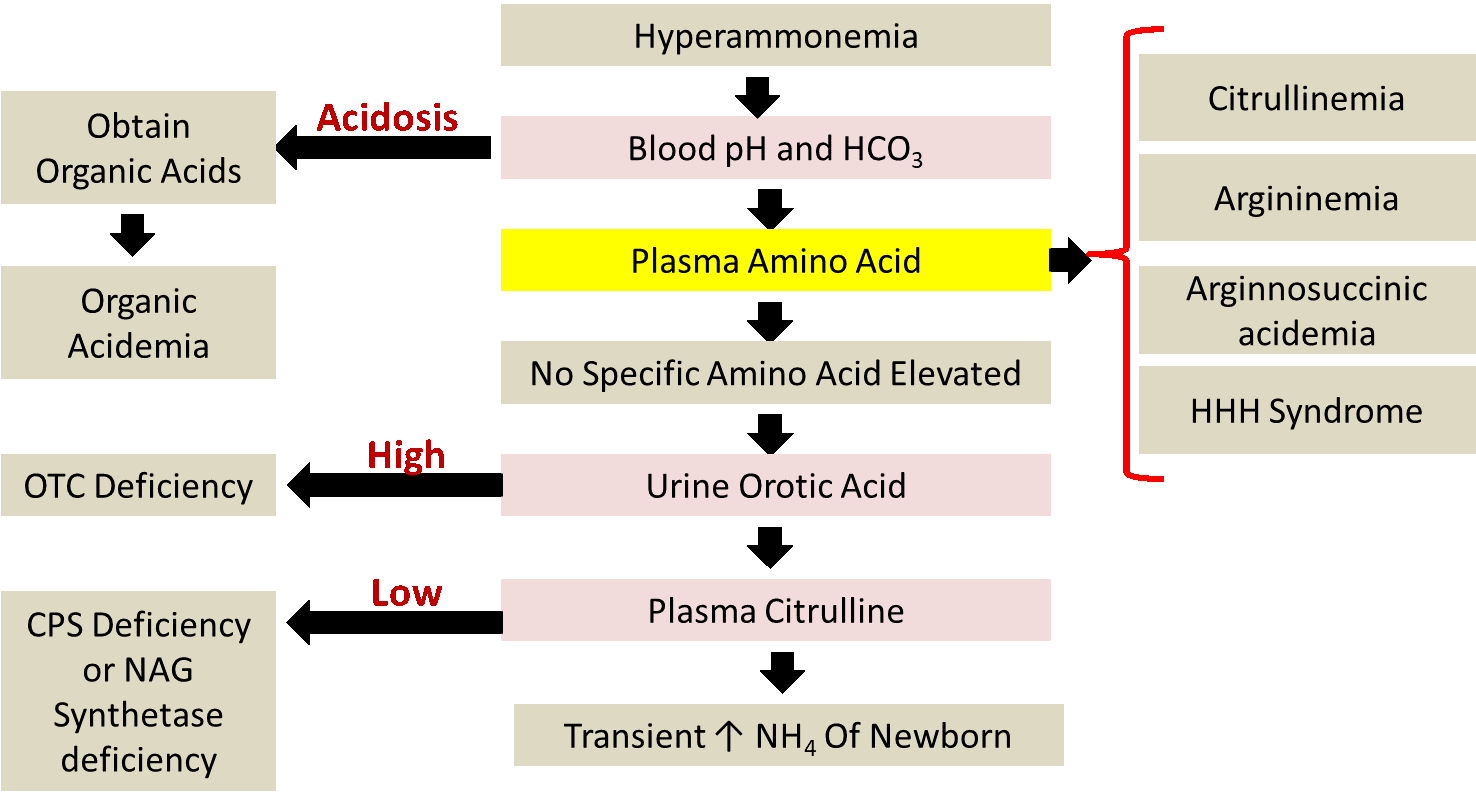
A deficiency of the enzyme arginosuccinate synthetase leads to the manifestation of Citrullinemia. This deficiency impairs the body’s ability to effectively remove ammonia, leading to its accumulation and resulting in the symptoms presented.
Insight into other options:
- A. Hyperargininemia: This condition arises from a deficiency of the enzyme arginase. Arginase plays a role in the last step of the urea cycle, converting arginine to ornithine. A deficiency would lead to an accumulation of arginine, hence the name hyperargininemia.
- B. Argininosuccinic aciduria: This disorder is a result of a deficiency in the enzyme Argininosuccinate Lyase. It’s one step before the formation of arginine in the urea cycle. Patients with this deficiency have an accumulation of argininosuccinic acid in their urine.
- D. Hyperammonemia type 1: This condition is linked to a deficiency of Carbamoyl Phosphate Synthase I. It is the first enzyme involved in the urea cycle and plays a pivotal role in the conversion of ammonia to a less toxic form, carbamoyl phosphate.