Question
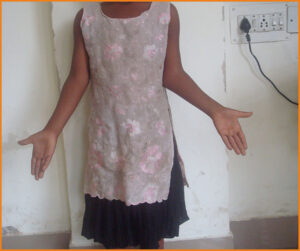
An 11-year-old comes to the clinic accompanied by their parents, concerned about the child’s forearm, which angles outward when compared to the upper arm. The child mentions feeling some discomfort and experiences a limited range of motion in the arm. This physical presentation characteristic of a specific condition?
| A. |
Cubitus Valgus
|
| B. |
Cubitus Varus
|
| C. |
Gunstock deformity
|
| D. |
Coxa Vara
|
Show Answer
|
Correct Answer » A
Explanation
|
|
A.Cubitus Valgus is characterized by an increased angle between the humerus and the ulna when the arm is extended, causing the forearm to angle outward away from the body. This condition can lead to discomfort and may affect the range of motion, matching the patient’s symptoms. It’s often the result of a growth plate injury or congenital malformation.
It typically results from a malunion of the distal humerus after a fracture, causing the forearm to deviate away from the midline of the body. In this case, the patient’s symptoms of occasional discomfort and limitation in range of motion are consistent with the diagnosis of cubitus valgus
Reasons to rule out other options
Option B- Cubitus Varus, often referred to as “gunstock deformity,” is the opposite of cubitus valgus, where there is an inward angulation of the forearm in relation to the upper arm. While it could cause similar symptoms of discomfort and motion limitation, the outward angulation described by the patient rules out this diagnosis.
Option C- Gunstock deformity is another name for Cubitus Varus, characterized by an inward deviation of the forearm and is not associated with the outward angulation described in the patient’s presentation.
Option D- Coxa Vara is a condition affecting the hip, where there is a decreased angle between the head and the shaft of the femur. This diagnosis is unrelated to the forearm’s angulation and does not fit the patient’s described symptoms.