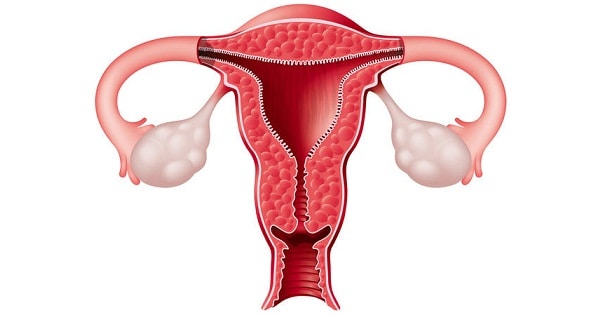
ADENOMYOSIS
Infertility is seen in :
| A |
Fibroid uterus |
|
| B |
Endometriosis |
|
| C |
Adenomyosis and PID both |
|
| D |
All Correct |
Infertility is seen in :
| A |
Fibroid uterus |
|
| B |
Endometriosis |
|
| C |
Adenomyosis and PID both |
|
| D |
All Correct |
Ans. is a, b, c i.e. Fibroid uterus; Endometriosis; Adenomyosis; and PID
Before going into the details of the causes of Infertility, lets first have a look at the prevalence of various causes.
Etiology of Inlertility
Male W 25%
Ovulatory 27%
Tubal / Uterine 22%
Others 9%
Unexplained 17%
Common causes of female Infertility are :
a. Decreased ovarian reserve
b. Ovarian Factor It is the most easily diagnosed and most treatable cause of infertility°. It includes :
Anovulation / Dysovulation
- Like in case of hypothalamic dysfunction°, Kaltman syndrome
- Hyperprolactinemia (due to drugs, pituitary adenoma°)
- Primary hypothyroidism°
- Sub clinical adrenal failure
- Diabetes mellitus
Luteinized unruptured follicle Luteal phase defect
c. Tubal Factors : Partial or Complete Bilateral tubal obstruction resulting from previous salpingitis / PID. It could be : — Postabortal°
— Gonococcal°
— Chlamydial°
— Tuberculous°
- Tubal inflammation related to endometriosis
- Following Inflammatory bowel disease
- Following surgical trauma
d. Peritoneal Factors : — Pelvic adhesions — Endometriosis
e. Uterine Factors :
- Uterine absence, atrophy
- Congenital malformations (Among all congenital uterine abnormalities, septate uterus is the M/C and most highly associated with reproductive failure and obstetrics complications).
- Intrauterine adhesions (Asherman’s syndrome)°
- Endometrial polyps
- Leiomyomas (most common with sub mucous variety)°
- Chronic endometritis (TB)°
- Exposure to DES in utero
f. Cervical Factors :
- Impenetrable cervical mucus or poorly penetrable cervical mucus due to presence of local sperm antibodies.
- Loss of mucus due to amputation of cervix, cone biopsy or over enthusiastic cervical diathermy.
- Faulty direction of cervix as seen in retroversion or severe prolapse.
- Cervical stenosis.
g. Others : Anxiety / apprehension use of contraceptives; anorexia nervosa.
As such adenomyosis is not given as a cause of infertility but if you go through the chapter of adenomyosis: (In chapter on Adenomyosis) : “The patient may also complain of infertility”. So, I am including it in the correct options
True regarding adenomyosis is :
| A |
Most common in nullipara |
|
| B |
Progestin are agents of choice for medical management |
|
| C |
Presents with menorrhagia, dysmenorrhea and an enlarged uterus |
|
| D |
More common in young women |
True regarding adenomyosis is :
| A |
Most common in nullipara |
|
| B |
Progestin are agents of choice for medical management |
|
| C |
Presents with menorrhagia, dysmenorrhea and an enlarged uterus |
|
| D |
More common in young women |
Ans. is c i.e. Presents with menorrhagia, dysmenorrhea and an enlarged uterus
Adenomyosis is a condition where there is ingrowth of endometrium (both gland + stroma) directly into the myometrium°.
Age group : • Elderly patients > 40 years°
Parity : • Multiparous°
Symptoms : • Most common symptom : Menorrhagia°
- 2nd most common symptom : Dysmenorrhea°
- Others : Pelvic discomfort, Backache, Dyspareunia.
On per vaginal examination : Painful symmetrical enlargement of uterus° (not more than 12-14 weeks of pregnancy)°.
Diagnosis : • Diagnostic hysteroscopy combined with curettage is the best diagnostic modality°.
Management : • TOC – Surgery (Total hysterectomy)° in most of the patient, as most of the patients are elderly.
- In younger women – localized excision can be tried.
Symptoms of adenomyosis :
| A |
Menorrhagia |
|
| B |
Dysmenorrhea |
|
| C |
Abdominal lump |
|
| D |
Option A and B both |
Symptoms of adenomyosis :
| A |
Menorrhagia |
|
| B |
Dysmenorrhea |
|
| C |
Abdominal lump |
|
| D |
Option A and B both |
Option A and B both
Treatment of adenomyosis :
| A |
Estrogens |
|
| B |
Estrogens and progesterones |
|
| C |
Total hysterectomy |
|
| D |
Laser |
Treatment of adenomyosis :
| A |
Estrogens |
|
| B |
Estrogens and progesterones |
|
| C |
Total hysterectomy |
|
| D |
Laser |
Total hysterectomy
A 45 year old G2P2 presents with a chief complaint of pelvic pain that is worse immediately before and during her period. A bimanual exam and Pap smear are performed and are unremarkable. An ultrasound of her pelvic organs is performed and shows non-focal thickening of the myometrium with unremarkable ovaries. Which of the following is most likely to be the cause of this patient’s complaint?
| A |
Adenomyosis |
|
| B |
Endometrial polyps |
|
| C |
Endometritis |
|
| D |
Leiomyoma |
32 year old lady presented with menorrhagia and dysmenorrhea. What is the definitive treatment of adenomyosis?
| A |
Mifepristone |
|
| B |
Oral progestins |
|
| C |
Hysterectomy |
|
| D |
Conservative resection |
32 year old lady presented with menorrhagia and dysmenorrhea. What is the definitive treatment of adenomyosis?
| A |
Mifepristone |
|
| B |
Oral progestins |
|
| C |
Hysterectomy |
|
| D |
Conservative resection |
Hysterectomy is the definitive treatment and as with other conditions, the type of surgical procedure depends on uterine size and associated uterine or abdominopelvic pathology.
Endometrial ablation or resection using hysteroscopy has been used to successfully treat dysmenorrhea and menorrhagia caused by adenomyosis.
Ref: Hoffman B.L., Schorge J.O., Schaffer J.I., Halvorson L.M., Bradshaw K.D., Cunningham F.G., Calver L.E. (2012). Chapter 9. Pelvic Mass. In B.L. Hoffman, J.O. Schorge, J.I. Schaffer, L.M. Halvorson, K.D. Bradshaw, F.G. Cunningham, L.E. Calver (Eds), Williams Gynecology, 2e.