
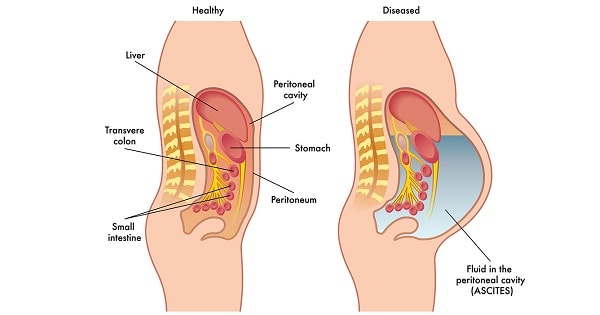
ASCITES
Minimal Ascites can be best detected by:
| A |
USG |
|
| B |
Plain X-ray abdomen |
|
| C |
MRI |
|
| D |
CT scan |
Minimal Ascites can be best detected by:
| A |
USG |
|
| B |
Plain X-ray abdomen |
|
| C |
MRI |
|
| D |
CT scan |
A i.e. USG
|
Earliest detection |
Investigation |
|
Ascites |
USGQ |
|
Pericardial effusion |
EchocardiographyQ |
|
Bronchiectasis |
CT-ScanQ |
|
Fetal life |
DopplerQ |
|
Pleural effusion |
IA lateral decubitus viewQ |
|
Pneumoperitonum |
Erect chest X-ray or left lateral decubitus abdominal X-rayQ |
The following are true regarding ascites except ‑
| A |
Only when the amount of present exceeds 1500 ml. It can be recognised clinically |
|
| B |
Shifting dullness is absent when there is a very large accumulation of fluid |
|
| C |
In Cirrhosis there is obstruction to the venous outflow of the liver due to obliterrative fibrosis of the infra hepatic venous bed |
|
| D |
All |
The following are true regarding ascites except ‑
| A |
Only when the amount of present exceeds 1500 ml. It can be recognised clinically |
|
| B |
Shifting dullness is absent when there is a very large accumulation of fluid |
|
| C |
In Cirrhosis there is obstruction to the venous outflow of the liver due to obliterrative fibrosis of the infra hepatic venous bed |
|
| D |
All |
Ans. is ‘a’
It can be recognised clinically when the amount of fluid exceeds 150 ml.


