Biomedical waste management
| A |
Incineration |
|
| B | Autoclaving | |
| C |
Chemically |
|
| D |
None |
| A |
Incineration |
|
| B | Autoclaving | |
| C |
Chemically |
|
| D |
None |
Incineration REF: Park 20th edition page 699, http://www.grantmedicalcollege-jjhospital.org/biomed.htm
|
Colour code |
Type of container |
Waste disposed |
Treatment options |
|
Black bag |
Plastic bag |
Noninfectious waste (papers, plastic covers) Discarded medicines & cytotoxic drugs |
Disposal in secured landfills |
|
Red bag |
Plastic bag/ |
Infected solid disposable wastes other than sharps |
Autoclaving/ |
|
|
Disinfected |
(gloves, tunings, catheters, iv sets) |
Microwaving/ |
|
|
container |
Infected solid wastes contaminated with blood and body fluids(dressing, plaster, linen) |
Chemical treatment |
|
|
|
Microbiology/Biotech waste (vaccines, cultures) |
|
|
Yellow bag |
Plastic bag |
Human anatomical waste |
Incineration/Deep burial |
|
|
|
Animal waste |
|
|
|
|
Microbiology/Biotech waste (vaccines, cultures) |
|
|
|
|
Infected solid wastes contaminated with blood and body fluids(dressing, plaster, linen) |
|
|
Blue bag |
Plastic bag/ |
Solid sharps (needles, syringes, scalpels, blades) |
Autoclaving/ |
|
|
Puncture proof |
Infected solid disposable wastes other than sharps |
Microwaving/ |
|
|
container |
(gloves, tunings, catheters, iv sets) |
Chemical treatment/ |
|
|
|
|
Shredding |
Incineration is not done for:
| A |
Cytotoxic drugs |
|
| B |
Cotton contaminated with blood |
|
| C |
Waste sharps |
|
| D |
Human tissue |
Incineration is not done for:
| A |
Cytotoxic drugs |
|
| B |
Cotton contaminated with blood |
|
| C |
Waste sharps |
|
| D |
Human tissue |
Waste sharps Repeat from May 11
All of the following statements regarding disposal of biomedical waste are true, EXCEPT:
| A |
Human Anatomical Waste is disposed in a Yellow bag |
|
| B |
Contents from a Red bag may be a source of contamination |
|
| C |
Block bags are used for disposal of ash from incineration |
|
| D |
Blue bags contents are disposed in secured landfill |
The blue or white translucent plastic bag is used for sharps (needles, syringes, scalpels, blades, glass etc.
that may cause puncture or cuts) and solid wastes such as waste generated from disposable items like tubings, catheters, intravenous sets etc. These wastes are treated by autoclaving/microwaving/chemical treatment and destruction/shredding.
The wastes in the black bags are treated by disposal in a secured landfill.
Ref: Preventive and Social Medicine, By K.Park, 19th edition, Page 648, 649
All of the following waste can be incinerated, except:
| A |
Anatomical waste |
|
| B |
Infectious waste |
|
| C |
Sharps |
|
| D |
Cytotoxic Waste |
All of the following waste can be incinerated, except:
| A |
Anatomical waste |
|
| B |
Infectious waste |
|
| C |
Sharps |
|
| D |
Cytotoxic Waste |
Out of all the given options, only sharps cannot be incinerated. sharps include needles, syringes, scalpels, blades and glass.
Sharps need to be disinfected either by chemotherapy, auto-claving, microwaving or mutilation shedding.
While cytotoxic waste, anatomical waste and infectious waste are incinerated and the incinerated ash is disposed in the municipal land fill.
Ref: Park’s Textbook of Preventive and Social Medicine 19th edition; pages
Hospital waste product accounts-
| A |
Paper 40% |
|
| B |
Plastic 10% |
|
| C |
Infectious waste 30% |
|
| D |
Rage 30% |
Hospital waste product accounts-
| A |
Paper 40% |
|
| B |
Plastic 10% |
|
| C |
Infectious waste 30% |
|
| D |
Rage 30% |
Ans. is ‘b’ i.e., Plastic 10%
Amount of waste infectious produced in hospitals‑
| A |
45% |
|
| B |
65% |
|
| C |
80% |
|
| D |
100% |
Amount of waste infectious produced in hospitals‑
| A |
45% |
|
| B |
65% |
|
| C |
80% |
|
| D |
100% |
Ans. is ‘a’ i.e., 45%
Average hospital waste produced per bed per day in Government hospital –
| A |
1-5-2-0 kg |
|
| B |
0-5-4 kg |
|
| C |
0-5-1 kg |
|
| D |
0-5-2 kg |
Average hospital waste produced per bed per day in Government hospital –
| A |
1-5-2-0 kg |
|
| B |
0-5-4 kg |
|
| C |
0-5-1 kg |
|
| D |
0-5-2 kg |
Ans. is ‘b’ i.e., 0.5-4 kg
Biomedical waste(s) to be discarded in Yellow :
| A |
Human anatomical waste |
|
| B |
Animal waste |
|
| C |
Microbiological waste |
|
| D |
All |
Biomedical waste(s) to be discarded in Yellow :
| A |
Human anatomical waste |
|
| B |
Animal waste |
|
| C |
Microbiological waste |
|
| D |
All |
Ans. is ‘a’ i.e., Human anatomical waste; b i.e., Animal waste; ‘c’ i.e., Microbiological waste
o Wastes discarded in yellow bag arc : (i) Category I (Human anatomical waste), (ii) Category 2 (Animal waste), (iii) Catagory 3 (Microbiology and Biotechnology waste), and (iv) Catagory 6 (Solid waste).
All can he incinerated except-
| A |
Cytotoxic waste |
|
| B |
Sharps |
|
| C |
Anatomical waste |
|
| D |
Infectious waste |
All can he incinerated except-
| A |
Cytotoxic waste |
|
| B |
Sharps |
|
| C |
Anatomical waste |
|
| D |
Infectious waste |
Ans. is ‘b’ i.e., Sharps
o Incineration of waste sharp (category No-4) is not recommended. o The recommended method for treatment and disposal is disinfection by chemical treatment / autoclaving /microwaving and multilation / shredding.
Which waste cannot be incinerated –
| A |
Anatomic waste |
|
| B |
Microbiology waste |
|
| C |
Halogenated plastic |
|
| D |
Infectious waste |
Which waste cannot be incinerated –
| A |
Anatomic waste |
|
| B |
Microbiology waste |
|
| C |
Halogenated plastic |
|
| D |
Infectious waste |
Ans. is ‘c’ i.e., Halogenated plastic
Best for Incineration of infectiouswaste ‑
| A |
Double – chamber |
|
| B |
Single – chamber |
|
| C |
Triple – chamber |
|
| D |
None |
Best for Incineration of infectiouswaste ‑
| A |
Double – chamber |
|
| B |
Single – chamber |
|
| C |
Triple – chamber |
|
| D |
None |
Ans. is ‘a’ i.e., Double-chamber
o Three basic kinds of incineration technology are of interest for treatment of healh care wastes :
i) Double-chamber pyrolytic incinerators which may be especially designed to burn infectious health care waste.
ii) Single-chamber furnaces with static grate, which should be used only if pyrolytic incinerators are not affordable.
iii) Rotary kilns operating at high temperatures, capable of causing decomposition of genotoxic substances and heat-resistant chemicals.
Hospital waste product accounts-
| A |
Paper 40% |
|
| B |
Plastic 10% |
|
| C |
Infectious waste 30% |
|
| D |
Rage 30% |
Hospital waste product accounts-
| A |
Paper 40% |
|
| B |
Plastic 10% |
|
| C |
Infectious waste 30% |
|
| D |
Rage 30% |
Ans. is ‘b’ i.e., Plastic 10%
True about composition of hospital waste –
| A |
Metal 1% |
|
| B |
Paper 15% |
|
| C |
Glass 5% |
|
| D |
a and b |
True about composition of hospital waste –
| A |
Metal 1% |
|
| B |
Paper 15% |
|
| C |
Glass 5% |
|
| D |
a and b |
Ans. is ‘a’ i.e., Metal 1%; ‘b’ i.e., Paper 15%
Biomedical waste(s) to he discarded in Yellow
| A |
Humananatomical waste |
|
| B |
Animal waste |
|
| C |
Microbiological waste |
|
| D |
All |
Biomedical waste(s) to he discarded in Yellow
| A |
Humananatomical waste |
|
| B |
Animal waste |
|
| C |
Microbiological waste |
|
| D |
All |
Ans. is ‘a’ i.e., Human anatomical waste; b i.e., Animal waste; ‘c’ i.e., Microbiological waste
o Wastes discarded in yellow bag arc : (i) Category I (Human anatomical waste), (ii) Category 2 (Animal waste), (iii) Catagory 3 (Microbiology and Biotechnology waste), and (iv) Catagory 6 (Solid waste).
Disposal of expired & cytotoxic drugs is by‑
| A |
Separate land fill disposal |
|
| B |
Municipal waste |
|
| C |
Autoclave |
|
| D |
Preserve for 10 years & land till |
Disposal of expired & cytotoxic drugs is by‑
| A |
Separate land fill disposal |
|
| B |
Municipal waste |
|
| C |
Autoclave |
|
| D |
Preserve for 10 years & land till |
Ans. is ‘a’ i.e., Separate land fill disposal
o Discarded (expired) drugs and cytotoxic drugs are classfied into category 5.
o For category 5. incineration destruction and rugs disposal in secured landfills is done.
All of the following are incinerated except:
| A |
Mercury |
|
| B |
Radiological waste |
|
| C |
Halogen containing plastics |
|
| D |
All |
All of the following are incinerated except:
| A |
Mercury |
|
| B |
Radiological waste |
|
| C |
Halogen containing plastics |
|
| D |
All |
Ans. is ‘a’ i.e. Mercury, ‘b i.e. Radiological waste, ‘c’ i.e. Halogen containing plastics
“Waste types not to be incinerated are: (a) pressurized gas container; (b) large amount of reactive chemical wastes; (c) silver salts and photographic or radiographic wastes; (d) Halogenated plastics such as PVC; (e) waste with high mercury or cadmium content, such as broken thermometers, used batteries, and lead-lined wooden panels; and (1) sealed ampules or ampules containing heavy metals”
The majority of the waste produced by health-care proViders is-
| A |
Chemical waste |
|
| B |
Infectious waste |
|
| C |
General waste |
|
| D |
Sharps waste |
The majority of the waste produced by health-care proViders is-
| A |
Chemical waste |
|
| B |
Infectious waste |
|
| C |
General waste |
|
| D |
Sharps waste |
Ans. is ‘c’ i.e., General waste
Sharp instruments like needles, syringes, scalpels hospital waste products are thrown in –
| A |
Yellow bag |
|
| B |
Red bag |
|
| C |
Blue bag |
|
| D |
Black bag |
Sharp instruments like needles, syringes, scalpels hospital waste products are thrown in –
| A |
Yellow bag |
|
| B |
Red bag |
|
| C |
Blue bag |
|
| D |
Black bag |
Ans. is ‘c’ i.e., Blue bag
Biodegradable waste products, disposing in which of the colour code of the bags-
| A |
Blue |
|
| B |
Black |
|
| C |
Green |
|
| D |
Yellow |
Biodegradable waste products, disposing in which of the colour code of the bags-
| A |
Blue |
|
| B |
Black |
|
| C |
Green |
|
| D |
Yellow |
Ans. is ‘d’ i.e., Yellow
Which one of the following is the category I of biomedical waste in India –
| A |
Human anatomical waste |
|
| B |
Microbiological and biotechnological waste |
|
| C |
Discarded medicines and cytotoxic drugs |
|
| D |
Animal waste |
Which one of the following is the category I of biomedical waste in India –
| A |
Human anatomical waste |
|
| B |
Microbiological and biotechnological waste |
|
| C |
Discarded medicines and cytotoxic drugs |
|
| D |
Animal waste |
Ans. is `a’ i.e., Human anatomical waste
Incineration is done for which of the following:
September 2008
| A |
Liquid waste |
|
| B |
Anatomy waste |
|
| C |
Sharp waste |
|
| D |
All of the above |
Incineration is done for which of the following:
September 2008
| A |
Liquid waste |
|
| B |
Anatomy waste |
|
| C |
Sharp waste |
|
| D |
All of the above |
Ans. B: Anatomy waste
Medical waste incinerators (MWIs) burn hospital waste particularly anatomy waste and amputated limbs,animal carcasses.
Liquid waste is treated with disinfectants/reagents and neutralized before flushing into the sewer.
Sharp waste can be disposed by deep burial if land is available
Human anatomical waste is put in:
March 2007
| A |
Yellow |
|
| B |
Red |
|
| C |
Blue |
|
| D |
Black |
Human anatomical waste is put in:
March 2007
| A |
Yellow |
|
| B |
Red |
|
| C |
Blue |
|
| D |
Black |
Ans. A: Yellow
Colour coded biomedical waste bags ‑
- Yellow plastic bags for human anatomical, animal, microbiological and soiled waste.
- Red disinfected container or plastic bags microbiological waste, solid waste (IV tubes, catheters, etc.)
-Blue or White plastic bag or puncture proof containers sharps, disposable tubings, etc .
– Black Plastic bag or puncture proof containers discarded medicines, incineration ash, chemical waste.
Yellow bag is used for –
| A |
Waste sharp |
|
| B |
Cytotoxic drugs |
|
| C |
Animal waste |
|
| D |
Chemical waste |
Yellow bag is used for –
| A |
Waste sharp |
|
| B |
Cytotoxic drugs |
|
| C |
Animal waste |
|
| D |
Chemical waste |
Ans. is ‘c’ i.e., Animal waste
Incineration is done for waste category ‑
| A |
Category 7 |
|
| B |
Category 9 |
|
| C |
Category 6 |
|
| D |
Category 5 |
Incineration is done for waste category ‑
| A |
Category 7 |
|
| B |
Category 9 |
|
| C |
Category 6 |
|
| D |
Category 5 |
Ans. is ‘c’ i.e., Category 6
In the disposal of the medical waste shown in the image,which coloured bag is used?

| A |
Yellow |
|
| B |
White |
|
| C |
Red |
|
| D |
Black |
In the disposal of the medical waste shown in the image,which coloured bag is used?
| A |
Yellow |
|
| B |
White |
|
| C |
Red |
|
| D |
Black |
Ans:B.)White
White ,translucent coloured bag is used during disposal of Syringe.(Sharp waste)
Biomedical wastes categories and their segregation, collection, treatment, processing and disposal options
|
Category |
Type of Waste |
Type of Bag or Container to be used |
Treatment and Disposal options |
|
|
|
|
|
|
Yellow |
(a) Human Anatomical Waste: Human tissues, organs, body parts and fetus below the viability period |
Yellow coloured non-chlorinated plastic bags |
Incineration or Plasma Pyrolysis or deep burial* |
|
(b)Animal Anatomical Waste : Experimental animal carcasses, body parts |
|||
|
(c) Soiled Waste: Items contaminated with blood, body fluids like dressings, plaster casts, cotton swabs ,etc |
|
Incineration or Plasma Pyrolysis or deep burial*
In absence of above facilities, autoclaving or micro-waving/ |
|
|
|
|
hydroclaving followed by shredding or mutilation or combination of sterilization and shredding. Treated waste to be sent for energy recovery.
|
|
(d) Expired or Discarded Medicines: Pharmaceutical waste like antibiotics, cytotoxic drugs including all items contaminated with cytotoxic drugs along with glass or plastic ampoules, vials etc. |
Yellow coloured non-chlorinated plastic bags or containers |
Incineration at >12000C Or Encapsulation or Plasma Pyrolysis at >12000C.
|
|
|
(e) Chemical Waste:
|
Yellow coloured containers or non-chlorinated plastic bags |
Incineration or Plasma Pyrolysis or Encapsulation in hazardous waste treatment, storage and disposal facility.
|
|
|
|
(f) Chemical Liquid Waste :
|
Separate collection system leading to effluent treatment system |
After resource recovery, the chemical liquid waste shall be pre-treated before mixing with other wastewater. |
|
|
(g) Discarded linen, mattresses, beddings contaminated with blood or body fluid.
|
Non-chlorinated yellow plastic bags or suitable packing material |
Non- chlorinated chemical disinfection followed by incineration or Plazma Pyrolysis or for energy recovery.
|
|
|
|
|
|
|
|
|
(h) Microbiology, Biotechnology and other clinical laboratory waste: Blood bags, Laboratory cultures, stocks or specimens of micro- organisms, live or attenuated vaccines, human and animal cell cultures ,etc
|
Autoclave safe plastic bags or containers |
Pre-treat to sterilize with nonchlorinated chemicals on-site , thereafter Incineration. |
|
|
Red |
Contaminated Waste (Recyclable) (a) Wastes generated from disposable items such as tubing, bottles, intravenous tubes and sets, catheters, urine bags, syringes (without needles and fixed needle syringes) and vaccutainers with their needles cut) and gloves. |
Red coloured non-chlorinated plastic bags or containers |
Autoclaving or micro-waving/ hydroclaving followed by shredding or mutilation or combination of sterilization and shredding.
|
|
|
White (Translucent) |
Waste sharps including Metals: Needles, syringes with fixed needles, needles from needle tip cutter or burner, scalpels, blades, etc
|
Puncture proof, Leak proof, tamper proof containers
|
Autoclaving or Dry Heat Sterilization followed by shredding or mutilation or encapsulation in metal container or cement concrete; combination of shredding cum autoclaving; and sent for final disposal to iron foundries (having consent to operate from the State Pollution Control Boards or Pollution Control Committees) or sanitary landfill or designated concrete waste sharp pit.
|
|
|
Blue |
(a) Glassware: Broken or discarded and contaminated glass including medicine vials and ampoules except those contaminated with cytotoxic wastes.
|
Cardboard boxes with blue colored marking |
Disinfection (by soaking the washed glass waste after cleaning with detergent and Sodium Hypochlorite treatment) or through autoclaving or microwaving or hydroclaving and then sent for recycling. |
|
|
|
(b) |
Metallic Body Implants |
Cardboard boxes with blue colored marking |
|
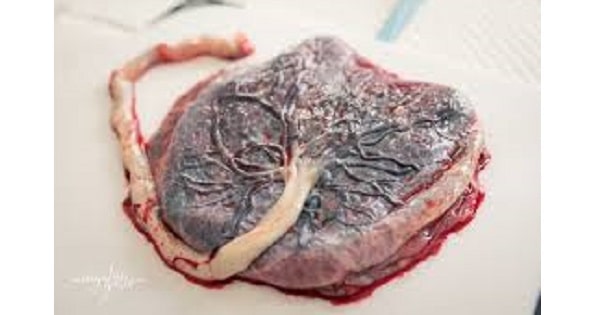
The type of Biomedical waste shown in the image is included in which category of Biomedical waste?

| A |
Category no:1 |
|
| B |
Category no:2 |
|
| C |
Category no:3 |
|
| D |
Category no:4 |
The type of Biomedical waste shown in the image is included in which category of Biomedical waste?
| A |
Category no:1 |
|
| B |
Category no:2 |
|
| C |
Category no:3 |
|
| D |
Category no:4 |
Ans:A.)Category no:1.
Placenta is shown in the image,which is a human Anatomical waste,included in Category no:1
Categories of Biomedical waste
| Category | Waste Category |
| Category No.1 | Human Anatomical Waste |
| Category No.2 | Animal Waste |
| Category No.3 | Microbiology and Biotechnological waste |
| Category No.4 | Waste sharps |
| Category No.5 | Discarded Medicines and Cytotoxic drugs |
| Category No.6 | [Soiled] Waste |
| Category No.7 | Solid Waste |
| Category No.8 | Liquid Waste |
| Category No.9 | Incineration Ash |
| Category No.10 | Chemical Waste |