
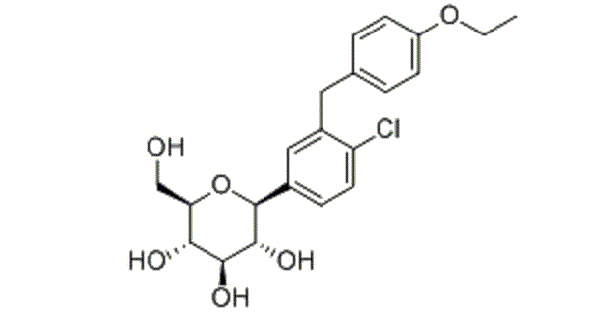
DAPAGLIFLOZIN
Q. 1
In which condition, Dapagliflozin is used?
| A |
Type 1 diabetes
|
|
| B |
Breast cancer |
|
| C |
Type 2 diabetes. |
|
| D |
Bladder cancer |
Q. 1
In which condition, Dapagliflozin is used?
| A |
Type 1 diabetes
|
|
| B |
Breast cancer |
|
| C |
Type 2 diabetes. |
|
| D |
Bladder cancer |
Ans.
C
C
D
Explanation:
Type 2 diabetes.
DAPAGLIFLOZIN
- An SGLT-2 inhibitor drug of gliflozin class.
- Used in type 2 diabetes treatment.
MECHANISM OF ACTION:
- Glucose is reabsorbed completely in proximal tubules by sodium-glucose cotransporter-2 [SGLT-2].
- Dapagliflozin acts by inhibiting SGLT-2 transporter.
Q. 2
Dapagliflozin inhibits which glucose transporter?
| A |
GLUT – 3 |
|
| B |
GLUT – 1 |
|
| C |
SGLT-2 |
|
| D |
GLUT – 2 |
Q. 2
Dapagliflozin inhibits which glucose transporter?
| A |
GLUT – 3 |
|
| B |
GLUT – 1 |
|
| C |
SGLT-2 |
|
| D |
GLUT – 2 |
Ans.
Explanation:
SGLT-2.
DAPAGLIFLOZIN
- An SGLT-2 inhibitor drug of gliflozin class.
- Used in type 2 diabetes treatment.
MECHANISM OF ACTION:
- Glucose is reabsorbed completely in proximal tubules by sodium-glucose cotransporter-2 [SGLT-2].
- Dapagliflozin acts by inhibiting SGLT-2 transporter.
Q. 3
Which is the most common side effect of Dapagliflozin?
| A |
Glycosuria |
|
| B |
Weight loss |
|
| C |
Fatigue |
|
| D |
All of the above |
Q. 3
Which is the most common side effect of Dapagliflozin?
| A |
Glycosuria |
|
| B |
Weight loss |
|
| C |
Fatigue |
|
| D |
All of the above |
Ans.
Explanation:
Causes all of the effects.
DAPAGLIFLOZIN
- An SGLT-2 inhibitor drug of gliflozin class.
- Used in type 2 diabetes treatment.
MECHANISM OF ACTION:
- Glucose is reabsorbed completely in proximal tubules by sodium-glucose cotransporter-2 [SGLT-2].
- Dapagliflozin acts by inhibiting SGLT-2 transporter.
Effects:
- Single daily dose produces round-the-clock glucosuria lowering blood glucose levels.
SIDE EFFECTS:
- Main effects:
- Heavy glycosuria (Up to 70 grams/day).
- Causes rapid weight loss & tiredness.
- Increased incidence of urinary tract infections & genital infections (candidiasis).
- Because increased urinary glucose worsens infections already associated with diabetes.
- Increased risk of diabetic ketoacidosis.
- Increased urinary frequency.
- Heavy glycosuria (Up to 70 grams/day).
- Other effects:
- Decreases bone mineral density —-> Increases risk of fractures.
- Higher rates of breast & bladder cancers reported.
- Hypotensive reactions.


👨⚕️
Chat Support
❌