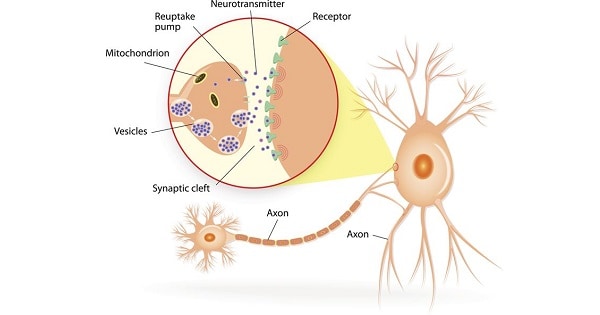
DEPRESSION – INTRODUCTION & SYMPTOMS
Risk factor for suicide in depression are all EXCEPT:
| A | Female | |
| B | Male > 45 | |
| C | Child with conduct disorder | |
| D | Family |
Risk factor for suicide in depression are all EXCEPT:
| A | Female | |
| B | Male > 45 | |
| C | Child with conduct disorder | |
| D | Family |
Female REF: Kaplan and sadock’s synopsis in psychiatry 10th ed p. 529
Risk factors of suicide in depression are:
- At end( involutional) or beginning of depression
- Mood disorders , personality disorders , psychosis , hypochondriac
- >45yrs male, unemployed, single, divorced, chronically ill, widowed, recently bereaved
- Family history
Schizophrenia and depression both have A/E
| A |
Formal thought disorder |
|
| B |
Social withdrawal |
|
| C |
Poor personal care |
|
| D |
Decreased interest in sex |
Schizophrenia and depression both have A/E
| A |
Formal thought disorder |
|
| B |
Social withdrawal |
|
| C |
Poor personal care |
|
| D |
Decreased interest in sex |
A i.e. Formal thought disorder
Most common age for depression is
| A |
Middle age men |
|
| B |
Middle age female |
|
| C |
Young girl |
|
| D |
Children |
Most common age for depression is
| A |
Middle age men |
|
| B |
Middle age female |
|
| C |
Young girl |
|
| D |
Children |
B i.e. Middle age female

Neurotransmittors involved in depression are
| A |
GABA and Dopamine |
|
| B |
Serotonin and Norepineprine |
|
| C |
Serotonin and Dopamine |
|
| D |
Norepinephrine and GABA |
Neurotransmittors involved in depression are
| A |
GABA and Dopamine |
|
| B |
Serotonin and Norepineprine |
|
| C |
Serotonin and Dopamine |
|
| D |
Norepinephrine and GABA |
B i.e. Serotonin & Noradrenaline (Nor epinephrine)
Endogenous Depression is characterized by A/E
| A |
Loss of Self esteem |
|
| B |
Guilt psychosis |
|
| C |
Third person hallucination |
|
| D |
Paranoid feeling |
Endogenous Depression is characterized by A/E
| A |
Loss of Self esteem |
|
| B |
Guilt psychosis |
|
| C |
Third person hallucination |
|
| D |
Paranoid feeling |
C i.e. Third person hallucination
Suicide risk is common with which type of depression :
| A |
Reactive depression |
|
| B |
Endogenous depression |
|
| C |
Endogenous depression |
|
| D |
All |
Suicide risk is common with which type of depression :
| A |
Reactive depression |
|
| B |
Endogenous depression |
|
| C |
Endogenous depression |
|
| D |
All |
B i.e. Endogenous depression
Most common symptom of depression in India is:
March 2011
| A |
Low mood |
|
| B |
Sleep disturbances |
|
| C |
Vague body aches |
|
| D |
Suicidal tendencies |
Most common symptom of depression in India is:
March 2011
| A |
Low mood |
|
| B |
Sleep disturbances |
|
| C |
Vague body aches |
|
| D |
Suicidal tendencies |
Ans. C: Vague body aches
Multiple physical symptoms (such as heaviness of head, vague body aches) are particularly common in the elderly depressives and depressed patients from the developing countries (such as India)
Depression:
- MC psychiatric disorder in India: Depression
- Neurotransmitter involved: Serotonin and nor-epinephrine
- MC cause of suicide: Depression
- Risk features of suicide in depression:
— Endogenous type of depression
— Psychotic depression
- MC type of post-purpueral psychosis: Depression
- Nihilistic ideas: Seen in depression
Depression of consciousness level in hypothermia starts when the core body temperature falls below:
COMEDK 14
| A |
35°C |
|
| B |
34°C |
|
| C |
33°C |
|
| D |
32°C |
Depression of consciousness level in hypothermia starts when the core body temperature falls below:
COMEDK 14
| A |
35°C |
|
| B |
34°C |
|
| C |
33°C |
|
| D |
32°C |
Ans. 32°C
Major depression is diagnosed after minimum of:
Maharashtra 09
| A |
1 week |
|
| B |
2 weeks |
|
| C |
3 weeks |
|
| D |
4 weeks |
Major depression is diagnosed after minimum of:
Maharashtra 09
| A |
1 week |
|
| B |
2 weeks |
|
| C |
3 weeks |
|
| D |
4 weeks |
Ans. 2 weeks
The evidence-based psychological therapy of choice for depression is.
| A |
Group discussion therapy |
|
| B |
Counselling |
|
| C |
Cognitive behaviour therapy |
|
| D |
Psychological psychotherapy |
The evidence-based psychological therapy of choice for depression is.
| A |
Group discussion therapy |
|
| B |
Counselling |
|
| C |
Cognitive behaviour therapy |
|
| D |
Psychological psychotherapy |
Ans. c. Cognitive behaviour therapy
The evidence-based psychological therapy of choice for depression is cognitive behaviour therapy.
“Cognitive Behavioral Therapy (CBT) developed by Aron Beck, is an extremely useful and evidence based non pharmacological intervention for depression. This therapy involves identification of the cognitive errors (thinking errors) in an individual and replacing the same with alternative thoughts, which are more adaptive and healthy in nature. It is most useful in patients suffering from mild to moderate depression.”- Kaplan and Sadock 10/e pe p553
Cognitive (Behaviour) Therapy
- It was developed by Beck and Meichenbaum, for the treatment of depression°, anxiety disorder°, panic disorder°, phobias°, eating disorders°, anticipatory anxiety°, and also for teaching problem solving skills° (methods).
- It involves:
- Cognitive techniques (e.g. recognizing and correcting negative thoughts, teaching reattribution techniques, increasing objectivity in perceptives, identifying and testing maladaptive assumptions, and decentering) Behaviour techniques (activity scheduling, homework assignment, graded task assignment, behavioral rehearsal, role playing, and diversion technique)
Treatment for unipolar depression is ‑
| A |
Fluoxetine |
|
| B |
Sertaline |
|
| C |
Citaloprom |
|
| D |
All of the above |
Treatment for unipolar depression is ‑
| A |
Fluoxetine |
|
| B |
Sertaline |
|
| C |
Citaloprom |
|
| D |
All of the above |
Ans. is ‘d’ i.e., All of the above
- All the given drugs are SSRI antidepressants.
Antidepressants
- Typical
a. Tricyclic antidepressants
- NA + 5HT reuptake inhibitors:- Imipramine, Trimipramine, Amitriptyline, Clomipramine.
- Predominantly NA reuptake inhibitors:- Desipramine, Nortriptyline, Amoxapine, Reboxetine.
b. Selective serotonin reuptake inhibitors:- Fluoxetine, Paroxetine, Sertaline, Citalopram, Scitalopram.
B. Atypical :- Trazodone, Mianserine, Mitrazapine, Venalafaxin, Duloxetine, Tianeptine, Amineptine, Bupropion.
C. MAO inhibitors :– Tranylcypramine, Meclobemide, Clorgyline
All are required to diagnose major depression except ‑
| A |
Depressed mood |
|
| B |
Isomnia |
|
| C |
Nihlistic ideas |
|
| D |
Decreased concentration |
All are required to diagnose major depression except ‑
| A |
Depressed mood |
|
| B |
Isomnia |
|
| C |
Nihlistic ideas |
|
| D |
Decreased concentration |
Ans. is ‘c’ i.e., Nihlistic ideas
Diagnostic criteria for major depression
- 5 or more of following symptoms should be present most of the day for at least 2 weeks: ‑
- Depressed mood
- Loss of interest or pleasure in all activities.
- Decrease/increase appetite or loss/gain of weight.
- Insomnia or hypersomnia (Increased or decreased sleep).
- Psychomotor retardation or agitation (decreased or increased psychomotor activity).
- Fatigue or loss of energy (weakness or lethargy).
- Feelings of worthlessness or excessive guilt.
- Diminished concentration
- Recurrent thoughts of death or recurrent suicidal ideation or suicidal attempt.
- At least one of symptoms should be either :‑
- Depressed mood or 2) Loss of interest or pleasure —) These two (1 & 2) are essential criteria. Therefore 1 essential criterian and 4 other criteria (total 5) should be persent.
Classical triad of symptoms of depression includes all except ‑
| A |
Depressed mood |
|
| B |
Slowed thinking |
|
| C |
Distractibility |
|
| D |
Psychomotor retardation |
Classical triad of symptoms of depression includes all except ‑
| A |
Depressed mood |
|
| B |
Slowed thinking |
|
| C |
Distractibility |
|
| D |
Psychomotor retardation |
Ans. is ‘c’ i.e., Distractibility
Clinical features of depression
- The classical triad of depression is depressed mood, psychomotor retardation, and slowed-down thinking.
- Mood : Mood is characteriztically low and sad. There is loss of interest and pleasure in almost all activities, which result in social withdrawal, avolition,occupational dysfunction. In severe cases there may be anhedonia (inability to experience pleasure).
- Thoughts (Thinking) : – Pesimistic thoughts conerning the patients past, present and future occur which results in Hopelessness, Helplessness, and worthlessness. Other thought problems may be guilt-feeling, Loss of self esteem, Suicidal ideas, Delusion of nihlism (World has come to an end, Intestines has been rotated away, No brain in head), Hypochondriacal delusions [Patient believes that he has severe (cancer) or incurable disease (eg. AIDS)]. Other delusions that may occur in elderly include paranoid or persecutory delusion, and delusional jealousy.
- Psychomotor activity : – There is psychomotor retardation —> Movements are sluggish & laboured, lack of initiative & energy, Easy fatiguability. In severe form, the patient becomes stuporous (depressive stupor). In older patient there may be agitation and restlessness.
- Cognition : – There is poor concentration, which may lead the patient to think (mistakenly) that the memory is also impaired (However, memory is normal). In old patients depression may present similar to dementia, i.e., Pseudodementia.
- Somatic symptoms & biological disturbances : – Multiple physical symptoms are common in elderly patient. Symptoms include heaviness of head, generalized ache & pain, Loss of sexual drive and amenorrhea, severe disturbance in biological function is called somatic syndrome (melancholia). Somatic syndrome (melanocholia) is characterized by :-
- Decrease in appetite or weight
- Early morning awakening, at least 2 hours before usual time.
- Diurnal variation, depession is worse in morning
- Loss of interest and loss of reactivity to pleasurable stimuli, and loss of pleasure in all activities.
- Psychomotor agitation or retardation.
- Excessive or inappropriate guilt.
6. Psychotic symptoms (Psychotic depression) : – Occur in 15-20% of patients. Symptoms include 2″a person auditory hallucinations, delusions, grossly inappropriate behavior. These symptoms may be mood congruent (e.g., nihilistic delusions, delusions of poverty or guilt) which are understandable in the light of depressed mood or can be mood incongruent (e.g., delusion of control) which are not directly related to depressive mood. Psychotic depression usually occur later in life and is associated with severe depression.
Intense depression & misery without any cause is?
| A |
Melancholia |
|
| B |
Major depressive disorder |
|
| C |
Mania |
|
| D |
Schizophrenia |
Intense depression & misery without any cause is?
| A |
Melancholia |
|
| B |
Major depressive disorder |
|
| C |
Mania |
|
| D |
Schizophrenia |
Ans:A. Melancholia
Depression is associated with which of the following neurological condition ‑
| A |
Cerebro-vascular disorder |
|
| B |
Multiple sclerosis |
|
| C |
Epilepsy |
|
| D |
None of the above |
Depression is associated with which of the following neurological condition ‑
| A |
Cerebro-vascular disorder |
|
| B |
Multiple sclerosis |
|
| C |
Epilepsy |
|
| D |
None of the above |
Ans. is ‘a’ i.e. Cerebro-vascular disorder
[Ref: Oxford Textbook of Stroke and Cerebrovascular Disease p. 2461]
important causes of depression
- General medical/neurological/endocrine disorders: – Cerebrovascular disorders, CNS infection, Parkinson’s disease, Dementia (Alzheimer’s disease), Hyperthyroidism, Hypothyroidism,Cushing’s disease or Addison’s disease, Hypopituitarism, Acromegaly, Hyperparathyroidism, Hypoparathyroidism, Postpartum period, Menses related disorders, Cancer, Tuberculosis
Beck’s cognitive triad of depression includes :
| A |
Self |
|
| B |
Future |
|
| C |
Past experience |
|
| D |
World and environment |
Beck’s cognitive triad of depression includes :
| A |
Self |
|
| B |
Future |
|
| C |
Past experience |
|
| D |
World and environment |
Ans. A,Self B,Future & D,World and environment
- Aaron Beck postulated a cognitive triad of depression.
Consists of,
- Views about tlw self-a negative self precept.
- About environment-a tendency to experience the world as hostile and.demanding.
- About future – expectation of suffering and failure.
Therapy consists of modifying these distortions.
- Cognitive triad :Beliefs about oneself, the world, and the future.
Essential criteria for major depression are all except –
| A |
Delusion of grandeur |
|
| B |
Loss of pleasure |
|
| C |
Insomnia |
|
| D |
Hypersomnia |
Essential criteria for major depression are all except –
| A |
Delusion of grandeur |
|
| B |
Loss of pleasure |
|
| C |
Insomnia |
|
| D |
Hypersomnia |
Ans. A. Delusion of grandeur
[Ref Niraj Ahaia p. 7l-72; Keplarn and Sadsck p. 357]
Diagnostic criteria for major depression
- 5 or more of the following symptoms should be present most of the day for at least 2 weeks: –
- Depressed mood
- Loss of interest or pleasure in all activities.
- Decrease/increase appetite or loss/gain of weight.
- Insomnia or hypersomnia (Increased or decreased sleep).
- Psychomotor retardation or agitation (decreased or increased psychomotor activity).
- Fatigue or loss of energy (weakness or lethargy).
- Feelings of worthlessness or excessive guilt.
- Diminished concentration
- Recurrent thoughts of death or recurrent suicidal ideation or suicidal attempt.