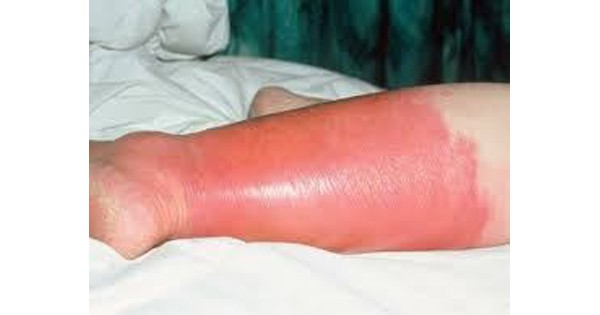
ERYSIPELAS
Erysipelas is caused by ‑
| A |
Staph aureus |
|
| B |
Staph albus |
|
| C |
Strep pyogenes |
|
| D |
Hemophilus |
Erysipelas is caused by ‑
| A |
Staph aureus |
|
| B |
Staph albus |
|
| C |
Strep pyogenes |
|
| D |
Hemophilus |
Ans. is ‘c’ i.e., Strep pyogenes
Erysipelas
– is due to S. pyogenes and
– is characterized by an abrupt onset of fiery-red swelling of the face or extremities.
the distinctive features of erysipelas are well-defined indurated margins, particularly along the nasolabial fold; rapid progression; and intense pain.
extension to deeper soft tissues is rare.
treatment with penicillin is effective
Following are true of erysipelas except
| A |
Streptococcal infection |
|
| B |
Contagious and infectious |
|
| C |
Margins are raised |
|
| D |
All |
Following are true of erysipelas except
| A |
Streptococcal infection |
|
| B |
Contagious and infectious |
|
| C |
Margins are raised |
|
| D |
All |
Ans. is ‘b’ i.e. Contagious and infectious
Erysipelas i, io! to S. pyogens and is characterized by an abrupt onset of fiery-red swelling of the face or extremities’
The distinctive features
Erysipelas are well-defined indurated margins, particularly along the masolabial fold; rapid Progression; and intense Pain.
Flaccid bullae may develof during the second or third day of illness, but extension to deeper soft tissues is rare’
The skin often has a peau d’orange texture.
The lesion typically develops over a few hours and is associated with fever and chills.
Erysipelas tends to occur on the malar area ofthe face (often with extension over the bridge ofthe nose to the contralateral malar region) and the lower extremities