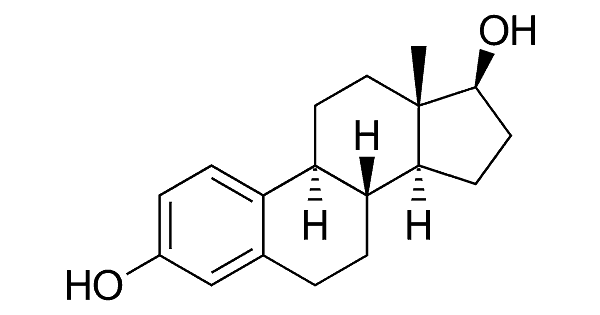
ESTROGEN
Failure of bleeding after withdrawal of oestrogen indicates :
| A |
Uterine factor |
|
| B |
Ovarian factors |
|
| C |
Pituitary factor |
|
| D |
Hypothalamic factor |
Failure of bleeding after withdrawal of oestrogen indicates :
| A |
Uterine factor |
|
| B |
Ovarian factors |
|
| C |
Pituitary factor |
|
| D |
Hypothalamic factor |
Uterine factor
Estrogen replacement for post — menopausal symptoms causes an increase in :
| A |
LDL |
|
| B |
Cholesterol |
|
| C |
VLDL |
|
| D |
Triglycerides |
Estrogen replacement for post — menopausal symptoms causes an increase in :
| A |
LDL |
|
| B |
Cholesterol |
|
| C |
VLDL |
|
| D |
Triglycerides |
Ans. is d i.e Triglycerides
Estrogen causes : — plasma LDL
— T plasma HDL
— T Triglycerides
- It also increases blood coagulability by inducing formation of clotting factors
- Estrogen increases lithogenesity of bile.
Estrogen administration in a menopausal woman increases the
| A |
Gonadotrophin secretion |
|
| B |
LDL — cholesterol |
|
| C |
Bone mass |
|
| D |
Muscle mass |
Estrogen administration in a menopausal woman increases the
| A |
Gonadotrophin secretion |
|
| B |
LDL — cholesterol |
|
| C |
Bone mass |
|
| D |
Muscle mass |
Ans. is c i.e Bone mass
Before seeing any Reference for the Question let’s rule out some options.
- Estrogen administration will exert a negative feedback on gonadotropin secretion and decreases Gonadotropin secretion rather than increasing it (Option ‘a’ ruled out).
As I have already discussed in previous Question -Estrogen decreases LDL and not increases it (ruling out Option `b).
Now we are left with 2 options, Option ‘c’ i.e. Bone mass and Option ‘rile. Muscle mass.
- Estrogen given as hormone replacement therapy is most beneficial in preventing osteoporosis i.e it must be increasing bone mass.
So, Option ‘c’seems to be correct.
Now have a look what texts have to say :
Estrogen helps to maintain bone mass and skeletal integrity thereby protecting against osteoporosis.
Effect of estrogen on bones :
- Estrogen causes increased osteoblastic activity in the bones.
- It is important in maintaining bone mass primarily by retarding bone resorption. The major action of estrogen is directed at reducing the maturation and activity of osteoclasts, by modifying regulatory cytokine signals from osteoblasts.
- The action of estrogen and progesterone result in increased expression of bone matrix proteins such as osteonectin, osteocalcin, collagen and alkaline phosphatase.
Extra Edge :
An overveiw of osteoporosis
Risk factors for osteoporosis
|
Non modifiable |
Modifiable |
Associated Medical Conditions |
||||||||||||||||||
|
|
|
Diagnosis : Bone Mineral Density Measurement (BMD)
- Dual X-ray Absorptiometry (DXA) of hip and spine is the primary technique for BMD assessment.
- BMD is expressed as a T score, which is the number of standard deviations from the mean for a young healthy woman.
- A T score above —1 is considered normal, a value between —1 and —2.5 denotes osteopenia and a score below —2.5 indicates osteoporosis.
- Evaluation of BMD by DXA is recommended for all women aged 65 and older, regardless of risk factors and for younger postmenopausal women with 1 or more risk factors.
Options for osteoporosis prevention and treatment
BisphosphonatesO
Alendronate : 35 – 70 mg/week
Risedronate : 35 mg/week
lbandronate : 150 mg/month
- Additional potential benefits : none
- Potential risks : esophageal ulcers
- Side effects : gastrointestinal distress, arthralgia / myalgia
Hormone therapy
Estrogen° or estrogen / progestin therapy°
- Additional potential benefits : treatment of vasomotor symptoms and urogenital atrophy
- Potential risk : breast cancer, gallbladder disease, venous thromboembolic events, cardiovascular disease, stroke.
- Side effects : vaginal bleeding, breast tenderness
Selective estrogen° receptor modulators (SERMSP
Raloxifene° : 60 mg/day
- Additional potential benefits : reduced risk of breast cancer
- Potential risks : venous thromboembolic events
- Side effects : Vasomotor symptoms, leg cramp
- Calcitonin° : 200 IU/day intranasally or 100 IU/day subcutaneously or intramuscularly
- Additional potential benefits : non
- Potential risks : none
- Side effects : rhinitis, back pain Tariparatide° : 20 mg/day subcutaneously
- Additional potential benefits : none
- Potential risks : osteosarcoma after long – term use in rodents, hypercalcemia
- Side effects : leg cramps
Oestrogen causes all except :
| A |
Weight gain |
|
| B |
Fluid and water |
|
| C |
Disappearance of comedones |
|
| D |
None |
Oestrogen causes all except :
| A |
Weight gain |
|
| B |
Fluid and water |
|
| C |
Disappearance of comedones |
|
| D |
None |
None
Post menopausal estrogen production is due to :
| A |
Peripheral aromatization of androstenedione |
|
| B |
Adrenal – Direct production |
|
| C |
Ovarian tumour |
|
| D |
Ovary testosterone secretion |
Post menopausal estrogen production is due to :
| A |
Peripheral aromatization of androstenedione |
|
| B |
Adrenal – Direct production |
|
| C |
Ovarian tumour |
|
| D |
Ovary testosterone secretion |
Ans. is a i.e. Peripheral aromatization of androstenedione
- In menopause estrogen levels decrease by 66%.
- Main source of estrogen production postmenopausaly is by peripheral aromatization of androstenedione.
- Main estrogen after menopause – oestrone.
Also know : • Main estrogen during reproductive year is oestradiol.°
- Main estrogen in pregnancy is oestriol.°
| A |
Secretory function on endometrium |
|
| B |
Synthetic function on endometrium |
|
| C |
Causes secondary sexual characters in female |
|
| D |
Breast enlargement during puberty |
| A |
Secretory function on endometrium |
|
| B |
Synthetic function on endometrium |
|
| C |
Causes secondary sexual characters in female |
|
| D |
Breast enlargement during puberty |
Secretory function on endometrium
REF: Ganong’s 22ed chapter 23
|
Organ |
Estrogen |
Progesterone |
|
Vagina |
Epithelium becomes cornified |
A thick mucus is secreted, and the epithelium proliferates and becomes infiltrated with leukocytes |
|
Fallopian tubes |
Increase the motility of the uterine tubes |
|
|
Ovary |
Follicular or preovulatory |
Luteal |
|
Endometrium |
Proliferative |
Secretory, It also decreases the number of estrogen receptors in the endometrium and increases the rate of conversion of 17 -estradiol to less active estrogens. |
|
Body of uterus |
Increase the amount of uterine muscle and its content of contractile proteins |
Anti-estrogenic effect on the myometrial cells, decreasing their excitability, their sensitivity to oxytocin, and their spontaneous electrical activity while increasing their membrane potential. |
| Cervix | Mucus thinner and more alkaline | Mucus thick, tenacious, and cellular |
| Breast | Proliferation of mammary ducts | Growth of lobules and alveoli |
| A |
Just before menopause |
|
| B |
At puberty |
|
| C |
At menstruation |
|
| D |
Before ovulation |
| A |
Just before menopause |
|
| B |
At puberty |
|
| C |
At menstruation |
|
| D |
Before ovulation |
Before ovulation REF: Ganong’s 22nd ed p. 24
Post menopausal estradiol levels: 35 pg / L
|
Reference ranges for serum estradiol |
||||
|
Patient type |
Lower limit |
Upper limit |
Unit |
|
|
Adult male |
50 |
200 |
pmol/L |
|
|
|
14 |
55 |
pg/mL |
|
|
Adult female (follicular |
70 |
500 |
pmol/L |
|
|
phase, day 5) |
|
|||
|
110 |
220 |
|||
|
|
19 |
140 |
pg/mL |
|
|
|
3 |
60 |
|
|
|
Adult female (preovulatory peak) |
400 |
1500 |
pmol/L |
|
|
110 |
410 |
pg/mL |
||
|
Adult female |
70 |
600 |
pmol/L |
|
|
(luteal phase) |
||||
|
19 |
160 |
pg/mL |
||
|
Adult female – free |
0.5 |
9 |
pg/mL |
|
|
(not protein bound) |
||||
|
1.7 |
33 |
pmol/L |
||
|
Post-menopausal female |
N/A |
< 130 |
pmol/L |
|
|
|
N/A |
< 35 |
pg/mL |
|
| A | Desmolase | |
| B | Isomerase | |
| C | Aromatase | |
| D | Hydroxylase |
| A | Desmolase | |
| B | Isomerase | |
| C | Aromatase | |
| D | Hydroxylase |
Aromatase
Effects of estrogen are all of the following, except:
| A |
Reduces HDL |
|
| B |
Reduces LDL |
|
| C |
Increases Triglycerides |
|
| D |
Increases HDL |
Effects of estrogen are all of the following, except:
| A |
Reduces HDL |
|
| B |
Reduces LDL |
|
| C |
Increases Triglycerides |
|
| D |
Increases HDL |
Estrogens increase HDL cholesterol.
Ref: KDT 5th Edition, Pages 274-9; KDT 6th Edition, Page 229; Harrison’s Principles of Internal Medicine, 16th Edition, Chapter 30; Novak’s Textbook of Gynecology, 14th Edition, Pages 272-73
All the following are the effects of oestrogen, EXCEPT:
| A |
Beneficial effect on cognition |
|
| B |
Reduced osteoclastic activity |
|
| C |
Increased osteoblastic activity |
|
| D |
Increased protein C and S levels |
All the following are the effects of oestrogen, EXCEPT:
| A |
Beneficial effect on cognition |
|
| B |
Reduced osteoclastic activity |
|
| C |
Increased osteoblastic activity |
|
| D |
Increased protein C and S levels |
The effects of oestrogen on the skeletal system includes:
Ref: Essentials of Gynaecology by Lakshmi Seshadri, Edition 1, page – 44
All are true about estrogen, EXCEPT:
| A |
Causes cholestasis |
|
| B |
Used in treatment of gynacomastia |
|
| C |
Used in HRT |
|
| D |
Increased risk of breast cancer |
All are true about estrogen, EXCEPT:
| A |
Causes cholestasis |
|
| B |
Used in treatment of gynacomastia |
|
| C |
Used in HRT |
|
| D |
Increased risk of breast cancer |
They promote the development of female secondary sexual characteristics, such as breast development.
So it is not used in treatment of gynaecomastia.
Estrogen and other hormones are given to postmenopausal women as a part of hormone replacement therapy (HRT) in order to prevent osteoporosis as well as treat the symptoms of menopause.
About 80% of breast cancers rely on supplies of the hormone estrogen to grow: they are known as hormone-sensitive or hormone-receptor-positive cancers.
Suppression of production of estrogen in the body is a treatment for these cancers.
Estrogens cause intrahepatic cholestasis by altering the composition of the lipid membrane and inhibiting the rate of secretion of bile into the canaliculi.
| A |
Gonadotrophin secretion |
|
| B |
LDL-cholesterol |
|
| C |
Bone mass |
|
| D |
Muscle mass |
| A |
Gonadotrophin secretion |
|
| B |
LDL-cholesterol |
|
| C |
Bone mass |
|
| D |
Muscle mass |
The success of estrogen and estrogen-like drugs in combating osteoporosis in postmenopausal women may indicate that estrogen:
| A |
Stimulates osteoclastic activity |
|
| B |
Inhibits osteoclastic activity |
|
| C |
Inhibits osteoblastic activity |
|
| D |
Inhibits recalcification during bone turnover |
The success of estrogen and estrogen-like drugs in combating osteoporosis in postmenopausal women may indicate that estrogen:
| A |
Stimulates osteoclastic activity |
|
| B |
Inhibits osteoclastic activity |
|
| C |
Inhibits osteoblastic activity |
|
| D |
Inhibits recalcification during bone turnover |
Estrogens directly regulate osteoblasts and increase the synthesis of type I collagen, osteocalcin, osteopontin, osteonectin, alkaline phosphatase, and other markers of differentiated osteoblasts.
Estrogens also increase osteocyte survival by inhibiting apoptosis.
However, the major effect of estrogens is to decrease the number and activity of osteoclasts.
Much of the action of estrogens on osteoclasts appears to be mediated by altering cytokine (both paracrine and autocrine) signals from osteoblasts.
Estrogens decrease osteoblast and stromal cell production of the osteoclast-stimulating cytokines interleukin (IL)-1, IL-6, and tumor necrosis factor (TNF)- and increase the production of IGF-1, bone morphogenic protein (BMP)-6, and transforming growth factor (TGF) Beta which are antiresorptive.
Ref: Levin E.R., Hammes S.R. (2011). Chapter 40. Estrogens and Progestins. In L.L. Brunton, B.A. Chabner, B.C. Knollmann (Eds), Goodman & Gilman’s The Pharmacological Basis of Therapeutics, 12e.
Which of the following is the main form of oestrogen secreted from the ovary?
| A |
Estradiol |
|
| B |
Estrone |
|
| C |
Estriol |
|
| D |
All of the above |
Which of the following is the main form of oestrogen secreted from the ovary?
| A |
Estradiol |
|
| B |
Estrone |
|
| C |
Estriol |
|
| D |
All of the above |
The major estrogens produced by women are estradiol (estradiol-17, E2), estrone (E1), and estriol (E3).
Estradiol is the major secretory product of the ovary.
Although some estrone is produced in the ovary, most estrone and estriol are formed in the liver from estradiol or in peripheral tissues from androstenedione and other androgens.
The amount of estrogen in low dose oral contraceptive pills is:
| A |
30 micrograms |
|
| B |
40 micrograms |
|
| C |
50 micrograms |
|
| D |
20 micrograms |
The amount of estrogen in low dose oral contraceptive pills is:
| A |
30 micrograms |
|
| B |
40 micrograms |
|
| C |
50 micrograms |
|
| D |
20 micrograms |
Over time, the estrogen and progestin contents of COCs have been reduced remarkably to minimize hormone-related adverse effects.
Currently, the lowest acceptable dose is limited by their ability to prevent pregnancy and unacceptable breakthrough bleeding. Although daily estrogen content varies from 20 to 50 g of ethinyl estradiol, most contain 35 µg or less.
Low-dose COCs usually contains 20 µg ethinyl estradiol.
Which of the following enzyme is associated with the conversion of androgen to oestrogen in a growing ovarian follicle is:
| A |
Aromatase |
|
| B |
5 alpha reductase |
|
| C |
Desmolase |
|
| D |
Isomerase |
Which of the following enzyme is associated with the conversion of androgen to oestrogen in a growing ovarian follicle is:
| A |
Aromatase |
|
| B |
5 alpha reductase |
|
| C |
Desmolase |
|
| D |
Isomerase |
Aromatase enzyme: In a normal ovary, LH acts on the theca interstitial stromal cells, whereas FSH acts on granulosa cells. In response to LH the thecal cells secretes androgen, and the produced androsendione is converted in the granulosa cells to estrogen by the action of aromatase enzyme.
Ref: Physiology By James N. Pasley 2nd Edition, Page 145 ; Androgens in health and disease By William J. Bremne Page 84 ; Padé approximation and its applications: Diagnosis and management of PCOS, Issue 765, By Luc Wuytack, Page 107
All of the following are functions of estrogen, EXCEPT:
| A |
Secretory function on endometrium |
|
| B |
Synthetic function on endometrium |
|
| C |
Causes secondary sexual characters in female |
|
| D |
Breast enlargement during puberty |
All of the following are functions of estrogen, EXCEPT:
| A |
Secretory function on endometrium |
|
| B |
Synthetic function on endometrium |
|
| C |
Causes secondary sexual characters in female |
|
| D |
Breast enlargement during puberty |
Estrogen is found to induce proliferation of endometrial glands and stroma including vascular endothelium. Progestin is responsible for the secretory differentiation in endometrial glands and decidual type changes in the stroma.
Other effects of estrogen are:
- Estrogen facilitate the growth of ovarian follicles and increase the motility of uterine tubes.
- Estrogen increases the growth of ducts in breasts and is responsible for breast enlargement at puberty in girls.
- It is also associated with the development of secondary sexual characters in females.
- It increases libido in humans, by exerting a direct effect on certain neurons in hypothalamus.
The enzyme associated with the conversion of androgen to oestrogen in the growing ovarian follicle is
| A |
Desmolase |
|
| B |
Isomerase |
|
| C |
Aromatase |
|
| D |
Hydroxylase |
The enzyme associated with the conversion of androgen to oestrogen in the growing ovarian follicle is
| A |
Desmolase |
|
| B |
Isomerase |
|
| C |
Aromatase |
|
| D |
Hydroxylase |
C i.e. Aromatase
Estrogen action on carbohydrate metabolism:
| A |
Increases uptake of glucose through increase in insulin sensitivity |
|
| B |
Glycolysis increases |
|
| C |
Increasing central adipose deposition |
|
| D |
Worsening of NIDDM |
Estrogen action on carbohydrate metabolism:
| A |
Increases uptake of glucose through increase in insulin sensitivity |
|
| B |
Glycolysis increases |
|
| C |
Increasing central adipose deposition |
|
| D |
Worsening of NIDDM |
B i.e. Glycolysis increases
Which of the following hormones is mainly responsible for skeletal maturation:
| A |
Testosterone |
|
| B |
Estrogen |
|
| C |
Growth hormone |
|
| D |
Testosterone/ estrogen ratio |
Which of the following hormones is mainly responsible for skeletal maturation:
| A |
Testosterone |
|
| B |
Estrogen |
|
| C |
Growth hormone |
|
| D |
Testosterone/ estrogen ratio |
B i.e. Estrogen
Growth spurt at puberty occurs because of androgen & estrogens, but estrogen ultimately terminate growth by causing the epiphyses to fuse to the long bones (epiphysial closure). Once the epiphyses have closed, linear growth ceases.
Patient with sexual precocity are apt to be dwarfed. On the other hand men who were castrated before puberty tend to be tall because their estrogen production is decreased & their epiphysis remain open.
These observation suggest that estrogen, rather than androgen, are responsible for bone maturation that ultimately leads to epiphyseal fusion and cessation of growthQ.
Major estrogen in normal adult women is –
| A |
Estradiol |
|
| B |
Estrone |
|
| C |
Estriol |
|
| D |
None of the above |
Major estrogen in normal adult women is –
| A |
Estradiol |
|
| B |
Estrone |
|
| C |
Estriol |
|
| D |
None of the above |
Ans. is ‘a’ i.e., Estradiol
o Estradiol is the major estrogen secreted by the ovary.
All of the following are natural estrogens except ‑
| A |
Estradial |
|
| B |
Ethinylestradiol |
|
| C |
Estriol |
|
| D |
Estrone |
All of the following are natural estrogens except ‑
| A |
Estradial |
|
| B |
Ethinylestradiol |
|
| C |
Estriol |
|
| D |
Estrone |
Ans. is ‘b’ i.e., Ethinylestradiol
o Estradial, estrone and estrial, all three are found in blood, but estradiol is the most potent estrogen.
Effects of estrogen are all of the following except ‑
| A |
Reduces HDL |
|
| B |
Reduces LDL |
|
| C |
Increases triglyceride |
|
| D |
Reduces bone resorption |
Effects of estrogen are all of the following except ‑
| A |
Reduces HDL |
|
| B |
Reduces LDL |
|
| C |
Increases triglyceride |
|
| D |
Reduces bone resorption |
Ans. is ‘a’ i.e., Reduces HDL
o Estrogens decrease LDL while increase HDL and triglyceride -4 atherosclerosis is rare before menopause.
All are true about estrogen EXCEPT-
| A |
Causes cholestasis |
|
| B |
Used in treatment of gynaecomastia |
|
| C |
Used in HRT |
|
| D |
Increased risk of breast cancer |
All are true about estrogen EXCEPT-
| A |
Causes cholestasis |
|
| B |
Used in treatment of gynaecomastia |
|
| C |
Used in HRT |
|
| D |
Increased risk of breast cancer |
Ans. is ‘b’ i.e., Used in treatment of gynacomastia
o Estrogen can cause gynaecomastia (not used in gynaecomastia), cholestasis and breast cancer.
o One of the most important use of estrogen is HRT in postmenopausal females.
Which of the following is a synthetic estrogen ?
| A |
Estrone |
|
| B |
Estriol |
|
| C |
Estradiol |
|
| D |
Diethylstibestrol |
Which of the following is a synthetic estrogen ?
| A |
Estrone |
|
| B |
Estriol |
|
| C |
Estradiol |
|
| D |
Diethylstibestrol |
Ans. is ‘d’ i.e., Diethylstibestrol
Synthetic progesterones
1. Progesterone derivatives —> Medroxyprogesterone, Megestrol, Dydrogesterone, Hydroxyprogesterone, Nomegestrol.
2. 1 9-Nortestosterone derivatives —> Norethindrone, Lynesternol, Allylesterone, Levonorgestrel, Desogestrel, Norgestimate, Gestodene.
Synthetic estrogens
- Steroidal —-> Ethinylestradiol, mestranol, tibolone.
- Nonsteroidal —-> Diethylstilbestrol, hexestrol, dienestrol
Uses of estrogen are all except –
| A |
Senile vaginitis |
|
| B |
Carcinoma prostate |
|
| C |
Breast cancer |
|
| D |
Delayed puberty |
Uses of estrogen are all except –
| A |
Senile vaginitis |
|
| B |
Carcinoma prostate |
|
| C |
Breast cancer |
|
| D |
Delayed puberty |
Ans. is ‘c’ i.e., Breast cancer
Antiestrogens (not estrogen) are used in breast cancer.
Thromboembolism is due to which component of OCP
| A |
Progesterone |
|
| B |
Estrogen |
|
| C |
Iron |
|
| D |
FSH |
Thromboembolism is due to which component of OCP
| A |
Progesterone |
|
| B |
Estrogen |
|
| C |
Iron |
|
| D |
FSH |
Ans. is ‘b’ i.e., Estrogen
o Estrogen is responsible for venous thromboembolism, i.e. leg vein and pulmonary thrombosis.
o Both estrogen and progesterone are responsible for arterial phenomena, i.e. coronary, and cerebral thrombosis —> MI and stroke
Ferning pattern of mucus under influence of:
March 2013
| A |
Progesterone |
|
| B |
Testosterone |
|
| C |
Estrogen |
|
| D |
Prostaglandins |
Ferning pattern of mucus under influence of:
March 2013
| A |
Progesterone |
|
| B |
Testosterone |
|
| C |
Estrogen |
|
| D |
Prostaglandins |
Ans. C i.e. Estrogen
Hormone responsible for ferning pattern of cervical mucus:
March 2007
| A |
Progesterone |
|
| B |
Estrogen |
|
| C |
LH |
|
| D |
Prolactin |
Hormone responsible for ferning pattern of cervical mucus:
March 2007
| A |
Progesterone |
|
| B |
Estrogen |
|
| C |
LH |
|
| D |
Prolactin |
Ans. B: Estrogen
An enzyme called plasmin contained in the endometrium tends to inhibit the blood from clotting.
Follicular Phase
Through the influence of a rise in (FSH), five to seven tertiary-stage ovarian follicles are recruited for entry into the next menstrual cycle.
One (or occasionally two) dominant follicles will continue to maturity and secrete increasing amounts of estradiol which initiate the formation of a new layer of endometrium in the uterus, histologically identified as the proliferative endometrium Ovulation
When the egg has matured, it secretes enough estradiol to trigger the acute release of (LH). In the average cycle this LH surge starts around cycle 12th day and may last 48 hours and leads to ovulation.
At the time of ovulation, the cervical mucus is thin and has the property of great elasticity and this is called spinnbarkeiti thread test under estrogenic activity. When viewed under the microscope, the mucus shows characteristic pattern of fern formation, which is due to presence of sodium chloride in the mucus secreted under estrogenic effect. Luteal phase
After ovulation, the residual follicle transforms into the corpus luteum. This corpus luteum will produce Progesterone in addition to estrogens for approximately the next 2 weeks.
Progesterone plays a vital role in converting the proliferative endometrium into a secretory lining receptive for implantation and supportive of the early pregnancy. It raises the body temperature.
Hormonal control
Gonadal
- Estradiol peaks twice, during follicular growth and during the luteal phase.
- Progesterone remains virtually absent prior to ovulation, but becomes critical in the luteal phase and during pregnancy. Many tests for ovulation check for the presence of progesterone.
After ovulation the corpus luteum which develops from the burst follicle and remains in the ovary secretes both estradiol and progesterone.
Hypothalamus and pituitary
These sex hormones come under the influence of the pituitary gland, and both FSH and LH play necessary roles:
- FSH stimulates immature follicles in the ovaries to grow.
- LH triggers ovulation.
The Gonadotropin releasing hormone of the hypothalamus controls the pituitary, yet both the pituitary and the hypothalamus receive feedback from the follicle.
Estrogen deficiency leads to:
September 2005
| A |
Postmenopausal bleeding |
|
| B |
Decreased risk of cardiovascular diseases |
|
| C |
Osteoporosis |
|
| D |
Dysmenorrhea |
Estrogen deficiency leads to:
September 2005
| A |
Postmenopausal bleeding |
|
| B |
Decreased risk of cardiovascular diseases |
|
| C |
Osteoporosis |
|
| D |
Dysmenorrhea |
Ans. C: Osteoporosis
Estrogen is cardioprotective in nature and hence deficiency of estrogen in postmenopausal phase increases the risk of cardiovascular diseases.
Osteoporosis: The most important risk factors for osteoporosis are :
Advanced age (in both men and women) and female sex;
Estrogen deficiency following menopause is correlated with a rapid reduction in bone mineral density, while in men a decrease in testosterone levels has a comparable (but less pronounced) effect
Aromatase produces estrogen from –
| A |
Progesterone |
|
| B |
Cortisol |
|
| C |
Aldosterone |
|
| D |
Androgen |
Aromatase produces estrogen from –
| A |
Progesterone |
|
| B |
Cortisol |
|
| C |
Aldosterone |
|
| D |
Androgen |
Ans. is ‘d’ i.e., Androgen
Estrogen Beta receptors are found on
| A |
Uterus |
|
| B |
Blood vessels |
|
| C |
Ovary |
|
| D |
Vagina |
Estrogen Beta receptors are found on
| A |
Uterus |
|
| B |
Blood vessels |
|
| C |
Ovary |
|
| D |
Vagina |
Ans. is ‘c’ i.e., Ovary
FSH and LH both are inhibited by ‑
| A |
Cortisol |
|
| B |
Aldosterone |
|
| C |
Estrogen |
|
| D |
Progesterone |
FSH and LH both are inhibited by ‑
| A |
Cortisol |
|
| B |
Aldosterone |
|
| C |
Estrogen |
|
| D |
Progesterone |
Ans. is ‘c’ i.e., Estrogen
Consistent with the phenomenon of negative feedback in which the secretion of the target hormone inhibits its trophic hormone, pregesterone inhibits LH and inhibin inhibits FSH.
- Estrogen, whose secretion is stimulated by both LH and FSH, inhibits both LH and FSH.
- Progesterone and estrogen act at both hypothalamic and pituitary levels while inhibin secreted by granulosa cells acts only on the pituitary.
- Under certain conditions, estrogen causes stimulation (positive feedback) rather than inhibition of LH, e.g., at ovulation.
Reason for hepatic involvement in oral contraceptives is ‑
| A |
Estrogen |
|
| B |
Progesterone |
|
| C |
Estrogen +Progesterone |
|
| D |
Mixed trace elements |
Reason for hepatic involvement in oral contraceptives is ‑
| A |
Estrogen |
|
| B |
Progesterone |
|
| C |
Estrogen +Progesterone |
|
| D |
Mixed trace elements |
Ans. is ‘a’ i.e., Estrogen
Hepatotoxicity with oral contraceptive pills
- While early formulations of OCPs were associated with frequent serum enzyme elevations, current formulations and hormonal replacement therapy have not been linked to ALT or alkaline phosphatase elevations at rates any higher than occur with placebo.
- Estrogens in OCPs can cause mild inhibition of bilirubin excretion leading to jaundice in patients with inherited forms of bilirubin metabolism such as the Dubin Johnson syndrome.
- It can induce a clinically apparent cholestatic liver injury which typically arises during the first few cycles of therapy, and rarely after the six months.
- It has also been linked to hepatic tumors, both benign and malignant.
Following pubertal change is not due to estrogen ‑
| A |
Vaginal cornification |
|
| B |
Pubic & axillary hair growth |
|
| C |
Cervical mucus production |
|
| D |
Menstruation |
Following pubertal change is not due to estrogen ‑
| A |
Vaginal cornification |
|
| B |
Pubic & axillary hair growth |
|
| C |
Cervical mucus production |
|
| D |
Menstruation |
Ans. is ‘d’ i.e., Menstruation
It is the lack of progesterone support (progesterone withdrawl) that causes mucosal shedding and bleeding during menstration.
Actions of estrogen
1. Sex organs
- Estrogen brings about pubertal changes in female .
- Growth of uterus, fallopian tube and vagina.
- Vaginal epithelium gets thickened, stratified and cornified.
- Estrogen induce watery cervical secretion.
- Proliferation of endometrium in preovulatory phase.
- Estrogen sensitizes the uterus to oxytocin.
2. Secondary sex character
- Estrogen produced at puberty causes growth of breast-proliferation of duct and stroma, accumulation of fat.
- Pubic and axillary hair appear.
- Feminine body contours and behaviour are influenced.
- Acne is common in girls at puberty → due to small amount of androgens produced simultaneously.
3. Metabolic effects
- Estrogens are anabolic
- Estrogens promotes fusion of epiphysis
- Maintain bone mass by reducing bone resorption.
- Promote positive calcium balance by inducing renal I a-hydroxylase.
- Cause salt and water retention.
- Estrogens decrease LDL while increase HDL and triglyceride → atherosclerosis is rare before menopause.
- Blood coagulability increases due to increased synthesis of factor II, VII, IX and X.
- Estrogens increase lithogenicity of bile by increasing cholestrol secretion and decreasing bile secretion.
True about estrogen production in menstural cycle‑
| A |
Only by theca cells |
|
| B |
Only by granulosa cells |
|
| C |
Both theca and granulosa cells |
|
| D |
None of the above |
True about estrogen production in menstural cycle‑
| A |
Only by theca cells |
|
| B |
Only by granulosa cells |
|
| C |
Both theca and granulosa cells |
|
| D |
None of the above |
Ans. is ‘c’ i.e., Both theca and granulosa cells
Ovarian follicle contains two types of cells in preovulatory phase :-
i) Granulosa cells :- Secrete mainly estrogen and very minimal amount of progesterone.
ii) Theca cells (interna & externa) Theca interna cells provide androgen and pregnenolone to granulosa cells to convert them into estrogen and progesterone respectively.
After ovulation, corpus luteum contain two types of cell :-
i) Granulosa luteal cells (formed by luteinization of granulosa cells) :- Produce mainly estrogen and minimal progesterone.
ii) Theca luteal cells (formed by luteinization of theca interna cells) :- Produce mainly progesterone.
False about estrogen action ‑
| A |
Stimulates secondery sex characters in female |
|
| B |
Stimulates osteoclasts |
|
| C |
Decreases LDL |
|
| D |
Increases blood coagulability |
False about estrogen action ‑
| A |
Stimulates secondery sex characters in female |
|
| B |
Stimulates osteoclasts |
|
| C |
Decreases LDL |
|
| D |
Increases blood coagulability |
Ans. is ‘b’ i.e., Stimulates osteoclasts
Major action of estrogen on bone is to inhibit osteoclastic bone resorption.
Estrogen blocks the action of IL-6, a potent stimulator of osteoclasts.
Estrogen also induces apoptosis of osteoclasts.
Other three options are correct.
Actions of estrogen have been explained in previous sessions.
Estrogen is secreted by ‑
| A |
Granulosa cells |
|
| B |
Theca luteal cells |
|
| C |
Theca interna |
|
| D |
Theca externa |
Estrogen is secreted by ‑
| A |
Granulosa cells |
|
| B |
Theca luteal cells |
|
| C |
Theca interna |
|
| D |
Theca externa |
Ans. is ‘a‘ i.e., Granulosa cells
Vascular condition shown due to in Photograph occur

| A |
Estrogens |
|
| B |
Steroids |
|
| C |
Androgens |
|
| D |
Progesterone |
Vascular condition shown due to in Photograph occur
| A |
Estrogens |
|
| B |
Steroids |
|
| C |
Androgens |
|
| D |
Progesterone |
Ans is Estrogens
(Condition shown: Spider naevi)
A spider angioma (also known as a nevus araneus, spider nevus, vascular spider, and spider telangiectasia is a type of telangiectasis (swollen blood vessels) found slightly beneath the skin surface, often containing a central red spot and reddish extensions which radiate outwards like a spider’s web. They are common and may be benign, presenting in around 10–15% of healthy adults and young children
A patient with chronic liver disease developed this condition on chest. It may be due to excess of the following hormone:

| A |
Estrogen |
|
| B |
Testosterone |
|
| C |
Aldosterone |
|
| D |
Hepatotoxin |
A patient with chronic liver disease developed this condition on chest. It may be due to excess of the following hormone:
| A |
Estrogen |
|
| B |
Testosterone |
|
| C |
Aldosterone |
|
| D |
Hepatotoxin |
Ans is Estrogen
All are required for conversion of progesterone to estrogen except ‑
| A |
Lyase |
|
| B |
11-hydroxylase |
|
| C |
Reductase |
|
| D |
Isomerase |
All are required for conversion of progesterone to estrogen except ‑
| A |
Lyase |
|
| B |
11-hydroxylase |
|
| C |
Reductase |
|
| D |
Isomerase |
Ans. is ‘b’ i.e., 11-hydroxylase
Which of the following acts on nuclear receptors‑
| A |
Glucocorticoids |
|
| B |
Progesterone |
|
| C |
Estrogen |
|
| D |
Mineralocorticoids |
Which of the following acts on nuclear receptors‑
| A |
Glucocorticoids |
|
| B |
Progesterone |
|
| C |
Estrogen |
|
| D |
Mineralocorticoids |
Ans. is ‘c’ i.e., Estrogen