MULTIPLE PREGNANCY-FEATURES AN DIAGNOSIS
| A | Dichorionic and monoamniotic in dizygotic (DZ) twins | |
| B | Dichorionic and monoamniotic in monozygotic (MZ) twins | |
| C | Monochorionic and monoamniotic in DZ twins | |
| D | Dichorionic and diamniotic in MZ twins |
| A | Dichorionic and monoamniotic in dizygotic (DZ) twins | |
| B | Dichorionic and monoamniotic in monozygotic (MZ) twins | |
| C | Monochorionic and monoamniotic in DZ twins | |
| D | Dichorionic and diamniotic in MZ twins |
(Gall, pp 1–3, 25–26.) Dizygotic twins of different sexes always have a dichorionic and diamniotic placenta, and monochorionic monozygotic twins are always of the same sex. The dichorionic placentas of dizygotic twins may be totally separated or intimately fused. Of monozygotic twins, 20 to 30% have dichorionic placentation, the result of separation of the blastocyst in the first 2 days after fertilization. The majority of monozygotic twins have a diamniotic and monochorionic placenta. The least common type of placentation in monozygotic twins is the monochorionic and monoamniotic placenta; its incidence is only about 1%.
An ultrasound performed on a women, shows twin pregnancy. Which of the following is a feature of dizygotic twins?
| A |
Separate amnion and same chorion |
|
| B |
Separate chorion and amnion |
|
| C |
Always different sex |
|
| D |
None of the above |
An ultrasound performed on a women, shows twin pregnancy. Which of the following is a feature of dizygotic twins?
| A |
Separate amnion and same chorion |
|
| B |
Separate chorion and amnion |
|
| C |
Always different sex |
|
| D |
None of the above |
In Dizygotic twins, each twin has separate amnion and chorion and the intervening membrane consists of 4 layers amnion, chorion, chorion and amnion.
Which among the following is the commonest twin presentation?
| A |
Vertex-brow |
|
| B |
Vertex-face |
|
| C |
Vertex-breech |
|
| D |
Cephalic-cephalic |
Which among the following is the commonest twin presentation?
| A |
Vertex-brow |
|
| B |
Vertex-face |
|
| C |
Vertex-breech |
|
| D |
Cephalic-cephalic |

Twin peak sign seen in :
| A |
Monochorionic diamniotic |
|
| B |
Dichorionic monoamniotic |
|
| C |
Conjoined twins |
|
| D |
Diamniotic dichorionic |
Twin peak sign seen in :
| A |
Monochorionic diamniotic |
|
| B |
Dichorionic monoamniotic |
|
| C |
Conjoined twins |
|
| D |
Diamniotic dichorionic |
Ans. is d i.e. Diamniotic dichorionic
In case of Twining true statement is:
| A |
After embryonic disc fusion, conjoint twin is formed. |
|
| B |
Incidence of monozygotic twin varies with race. |
|
| C |
Incidence of dizygotic twin is constant |
|
| D |
The frequency of monozygosity and dizygosity is same. |
In case of Twining true statement is:
| A |
After embryonic disc fusion, conjoint twin is formed. |
|
| B |
Incidence of monozygotic twin varies with race. |
|
| C |
Incidence of dizygotic twin is constant |
|
| D |
The frequency of monozygosity and dizygosity is same. |
After embryonic disc fusion, conjoint twin is formed.
According to Hellin’s law chances of twins in pregnancy are :
| A |
1 in 60 |
|
| B |
1 in 70 |
|
| C |
1 in 80 |
|
| D |
1 in 90 |
According to Hellin’s law chances of twins in pregnancy are :
| A |
1 in 60 |
|
| B |
1 in 70 |
|
| C |
1 in 80 |
|
| D |
1 in 90 |
Ans. is c i.e. 1 in 80
According to Hellin’s rule
The mathematical frequency of multiple pregnancy is :
- Twins 1 in 80
- Triplets 1 in (80)2
- Quadruplets 1 in (80)3 and so on
Also know :
- The incidence of twins is highest in Nigeria (1 in 20).°
- It is lowest in far East countries.°
- Incidence in India – 1 in 80.°
- Incidence of twins is increasing in India because of the use of ovulation inducing drugs like clomiphene, gonadotrophins.°
- The incidence of monozygotic twins is constant throughout the world – 1 in 250.
- The incidence of dizygotic twins changes and is responsible for world wide variation in incidence.
- The incidence of Dizygotic twins increases with :
– Increasing maternal age
– Increasing parity
Family history of twinning
– Ovulation induction with clomiphene citrate or gonadotrophins.
Correct statement about establishing the chorionicity in twin nreanancv is :
| A |
Same sex rule out dichorionicity |
|
| B |
Twin peak in dichorionicity |
|
| C |
Thick membrane is present in monochorionic |
|
| D |
Best detected after 16 weeks |
Correct statement about establishing the chorionicity in twin nreanancv is :
| A |
Same sex rule out dichorionicity |
|
| B |
Twin peak in dichorionicity |
|
| C |
Thick membrane is present in monochorionic |
|
| D |
Best detected after 16 weeks |
Ans. is b i.e. Twin peak in dichorionicity
“Chorionicity of the placenta is best diagnosed by ultrasound at 6 to 9 weeks of gestation. In dichoronic twins there is a thick septum between the chorionic sacs. It is best identified at the base of the membrane, where a triangular projection is seen. This is known as lambda or twin peak sign. Presence of lambda or twin peak sign indicates dichorionic placenta”
So it is clear that lambda / Twin peak sign clearly indicates dichorionic placenta & is hence the correct option ‘W. As far as other options are concerned.
Option a – Same sex rules out dichorionicity, this is incorrect because
Twins of opposite sex are almost always dizygotic dichorionic but same sex does not rule out dichorionicity. Option c – Thick membrane is present in monochrionic twins
This is also incorrect because monochorionic means there is a single chorion whereas dichorionic means there are 2 chorions so obviously dichorionic membrane will be thick.
“Monochorionic pregnancies have a dividing membrane that is so thin, it may not be seen until the second trimester. The membrane is generally less than 2mm thick & magnification reveals only 2 layers (of amnion)”
Option d – Chorionicity is best detected after 16 weeks –
Again this statement is incorrect because the best time to detect chrorionicity by USG is between 6 to 9 weeks.
Monochorionic monoamniotic twin occurs if division occurs :
| A |
Before 24 hours |
|
| B |
1-4 days |
|
| C |
4-8 days |
|
| D |
> 8 days |
Monochorionic monoamniotic twin occurs if division occurs :
| A |
Before 24 hours |
|
| B |
1-4 days |
|
| C |
4-8 days |
|
| D |
> 8 days |
> 8 days
If division of fertilized egg occurs at 4-8th day what kind of mono zygotic twin pregnancy will it give rise to :
| A |
Diamnionic dichroionic |
|
| B |
Diamnionic monochorionic |
|
| C |
Monoamnionic monochorionic |
|
| D |
Conjoined twins |
If division of fertilized egg occurs at 4-8th day what kind of mono zygotic twin pregnancy will it give rise to :
| A |
Diamnionic dichroionic |
|
| B |
Diamnionic monochorionic |
|
| C |
Monoamnionic monochorionic |
|
| D |
Conjoined twins |
Diamnionic monochorionic
Commonest twin presentation is :
| A |
Vertex-brow |
|
| B |
Vertex-face |
|
| C |
Vertex-breech |
|
| D |
Vertex-vertex |
Commonest twin presentation is :
| A |
Vertex-brow |
|
| B |
Vertex-face |
|
| C |
Vertex-breech |
|
| D |
Vertex-vertex |
Vertex-vertex
Identical twins may not have :
| A |
Same DNA finger |
|
| B |
Same finger print pattern |
|
| C |
Same blood group |
|
| D |
Same HLA system |
Identical twins may not have :
| A |
Same DNA finger |
|
| B |
Same finger print pattern |
|
| C |
Same blood group |
|
| D |
Same HLA system |
B i.e. Same finger print
Most common type of twin pregnancy is:
March 2012
| A |
Conjoined twins |
|
| B |
Monoamniotic monochorionic twins |
|
| C |
Diamniotic monochorionic twins |
|
| D |
Diamniotic dichorionic twin |
Most common type of twin pregnancy is:
March 2012
| A |
Conjoined twins |
|
| B |
Monoamniotic monochorionic twins |
|
| C |
Diamniotic monochorionic twins |
|
| D |
Diamniotic dichorionic twin |
Ans: C i.e. Diamniotic monochorionic twins
Frequency of twins
- Frequency of conjoined twins (
- Frequency of M/M is 3%
- Frequency of D/M is 66%
- Frequency of D/D is 30%
- MC cause of mortality in twins is: Prematurity.
Twin pregnancy, but due to two different men is called:
NEET 14
| A |
Superfetation |
|
| B |
Superfecundation |
|
| C |
Both of the above |
|
| D |
None |
Twin pregnancy, but due to two different men is called:
NEET 14
| A |
Superfetation |
|
| B |
Superfecundation |
|
| C |
Both of the above |
|
| D |
None |
Ans. Superfecundation
-
Fertilization of two ova discharged from the ovary at the same period of ovulationby two different acts of coitus committed at short intervals is superfecundation.
-
The term is also used to refer to instances of two different males fathering fraternal twins, though this is more accurately known as heteropaternal super-fecundation.
-
Medicolegal Aspect: Gross variations may occur in the complexion and features of the two babies and features of the two babies and may give rise to the dought of adultery and infidelity.
True about fraternal twins are:
UP 11
| A |
Dizygotic twins |
|
| B |
Comes from single egg |
|
| C |
Two eggs fertilized at different period of gestation |
|
| D |
Unrelated by birth |
True about fraternal twins are:
UP 11
| A |
Dizygotic twins |
|
| B |
Comes from single egg |
|
| C |
Two eggs fertilized at different period of gestation |
|
| D |
Unrelated by birth |
Ans. Comes from single egg
Imaging procedure as shown in the photograph below in twins is used for ?
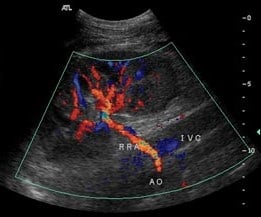
| A |
Twin to twin transfusion. |
|
| B |
Conjoined twin. |
|
| C |
Diagnosis of twins. |
|
| D |
All of the above. |
Imaging procedure as shown in the photograph below in twins is used for ?
| A |
Twin to twin transfusion. |
|
| B |
Conjoined twin. |
|
| C |
Diagnosis of twins. |
|
| D |
All of the above. |
|
|||||||
Twin pregnancy, but due to two different men cause is ‑
| A |
Superfactation |
|
| B |
Superfecundation |
|
| C |
Both of the above |
|
| D |
Not a realistic situation |
Twin pregnancy, but due to two different men cause is ‑
| A |
Superfactation |
|
| B |
Superfecundation |
|
| C |
Both of the above |
|
| D |
Not a realistic situation |
Ans. is ‘c’ i.e., Both of the above
- Superfecundation : Two ova are released in the same cycle get fertilized, either during the same act of coitus or during the separate acts. There is a possibility of the twin having two fathers.
- Superfaetation : (i) During the continuation of development of fetus, another ova released in a subsequent cycle get fertilized and starts developing as a second fetus. This can result in (a) Twin having two fathers, (b) Two children being born together with different stages of development, (c) Female may deliver twice within 1-3 months