
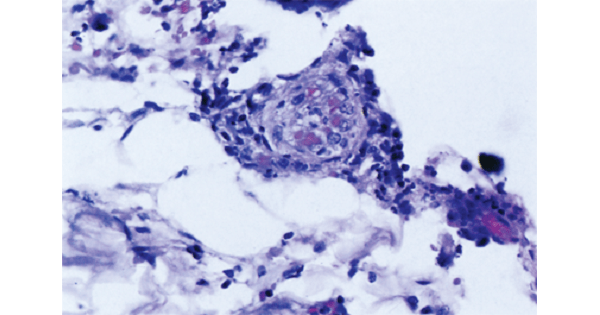
Rickettsiae
| A |
Rickettsia ricketsiae |
|
| B | Rickettsia akari | |
| C |
R. typhi |
|
| D | Rickettsia coonri |
| A |
Rickettsia ricketsiae |
|
| B | Rickettsia akari | |
| C |
R. typhi |
|
| D | Rickettsia coonri |
Rickettsia akari REF: Park 20th edition page 262 table 1
RICKETTSIAL DISEASE:
|
Disease |
Rickettsial agent |
Insect vector |
Mammalian reservoir |
|
Typhus group |
|
|
|
|
Epidemic typhus |
R. prowazekii |
Louse |
Human |
|
Murine (Endemic)typhus |
R. typhi |
Rat flea |
Rodent |
|
Scrub typhus |
R. tsutsugamushi |
Mite’ |
Rodent |
|
Spotted fever group |
|
|
|
|
Indian tick typhus |
R. conorii |
Tick* |
Rodent , Dogs |
|
Rocky mountain spotted fever |
R. rickettsii |
Tick* |
Rodent , Dogs |
|
Rickettsial pox |
R. akari |
Mite* |
Mice |
|
Others |
|
|
|
|
Q fever |
C. burnetii |
Nil |
Cattle, sheep, goat |
|
Trench fever |
Rochalemaea Quintana |
Louse |
Human |
| A | Epidemic typhus | |
| B | Endemic typhus | |
| C | Scrub typhus | |
| D | Q fever |
| A | Epidemic typhus | |
| B | Endemic typhus | |
| C | Scrub typhus | |
| D | Q fever |
Scrub typhus
An army jawan posted in a remote forest area had fever of 104F and headache. On examination he had an erythematous lesion of about 1 cm on the leg surrounded by small vesicles, along with generalized lymphadenopathy. His blood sample is collected to perform serology for the diagnosis of Rickettsial disease. Which one of the following results in Weil-felix reaction will be helpful in diagnosing this condition?
| A |
High OX-2 |
|
| B |
High OX-19 |
|
| C |
High OX-K |
|
| D |
High OX-19 and OX-2 |
An army jawan posted in a remote forest area had fever of 104F and headache. On examination he had an erythematous lesion of about 1 cm on the leg surrounded by small vesicles, along with generalized lymphadenopathy. His blood sample is collected to perform serology for the diagnosis of Rickettsial disease. Which one of the following results in Weil-felix reaction will be helpful in diagnosing this condition?
| A |
High OX-2 |
|
| B |
High OX-19 |
|
| C |
High OX-K |
|
| D |
High OX-19 and OX-2 |
- Sera from endemic and epidemic typhus agglutinate OX 19 and sometimes OX2
- In tick borne spotted fever both OX 19 and OX2 are agglutinated
- In scrub typhus only OX K agglutinins are only found. This test is negative in rickettsial pox, trench fever and Q fever
A patient complained of chills and fever following a louse bite 2 weeks before. He had rashes all over the body and was delirious at the time of presentation to the hospital and subsequently went to coma. A provisional diagnosis of vasculitis due to Rickettsial infection was made. Which one of the following can be causative agent:
| A |
Rickettsia typhi |
|
| B |
Rickettsia ricjettsiae |
|
| C |
Rickettsia prowazeki |
|
| D |
Rickettsia akarai |
A patient complained of chills and fever following a louse bite 2 weeks before. He had rashes all over the body and was delirious at the time of presentation to the hospital and subsequently went to coma. A provisional diagnosis of vasculitis due to Rickettsial infection was made. Which one of the following can be causative agent:
| A |
Rickettsia typhi |
|
| B |
Rickettsia ricjettsiae |
|
| C |
Rickettsia prowazeki |
|
| D |
Rickettsia akarai |
Amongst the options provided ‘Louse’ is the insect vector only for Rickettsia prowazekii.
Ref: Jawetz, Melnick and Adelberg’s Medical Microbiology, 19th Edition, Page 295; Textbook of Microbiology By Ananthanarayan, 6th Edition, Page 414
Rickettsial pox is transmitted by a house mice mite. The symtoms similar to chicken pox is caused by which of the following?
| A |
Rickettsia ricketsiae |
|
| B |
Rickettsia akari |
|
| C |
R. typhi |
|
| D |
Rickettsia conori |
Rickettsial pox is transmitted by a house mice mite. The symtoms similar to chicken pox is caused by which of the following?
| A |
Rickettsia ricketsiae |
|
| B |
Rickettsia akari |
|
| C |
R. typhi |
|
| D |
Rickettsia conori |
Rickettsial pox, caused by Rickettsia akari, is transmitted to humans by the house mouse mite Liponyssoides sanguineus.
It is also known as vesicular rickettsiosis, a disease similar to chicken pox.
The disorder begins with the bite of an infected mite, which results in a black eschar. The classic triad of rickettsialpox consists of fever, eschar, and rash. It is endemic in US. It is self-limited over 7-10 days.
Rickettsia rickettsia is the cause of the tick-borne Rocky Mountain spotted fever.
R. typhi is the flea-borne cause of endemic typhus.
Rickettsia conori causes Mediterranean spotted fever, also known as African tick typhus.
A patient presented to you with fever, headache, rash and eschar. You suspect rickettsial disease. Which of the following is the LEAST likely disease in this case?
| A |
Indian tick typhus |
|
| B |
Rickettsial pox |
|
| C |
Scrub typhus |
|
| D |
Endemic typhus |
A patient presented to you with fever, headache, rash and eschar. You suspect rickettsial disease. Which of the following is the LEAST likely disease in this case?
| A |
Indian tick typhus |
|
| B |
Rickettsial pox |
|
| C |
Scrub typhus |
|
| D |
Endemic typhus |
Rash is seen in
All are true about Rickettsia except ‑
| A |
obligate intracellular |
|
| B |
Gram +ve bacillus |
|
| C |
Arthropods are vector |
|
| D |
Weil felix test is diagnostic |
All are true about Rickettsia except ‑
| A |
obligate intracellular |
|
| B |
Gram +ve bacillus |
|
| C |
Arthropods are vector |
|
| D |
Weil felix test is diagnostic |
Ans. is ‘b’ i.e., Gram +ve bacillus
Rickettsiae are
- Gram negative
- Pleomorphic coccobacilli
- Obligate intracellular organisms
- Non motile
- Non capsulated
- Stain bluish purple with Giemsa and Castaneda stains
- Stain deep red with Machiavella and Gimenez stains
About other options
. Rickettsiae are transmitted to humans by arthropod vectors through their bite or feces
. Serological diagnosis of Rickettsial infection may be done by
. Heterophile Weil felix reaction or
. Specific tests using Rickettsial antigens.
Which rickettesiae are able to grow in cell free media‑
| A |
R. Quintana |
|
| B |
R. Rickettsii |
|
| C |
R. Typhi |
|
| D |
R. Tsutsugamushi |
Which rickettesiae are able to grow in cell free media‑
| A |
R. Quintana |
|
| B |
R. Rickettsii |
|
| C |
R. Typhi |
|
| D |
R. Tsutsugamushi |
Ans. is ‘a’ i.e., R. Quintana
. Rickettisiae are obligate intracelluar organisms. So they cannot grow in cell free medium. But, there is one exception to this rule, R. Quintana which is not an intracellular parasite, so can grow in cell free media.
The primary site of multiplication of rickettsia! organisms is in the ‑
| A |
Parenchymal cells of the liver |
|
| B |
Endothelial cells of small vessels |
|
| C |
Media of arteries |
|
| D |
Adventitia of all blood vessels |
The primary site of multiplication of rickettsia! organisms is in the ‑
| A |
Parenchymal cells of the liver |
|
| B |
Endothelial cells of small vessels |
|
| C |
Media of arteries |
|
| D |
Adventitia of all blood vessels |
Ans. is ‘b’ i.e., Endothelial cells of small vessels
Pathogenicity
- On entry into the human body, the rickettsiae multiply locally and enter the blood. They become localized chiefly in vascular endothelial cells, which enlarge, degenerate and cause thrombus formation, with partial or complete occlusion of the vascular lumen.
. The overall pathological features of the rickettsia! diseases are due to the damage of vascular endothelium.
An army jawan posted in remote forest area had fever and headache. His fever was 104°F and pulse was 70 per min. He had an erythematous lesion of about 1 cm on the leg surrounded by small vesicles, along with generalized lymphadenopathy at the time of presentation to the referral hospital. His blood sample was collected to perform serology for the diagnosis of Rickettsial disease. Which one of the following results in Weil-felix reaction will be diagnostic in this clinical setting –
| A |
High OX – 2 |
|
| B |
High OX – 19 |
|
| C |
High OX – K |
|
| D |
High OX – 19 and OX – 2 |
An army jawan posted in remote forest area had fever and headache. His fever was 104°F and pulse was 70 per min. He had an erythematous lesion of about 1 cm on the leg surrounded by small vesicles, along with generalized lymphadenopathy at the time of presentation to the referral hospital. His blood sample was collected to perform serology for the diagnosis of Rickettsial disease. Which one of the following results in Weil-felix reaction will be diagnostic in this clinical setting –
| A |
High OX – 2 |
|
| B |
High OX – 19 |
|
| C |
High OX – K |
|
| D |
High OX – 19 and OX – 2 |
Ans. is ‘c’ i.e., High OX – K
. Fever, headache, erythmatous lesion along with generalized lymphadenopathy are suggestive of scrub typhus.
. In scrub typhus, Weil – Felix reaction is strongly positive with the proteus strain OX – K.
Note —> In this question the key word is lymphadenopathy. Amongst the typhus group, lymphadenopathy is seen only in scrub typhus.
Rickettsiae –
| A |
Multiply only within living cell |
|
| B |
Produce typhus fever of epidemic type only |
|
| C |
Transmitted by athropod vectors |
|
| D |
a and c |
Rickettsiae –
| A |
Multiply only within living cell |
|
| B |
Produce typhus fever of epidemic type only |
|
| C |
Transmitted by athropod vectors |
|
| D |
a and c |
Ans. is ‘a’ i.e., Multiply only within living cell; ‘c’ i.e., Transmitted by athropod vectors
Option ‘a’
. Rickettsiae are unable to grow in cell free media. Growth generally occurs in the cytoplasm of infected cells. (In case of spotted fever, growth may take place in the nucleus as well).
. Ricketsiae are cultivated in –
i) Yolk sac of developing chick embryo.
ii) Mouse fibroblast
di) Continous cell lines -4 HeLa, HEP-2, Detroid-6
iv) Tissue cultures are not satisfactory.
v) Guinea pigs and mice are useful for isolation.
Option ‘b’
. Rickettsiae produce typhus fever :
1) Epidemic typhus
2) Endemic typhus
3) Scrub typhus
Option ‘c’
. Rickettsiae are transmiteed to human by arthropod vectors (Except Q fever)
Which of the following is used for Rickettsia ‑
| A |
Weil-Felix reaction |
|
| B |
Rose-waler test |
|
| C |
Poul-Bunnel test |
|
| D |
VDRL |
Which of the following is used for Rickettsia ‑
| A |
Weil-Felix reaction |
|
| B |
Rose-waler test |
|
| C |
Poul-Bunnel test |
|
| D |
VDRL |
Ans. is ‘a’ i.e., Weil-Felix reaction
About rickettsiae, all are true except –
| A |
These are transmitted by arthropod vectors |
|
| B |
Eschar is not seen in RMSF |
|
| C |
Weil-Felix reaction may be diagnostic |
|
| D |
Cephalosporins are drugs of choice |
About rickettsiae, all are true except –
| A |
These are transmitted by arthropod vectors |
|
| B |
Eschar is not seen in RMSF |
|
| C |
Weil-Felix reaction may be diagnostic |
|
| D |
Cephalosporins are drugs of choice |
Ans. is ‘d’ i.e., Cephalosporins are drugs of choice
. Tetracyclines (e.g., doxycycline are DOCs).
A patient complained of chills and fever following a louse bite 2 weks before. He had rashes all over the body and was delirious at the time of presentation to the hospital and subsequently went into coma. A provisional diagnosis of vasculitis due to Rickettsial infection was made. Which one of the following can be causative agent. –
| A |
Rickettsia typhi |
|
| B |
Rickettsia rickettsiae |
|
| C |
Rickettsia prowazekii |
|
| D |
Rickettsia akari |
A patient complained of chills and fever following a louse bite 2 weks before. He had rashes all over the body and was delirious at the time of presentation to the hospital and subsequently went into coma. A provisional diagnosis of vasculitis due to Rickettsial infection was made. Which one of the following can be causative agent. –
| A |
Rickettsia typhi |
|
| B |
Rickettsia rickettsiae |
|
| C |
Rickettsia prowazekii |
|
| D |
Rickettsia akari |
Ans. is ‘c’ i.e., Rickettsia prowazeki
Weil felix reaction is heterphile antibodies reaction due sharing of Rickettsial antigen with
| A |
Shigella |
|
| B |
Proteus |
|
| C |
Chlamydia |
|
| D |
Mycoplasma |
Weil felix reaction is heterphile antibodies reaction due sharing of Rickettsial antigen with
| A |
Shigella |
|
| B |
Proteus |
|
| C |
Chlamydia |
|
| D |
Mycoplasma |
Ans. is ‘b’ i.e., Proteus
Weil felix reaction
- This reaction is an agglutination test in which sera are tested for agglutinins to 0 antigens of certain nonmotile proteus strains OX -19, OX – 2 and OX – K.
- The basis of the test is the sharing of an alkali – stable carbohydrate antigen by some rickettsiae and by certain strains of proteus, P. vulgaris OX – 19 and OX – 2 and P. mirabilis OX – K.
- The test is usually done as a tube agglutination, though rapid slide agglutination methods have been employed for screening
Rickettsial infections cause 30% mortality due to ‑
| A |
Endothelial injury |
|
| B |
Hemodynamic instability |
|
| C |
Endocarditis |
|
| D |
Renal failure |
Rickettsial infections cause 30% mortality due to ‑
| A |
Endothelial injury |
|
| B |
Hemodynamic instability |
|
| C |
Endocarditis |
|
| D |
Renal failure |
Ans. is ‘a’ i.e., Endothelial injury
Rickettsial infections are associated with a high morbidity and mortality.
The mortality rate can be as high as 20% of Rocky Mountain Spotted fever and 30% for epidemic typhus.
On entry into the human body, the rickettsiae multiply locally and enter the blood. They become localized chiefly in vascular endothelial cells, which enlarge, degenerate and cause thrombus formation, with partial or complete occlusion of the vascular lumen.
The overall pathological features of the rickettsial diseases are due to the damage of vascular endothelium.

