TYPE IV HYPERSENSITIVITY
Which of the following principally mediates delayed type hypersensitivity?
| A |
Cytotoxic T cells, TH1 cells, and macrophages |
|
| B |
IgE, basophils, and mast cells |
|
| C |
IgG and complement |
|
| D |
IgG, IgM, neutrophils, and macrophages |
Which of the following principally mediates delayed type hypersensitivity?
| A |
Cytotoxic T cells, TH1 cells, and macrophages |
|
| B |
IgE, basophils, and mast cells |
|
| C |
IgG and complement |
|
| D |
IgG, IgM, neutrophils, and macrophages |
Cytotoxic T lymphocytes, helper T1 lymphocytes, and macrophages mediate the delayed-type hypersensitivity reaction, which develops in response to viral, fungal, and intracellular bacterial antigens. Antibodies do not play a significant role in this type of response.
- IgE, basophils, and mast cells are involved in the production of type I hypersensitivity.
- IgG and complement is a mechanism of toxicity in type II cytotoxic hypersensitivity.
- IgG, IgM, neutrophils, and macrophages may be involved in types II or III hypersensitivities.
Delayed hypersensitivity reaction is mediated by ‑
| A |
B lymphocyte |
|
| B |
NK cell |
|
| C |
Mast cell |
|
| D |
T lymphocyte |
Delayed hypersensitivity reaction is mediated by ‑
| A |
B lymphocyte |
|
| B |
NK cell |
|
| C |
Mast cell |
|
| D |
T lymphocyte |
Ans. is ‘d’ i.e., T lymphocytes
Example of Type IV hypersensitivity is ‑
| A |
Serum sickness |
|
| B |
Granulomatous reaction |
|
| C |
Schwartzmann reaction |
|
| D |
Arthus reaction |
Example of Type IV hypersensitivity is ‑
| A |
Serum sickness |
|
| B |
Granulomatous reaction |
|
| C |
Schwartzmann reaction |
|
| D |
Arthus reaction |
Ans. is ‘b’ i.e., Granulomatous reaction
A 40 year old man has chronic cough with fever for several months. The chest radiograph reveals a diffuse reticulondular pattern. Microscopically on transbronchial biopsy there are focal areas of inflammation containing epitheloid cell granuloma, Langhans giant cells, and lymphocytes. These findings are typical for which of the following type of hypersensitivity immunologic responses ‑
| A |
Type I |
|
| B |
Type II |
|
| C |
Type III |
|
| D |
Type IV |
A 40 year old man has chronic cough with fever for several months. The chest radiograph reveals a diffuse reticulondular pattern. Microscopically on transbronchial biopsy there are focal areas of inflammation containing epitheloid cell granuloma, Langhans giant cells, and lymphocytes. These findings are typical for which of the following type of hypersensitivity immunologic responses ‑
| A |
Type I |
|
| B |
Type II |
|
| C |
Type III |
|
| D |
Type IV |
Ans. is ‘d’ i.e., Type IV
o Presence of epitheloid cell granuloma, Ianghans giant cells and lymphocytes is characteristic of chronic granulomatous inflammation
Type IV Hypersensitivity-
| A |
Farmer’s lung |
|
| B |
Contact hypersensitivity |
|
| C |
Immediate hypersensitivity |
|
| D |
Myasthenia gravis |
Type IV Hypersensitivity-
| A |
Farmer’s lung |
|
| B |
Contact hypersensitivity |
|
| C |
Immediate hypersensitivity |
|
| D |
Myasthenia gravis |
Ans. is ‘b’ i.e., Contact hypersensitivity
Delayed type of hypersensitivity is seen in following except –
| A |
Arthus phenomenon |
|
| B |
Contact dermatitis |
|
| C |
Tuberculin test |
|
| D |
Graft vs host reaction |
Delayed type of hypersensitivity is seen in following except –
| A |
Arthus phenomenon |
|
| B |
Contact dermatitis |
|
| C |
Tuberculin test |
|
| D |
Graft vs host reaction |
Ans. is ‘a’ i.e., Arthus Phenomenon
Cell mediated immune response is which type of hypersensitivity –
| A |
I |
|
| B |
II |
|
| C |
III |
|
| D |
IV |
Cell mediated immune response is which type of hypersensitivity –
| A |
I |
|
| B |
II |
|
| C |
III |
|
| D |
IV |
Ans. is `d’ i.e., IV
Granulomatous inflammation is which type of hypersensitivity?
| A |
Type I |
|
| B |
Type II |
|
| C |
Type III |
|
| D |
Type IV |
Granulomatous inflammation is which type of hypersensitivity?
| A |
Type I |
|
| B |
Type II |
|
| C |
Type III |
|
| D |
Type IV |
Ans. is ‘d’ i.e., Type IV
Which of the following is an example of type IV hypersensitivity:
| A |
Arthrus reaction |
|
| B |
Serum sickness |
|
| C |
Schwartzmann reaction |
|
| D |
Granulomatous reaction |
Which of the following is an example of type IV hypersensitivity:
| A |
Arthrus reaction |
|
| B |
Serum sickness |
|
| C |
Schwartzmann reaction |
|
| D |
Granulomatous reaction |
Answer is D (Granulomatous reaction):
Gramdomatous inflammation/Granuloma formation is typical cif reaction to poorly digestible agents elicited tuberculosis, leprosy, fungal infection etc. It is type IV hypersensitivityQ – Robbins
- Arthrus reaction and serum sickness are forms of type III hypersensitivity.Q
- Schwartzmann reaction is not an immune reaction at all. It is rather an alteration in factors affecting intravascular coagulation.
Frei test which type of hypersensitivity ‑
| A |
Type I |
|
| B |
Type II |
|
| C |
Type III |
|
| D |
Type IV |
Frei test which type of hypersensitivity ‑
| A |
Type I |
|
| B |
Type II |
|
| C |
Type III |
|
| D |
Type IV |
Ans. is ‘d’ i.e., Type IV
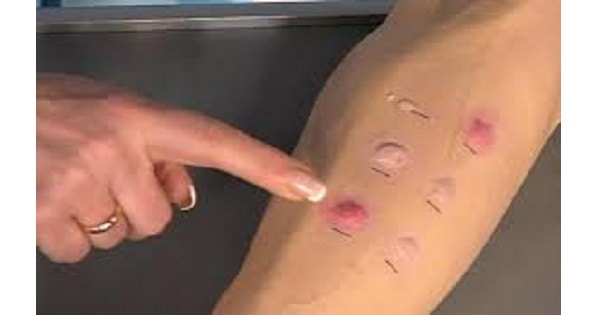
The test shown in the picture below is based on which hypersensitivity? 
| A |
Type 1. |
|
| B |
Type 2. |
|
| C |
Type 3. |
|
| D |
Type 4. |
The test shown in the picture below is based on which hypersensitivity?
| A |
Type 1. |
|
| B |
Type 2. |
|
| C |
Type 3. |
|
| D |
Type 4. |
The test shown in the picture above represents Mantoux test.
Following are the examples of type 4 hypersensitivity reactions :-
- Type 1 diabetes mellitus
- Hashimoto thyroiditis
- Crohn’s disease
- Multiple sclerosis
- Contact dermatitis
- Mantoux test.
A 25 year old male suffering from productive cough,fever ,night sweats and weight loss since 2 months.He undergone a skin test as shown in the image..This test is based on which hypersensitivity reaction? 
| A |
Type 1. |
|
| B |
Type 2. |
|
| C |
Type 3. |
|
| D |
Type 4. |
A 25 year old male suffering from productive cough,fever ,night sweats and weight loss since 2 months.He undergone a skin test as shown in the image..This test is based on which hypersensitivity reaction?
| A |
Type 1. |
|
| B |
Type 2. |
|
| C |
Type 3. |
|
| D |
Type 4. |
Ans:D.)Type 4
The test shown in the photograph above represents Mantoux test.
Hypersensitivity reaction
- Hypersensitivity is a set of undesirable reactions produced by the normal immune system, including allergies and autoimmunity.
Comparison of hypersensitivity types
| Type | Alternative names | Often mentioned disorders | Mediators |
|---|---|---|---|
| I | Allergy (immediate) |
|
|
| II | Cytotoxic, antibody-dependent |
|
|
| III | Immune complex disease |
|
|
| IV | Delayed-type hypersensitivity, cell-mediated immune memory response, antibody-independent |
|
|
| V | Autoimmune disease, receptor mediated |
|
|
A hypersensitivity reaction is shown in the image.From the following options,which option is an example of this type of reaction?

| A |
Rheumatoid Arthritis |
|
| B |
Grave’s Disease |
|
| C |
Angioedema |
|
| D |
Reaction against tumor cells |
A hypersensitivity reaction is shown in the image.From the following options,which option is an example of this type of reaction?
| A |
Rheumatoid Arthritis |
|
| B |
Grave’s Disease |
|
| C |
Angioedema |
|
| D |
Reaction against tumor cells |
Ans:D.)Reaction against tumor cells
Type IV hypersensitivtiy reaction is shown in the image.