

Vitamin A
Vitamin A is present in all of the following sources of diet, EXCEPT:
| A |
Sunflower seeds |
|
| B |
Egg |
|
| C |
Milk |
|
| D |
Tomato |
Vitamin A is present in all of the following sources of diet, EXCEPT:
| A |
Sunflower seeds |
|
| B |
Egg |
|
| C |
Milk |
|
| D |
Tomato |
Sunflower seeds are unusually rich in B complex vitamins. Sunflower seeds also contain a potent antioxidant team of selenium and vitamin E and are significantly deficient in vitamin A.
Which of the following statements regarding vitamin A is TRUE?
| A |
Vitamin A promotes maintenance of epithelial tissue |
|
| B |
Vitamin A is necessary for hearing but not for vision |
|
| C |
Vitamin A is synthesized in skin |
|
| D |
All vitamin A derivatives are safe to use during pregnancy |
Which of the following statements regarding vitamin A is TRUE?
| A |
Vitamin A promotes maintenance of epithelial tissue |
|
| B |
Vitamin A is necessary for hearing but not for vision |
|
| C |
Vitamin A is synthesized in skin |
|
| D |
All vitamin A derivatives are safe to use during pregnancy |
Vitamin A is essential for the normal differentiation of epithelial tissue as well as normal reproduction. Yellow and dark green vegetables as well as fruits are good sources of carotenoids, which serve as precursors of vitamin A.
However, egg yolk, butter, cream, and liver and kidneys are good sources of preformed vitamin A.
Vitamin A is necessary for vision, not hearing. The visual pigment rhodopsin is formed from the protein opsin and 11-cis-retinal.
Accutane causes birth defects of the face and brain if taken during the first trimester of pregnancy.
Vitamin A is not synthesized in the skin.
Vitamin D (derivatives of calciferol) can be synthesized in the skin under the influence of sunlight from 7-dehydrocholesterol, an intermediate in cholesterol synthesis.
Vitamin A is stored mainly as retinol esters in:
| A |
Kidney |
|
| B |
Muscle |
|
| C |
Liver |
|
| D |
Retina |
Vitamin A is stored mainly as retinol esters in:
| A |
Kidney |
|
| B |
Muscle |
|
| C |
Liver |
|
| D |
Retina |
C i.e. Liver

Which of the following combinations of biologically active molecules does vitamin A consists of
| A |
Retinol, retinal and retinoic acid |
|
| B |
Retinol, retinal and tetrahydrofolate |
|
| C |
Retinal, conjugase and retinoic acid |
|
| D |
PABA, retinal and retinaldehyde |
Which of the following combinations of biologically active molecules does vitamin A consists of
| A |
Retinol, retinal and retinoic acid |
|
| B |
Retinol, retinal and tetrahydrofolate |
|
| C |
Retinal, conjugase and retinoic acid |
|
| D |
PABA, retinal and retinaldehyde |
A i.e. Retinol, Retinal, and Retinoic acid
During the dark phase of visual cycle, which form of vitamin A combines with opsin to make Rhodopsin:
| A |
All trans-Retinaldehyde |
|
| B |
All trans-Retinol |
|
| C |
11-cis-Retinaldehyde |
|
| D |
11-cis-Retinol |
During the dark phase of visual cycle, which form of vitamin A combines with opsin to make Rhodopsin:
| A |
All trans-Retinaldehyde |
|
| B |
All trans-Retinol |
|
| C |
11-cis-Retinaldehyde |
|
| D |
11-cis-Retinol |
C i.e. 11-Cis – Retinalaldehyde
In the dark phase – 11-Cis- retinalQ exists with opsin. In the light phase – 11 trans – retinal exist with opsin.
Visual Cycle
- The photosensitive pigment in the rods is called rhodopsin or visual purple. It has a peak sensitivity to light at 505nm.
- Rhodopsin consists of 11-Cis retinal specifically bound to protein opsin.
- Regeneration of rhodopsin requires isomerization of all trans retinal back to 11-Cis retinal.
Trans retinal after being released from rhodopsin is isomerized to 11-Cis retinal which spontaneously combines with opsin to form rhodopsin thus completing the cycle.
- Similar reactions are responsible for color vision in the cone cells.
Anti infective vitamin is –
| A |
Vitamin B6 |
|
| B |
Vitamin A |
|
| C |
Vitamin D |
|
| D |
Vitamin C |
Anti infective vitamin is –
| A |
Vitamin B6 |
|
| B |
Vitamin A |
|
| C |
Vitamin D |
|
| D |
Vitamin C |
Ans. is ‘b’ i.e., Vitamin A
Functions of Vit A
o Vitamin A is essential for –
1.Normal vision
Retinol is necessory for functioning of retina.
Regeneration of rhodopsin during dark light is vit A dependent
vit A deficiency causes defective dark adaptation.
2. Anti-infective
Vitamin A is necessary for integrity of epithelial tissues that resist invasion by pathogens.
Vitamin A has some role in immune response.
Anticancer effect
Beta-carotene has antioxidant property —› by virtue of this action it reduces the incidence of lung, breast, oral, esophageal and bladder cancers.
Skeletal – growth
Vitamin A supports skeletal growth.
Vitamin A deficiency is characterized by-
| A |
Bitot spot |
|
| B |
Xerophthalmia |
|
| C |
Night blindness |
|
| D |
All |
Vitamin A deficiency is characterized by-
| A |
Bitot spot |
|
| B |
Xerophthalmia |
|
| C |
Night blindness |
|
| D |
All |
Ans. is ‘a’ i.e., Bitot spot; ‘b’ i.e., Xerophthalmia & ‘c’ i.e., Night blindness
o The most characteristic and specific signs of vitamin A deficiency are eye lesions.
o These develop before the age of 2 years.
o The term xerophthalmia comprises all the occular manifestations of vitamin A deficiency.
Xerophthalmia (Dry eye)
o It is a syndrome due to deficiency of vitamin A.
o It has following stages
1. Night blindness Earliest ocular symptom
2. Conjuctival xerosis Earliest ocular sign
3. Bitot’s spot
4. Corneal xerosis
Keratomalacia & corneal ulcers
Daily dose of vitamin A in a 6-12 months old child is –
| A |
500 microgram |
|
| B |
200 microgram |
|
| C |
300 microgram |
|
| D |
700 microgram |
Daily dose of vitamin A in a 6-12 months old child is –
| A |
500 microgram |
|
| B |
200 microgram |
|
| C |
300 microgram |
|
| D |
700 microgram |
Ans. is ‘c’ i.e., 300 microgram
Daily dose of vitamin in
o Infants 300-400 microgram
o Children 400-600 microgram
o Adolescents 750 microgram
The highest concentrations of Vitamin A is seen in –
| A |
Polar bear liver |
|
| B |
Cod liver oil |
|
| C |
Shark liver oil |
|
| D |
Papaya |
The highest concentrations of Vitamin A is seen in –
| A |
Polar bear liver |
|
| B |
Cod liver oil |
|
| C |
Shark liver oil |
|
| D |
Papaya |
Ans. is ‘b’ i.e., Codliver oil
Amongst the given options, cod liver oil has highest concentration.
‘Vitamin A requirement in infant is-
| A |
350 g |
|
| B |
600 g |
|
| C |
800 g |
|
| D |
1000 g |
‘Vitamin A requirement in infant is-
| A |
350 g |
|
| B |
600 g |
|
| C |
800 g |
|
| D |
1000 g |
Ans. is ‘a’ i.e., 350 g
The recommended daily requirement of vitamin A for pregnant woman is –
| A |
750 meg |
|
| B |
900 mg |
|
| C |
1200 mcg |
|
| D |
None |
The recommended daily requirement of vitamin A for pregnant woman is –
| A |
750 meg |
|
| B |
900 mg |
|
| C |
1200 mcg |
|
| D |
None |
Ans. is ‘None’
Vitamin ‘A’ requirment for a Pregnant woman is 800 mg/d.
All of the following are sources of vitamin A except:
| A |
Egg |
|
| B |
Milk |
|
| C |
Sunflower seeds |
|
| D |
Tomato |
All of the following are sources of vitamin A except:
| A |
Egg |
|
| B |
Milk |
|
| C |
Sunflower seeds |
|
| D |
Tomato |
Ans. is ‘c’ i.e., Sunflower seeds
Dose of vitamin A prophytaxis given in age group 16 years –
| A |
2000 iu |
|
| B |
20000 iu |
|
| C |
200000 iu |
|
| D |
100000 iu |
Dose of vitamin A prophytaxis given in age group 16 years –
| A |
2000 iu |
|
| B |
20000 iu |
|
| C |
200000 iu |
|
| D |
100000 iu |
Ans. is ‘c’ i.e., 200000 iu
Absorption of vitamin A can be enhanced by giving the child a diet rich in –
| A |
Fat |
|
| B |
Protein |
|
| C |
Minerals |
|
| D |
Carbohydrates |
Absorption of vitamin A can be enhanced by giving the child a diet rich in –
| A |
Fat |
|
| B |
Protein |
|
| C |
Minerals |
|
| D |
Carbohydrates |
Ans. is ‘a’ i.e., Fat
Note : Retinol and carotene are fat, soluble.
All of the following are true about prevention of vitamin A deficiency by supplements except:
| A |
Dose in children over 1 year is 2 lac IU orally |
|
| B |
Dose in infants less than 6 month (not being breast fed is 50 thousand IV orally) |
|
| C |
Dose in first trimester of pregnancy is 1 lac IU |
|
| D |
Under CSSM Programme first dose (1 lac IU) is given at 9 months of age along with measles |
All of the following are true about prevention of vitamin A deficiency by supplements except:
| A |
Dose in children over 1 year is 2 lac IU orally |
|
| B |
Dose in infants less than 6 month (not being breast fed is 50 thousand IV orally) |
|
| C |
Dose in first trimester of pregnancy is 1 lac IU |
|
| D |
Under CSSM Programme first dose (1 lac IU) is given at 9 months of age along with measles |
Ans. Dose in first trimester of pregnancy is 1 lac IU
Commonest cause of blindness in India:
| A |
Vitamin A deficiency |
|
| B |
Cataract |
|
| C |
Trauma |
|
| D |
Trachoma |
Commonest cause of blindness in India:
| A |
Vitamin A deficiency |
|
| B |
Cataract |
|
| C |
Trauma |
|
| D |
Trachoma |
Ans. Vitamin A deficiency
Following are seen in vitamin A deficiency EXCEPT:
March 2004
| A |
Nightblindness |
|
| B |
Follicular hyperkeratosis |
|
| C |
Growth retardation |
|
| D |
Polyneuritis |
Following are seen in vitamin A deficiency EXCEPT:
March 2004
| A |
Nightblindness |
|
| B |
Follicular hyperkeratosis |
|
| C |
Growth retardation |
|
| D |
Polyneuritis |
Ans. D i.e. Polyneuritis
Highest vitamin A content is seen in:
September 2004
| A |
Lemon |
|
| B |
Green leafy vegetables |
|
| C |
Tomato |
|
| D |
Ragi |
Highest vitamin A content is seen in:
September 2004
| A |
Lemon |
|
| B |
Green leafy vegetables |
|
| C |
Tomato |
|
| D |
Ragi |
Ans. B i.e. Green leafy vegetables
First dose of vitamin A should be given at:
September 2005
| A |
3 months |
|
| B |
6 months |
|
| C |
9 months |
|
| D |
12 months |
First dose of vitamin A should be given at:
September 2005
| A |
3 months |
|
| B |
6 months |
|
| C |
9 months |
|
| D |
12 months |
Ans. C: 9 months
National programme for prevention of nutritional blindness focuses on
- Promoting consumption of vitamin A rich foods by pregnant and lactating women and by children under 5 years of age.
- Administration of massive doses of vitamin A up to 5 years. First dose of 100,000 IU with measles vaccination at 9 months and subsequent doses of 200,000 IU each, every 6 months up to the age of 5 years should be given.
Fish liver oil is the richest source of:
September 2006
| A |
Vitamin K |
|
| B |
Vitamin E |
|
| C |
Vitamin D |
|
| D |
Vitamin A |
Fish liver oil is the richest source of:
September 2006
| A |
Vitamin K |
|
| B |
Vitamin E |
|
| C |
Vitamin D |
|
| D |
Vitamin A |
Ans. D: Vitamin A
Fish liver oil is the richest source of vitamin A, but they are used as nutritional supplements rather than as food sources.
Vitamin A prophylaxis is given to children every:
September 2007
| A |
3 months |
|
| B |
6 months |
|
| C |
12 months |
|
| D |
18 months |
Vitamin A prophylaxis is given to children every:
September 2007
| A |
3 months |
|
| B |
6 months |
|
| C |
12 months |
|
| D |
18 months |
Ans. B: 6 months
National programme for prevention of nutritional blindness focuses on
- Promoting consumption of vitamin A rich foods by pregnant and lactating women and by children under 5 years of age.
- Administration of massive doses of vitamin A up to 5 years. First dose of 100,000 IU with measles vaccination at 9 months and subsequent doses of 200,000 IU each, every 6 months up to the age of 5 years should be given.
Under National Programme for Prevention of Nutritional Blindness, a child in the age group of 6-11 months is given a single dose of vitamin A is:
March 2005
| A |
50,000 IU |
|
| B |
1,00,000 IU |
|
| C |
1,50,000 IU |
|
| D |
2,00,000 IU |
Under National Programme for Prevention of Nutritional Blindness, a child in the age group of 6-11 months is given a single dose of vitamin A is:
March 2005
| A |
50,000 IU |
|
| B |
1,00,000 IU |
|
| C |
1,50,000 IU |
|
| D |
2,00,000 IU |
Ans. B: 1,00,000 IU
Nutritional blindness which affects over seven million children in India per year results mainly “from the deficiency of vitamin A coupled with protein-energy malnutrition.
In its severest form, it often result in loss of vision.
Vitamin A deficiency is assessed on the basis of conjuctival xerosis and Bitot’s spot.
Which of the following vitamin may have an anti infective action:
September 2005
| A |
Vitamin K |
|
| B |
Vitamin D |
|
| C |
Vitamin A |
|
| D |
Vitamin E |
Which of the following vitamin may have an anti infective action:
September 2005
| A |
Vitamin K |
|
| B |
Vitamin D |
|
| C |
Vitamin A |
|
| D |
Vitamin E |
Ans. C: Vitamin A
Known as ‘the anti-infective vitamin’, vitamin A plays an essential role in protecting your body from infection. It keeps body surfaces healthy so they can act as barriers to invading micro-organisms.
Skin and membrane alteration partly explain increased sensitivity to infection during vitamin A deficiency. Even marginal deficits may induce modifications of lung membranes.
Vitamin A stimulates and enhances many immune functions including antibody response and the activity of various white blood cells such as T helper cells and phagocytes.
This immune-enhancing function promotes healing of infected tissues and increases resistance to infection.
A child of age 9 needed prophylaxis of vitamin A. The dose and route of administration is:
September 2009
| A |
1,00,000 IU intramuscularly |
|
| B |
1,00,000 IU orally |
|
| C |
2,00,000 IU intramuscularly |
|
| D |
2,00,000 IU orally |
A child of age 9 needed prophylaxis of vitamin A. The dose and route of administration is:
September 2009
| A |
1,00,000 IU intramuscularly |
|
| B |
1,00,000 IU orally |
|
| C |
2,00,000 IU intramuscularly |
|
| D |
2,00,000 IU orally |
Ans. B: 1,00,000 IU Orally
Antioxidant vitamin ‑
| A |
Vitamin A |
|
| B |
Ascorbic acid |
|
| C |
Vitamin E |
|
| D |
All of the above |
Antioxidant vitamin ‑
| A |
Vitamin A |
|
| B |
Ascorbic acid |
|
| C |
Vitamin E |
|
| D |
All of the above |
RDA of vitamin A in an adolescent female ‑
| A |
400 mcg |
|
| B |
350 mcg |
|
| C |
600 mcg |
|
| D |
800 mcg |
RDA of vitamin A in an adolescent female ‑
| A |
400 mcg |
|
| B |
350 mcg |
|
| C |
600 mcg |
|
| D |
800 mcg |
Ans. is ‘c’ i.e., 600 mcg
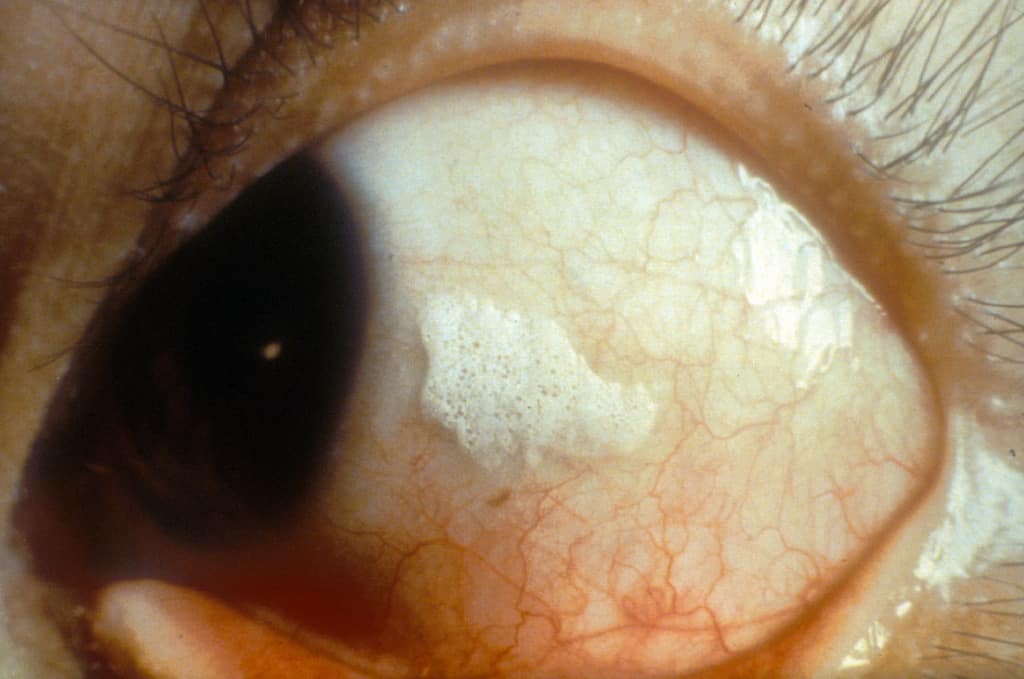
The Following Condition is caused by the Deficiency of
| A |
Vitamin A |
|
| B |
Zinc |
|
| C |
Vitamin C |
|
| D |
It is not a deficiency Disease |
The Following Condition is caused by the Deficiency of
| A |
Vitamin A |
|
| B |
Zinc |
|
| C |
Vitamin C |
|
| D |
It is not a deficiency Disease |
The Image Shows Bitots Spot due to deficiency of Vitamin A

