
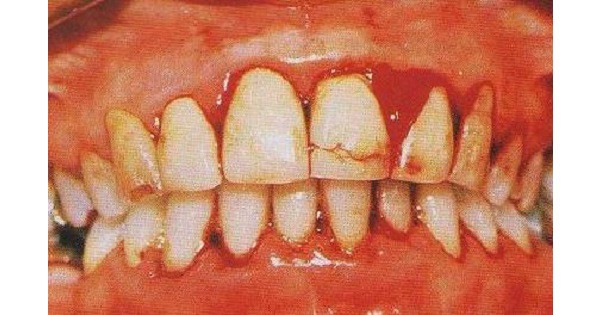
Vitamin K & Deficiency
You have made the diagnosis of vitamin K dependant bleeding manifestation in a neonate. You believe that a drug taken by the mother in the antenatal period is responsible for it. All the following if taken by a pregnant woman can lead to the above mentioned condition, EXCEPT:
| A |
Phenytoin |
|
| B |
Phenobarbitone |
|
| C |
INH |
|
| D |
Quinine |
The maternal medications responsible for Vit – K dependant bleeding manifestation in a neonate are phenytoin, phenobarbitone, salicylates, INH, rifampicin and dicumarol derivatives.
Quinine usually causes thrombocytopenia. Salicylates and thiazides can also cause thrombocytopenia.
Ref: Meharban Singh, Edition 3, Page 235
Vitamin K dependent clotting factors include the following, EXCEPT:
| A |
Factor VII |
|
| B |
Factor VIII |
|
| C |
Prothrombin |
|
| D |
Factor IX |
Vitamin K dependent clotting factors include the following, EXCEPT:
| A |
Factor VII |
|
| B |
Factor VIII |
|
| C |
Prothrombin |
|
| D |
Factor IX |
Vitamin K is ivolved in the posttranslational modification?
| A |
Glutamate |
|
| B |
Aspartate |
|
| C |
Leucine |
|
| D |
Lysine |
Vitamin K is ivolved in the posttranslational modification?
| A |
Glutamate |
|
| B |
Aspartate |
|
| C |
Leucine |
|
| D |
Lysine |
A i.e. Glutamate

Carboxylation of clotting factors by vitamin K is required to be biologically active. Which of the following amino acid is carboxylated?
| A |
Histidine |
|
| B |
Histamine |
|
| C |
Glutamate |
|
| D |
Aspartate |
Carboxylation of clotting factors by vitamin K is required to be biologically active. Which of the following amino acid is carboxylated?
| A |
Histidine |
|
| B |
Histamine |
|
| C |
Glutamate |
|
| D |
Aspartate |
C i.e. Glutamate
Vitamin K dependent coagulation factors include:
| A |
II and III |
|
| B |
IX and X |
|
| C |
III and V |
|
| D |
VIII and XII |
Vitamin K dependent coagulation factors include:
| A |
II and III |
|
| B |
IX and X |
|
| C |
III and V |
|
| D |
VIII and XII |
B i.e. IX and X
All are vitamin K dependent clotting factors of hepatic origin except:
| A |
II |
|
| B |
VII |
|
| C |
VIII |
|
| D |
X |
All are vitamin K dependent clotting factors of hepatic origin except:
| A |
II |
|
| B |
VII |
|
| C |
VIII |
|
| D |
X |
C i.e. VIII
Vitamin K-dependent factor is –
| A |
II |
|
| B |
TV |
|
| C |
VI |
|
| D |
All |
Vitamin K-dependent factor is –
| A |
II |
|
| B |
TV |
|
| C |
VI |
|
| D |
All |
Ans is ‘a’ i.e., II
True about vitamin K-
| A |
↑ed synthesis of factor II, VII, IX & X |
|
| B |
Doesn’t require exposure to sunlight |
|
| C |
Cause hemolytic anemia |
|
| D |
All |
True about vitamin K-
| A |
↑ed synthesis of factor II, VII, IX & X |
|
| B |
Doesn’t require exposure to sunlight |
|
| C |
Cause hemolytic anemia |
|
| D |
All |
Ans. is ‘a’ i.e., ↑ed synthesis of factor II, VII, IX & X; ‘b’ i.e., Doesn’t require exposure to sunlight; `c’ i.e., Cause hemolytic anemia
o Half life of vit K is 72 hours – Mahenderbhan Singh 5thie – 348
- Vit K acts as a cofactor at a late stage in the synthasis of coagulation factors by liver – Prothrombin (factor II), Factor VII, IX and X (also protein ‘C’ & Protein ‘S’).
- Vit K3 (Menadione) can cause hemolysis-contraindicated in G-6-PD deficiency and neonates.
o Vitamin D requires sun exposure (not vitamin K).
Dose of vitamin Kin case of serious bleeding is ‑
| A |
2.5 mg |
|
| B |
5 mg |
|
| C |
10 mg |
|
| D |
20 mg |
Dose of vitamin Kin case of serious bleeding is ‑
| A |
2.5 mg |
|
| B |
5 mg |
|
| C |
10 mg |
|
| D |
20 mg |
Ans. is ‘c’ i.e., 10 mg
Management of warfarin induced bleeding
o Phytonadione (vitamin K1) is the preparation of choice because it acts most rapidly.
o Management of warfarin induced bleeding is guided by clinical state and INR. Unnecessary high dose is to be avoided because it renders the patient unresponsive to oral anticoagulants for several days.
i) INR is < 5 but above therapeutic range —>‘Temporarily discontinue warfarin and restart at a lower dose once the INR is within the therapeutic range.
ii) IfINR is between 5 to 9 —> Vitamin K1 (phytonadione) at 1-2.5 mg oral.
iii) INR is between 9-20 —> Vitamin K1 at 5 mg oral..
iv) If INR is > 20 or serious bleeding Immediate hemostatic competence is necessary. Fresh frozen plasma is transfused immediately supplemented with 10 mg vit K1 intravenous. Fresh frozen plasma replenishes the vit K dependent factor immediately. Alternative to fresh frozen plasma, fresh blood transfusion (supplies clotting factors) or prothrombin complex concentrate (containing factor II, IX and X) can be used. This treatment renders the patient refractory to oral anticoagulants but not to heparin.
Vitamin K dependent coagulation factors include:
| A |
II and III |
|
| B |
IX and X |
|
| C |
III and V |
|
| D |
VIII and XII |
Vitamin K dependent coagulation factors include:
| A |
II and III |
|
| B |
IX and X |
|
| C |
III and V |
|
| D |
VIII and XII |
Answer is B (IX and X):
Vitamin K dependent coagulation factors include coagulation factor II, VII, IX and X.
Vitamin K dependent Coagulation Factors / Proteins
- Six proteins involved in clotting require conversion of a number of glutamic acid residues to 7 – carboxyglutamic acid residues before being released into circulation
- This process of y (gamma) carboxylation occurs in the liver and requires vitamin k and hence these proteins are called vitamin – K dependent
- These include coagulation factors II, VII, IX and X as well as protein C and protein S.
Vitamin K dependent proteins involved in clotting
- Coagulation Factor IIQ (Prothrombin)
- Coagulation Factor VIIQ (Proconvertin)
- Coagulation Factor IXQ (Christmas factor)
- Coagulation factor XQ (Stuart Prover Factor)
- Protein CQ
- Protein SQ
Vitamin K dependent clotting factors of hepatic origin are all of the following except:
March 2007 and 2011; March 2013
| A |
II |
|
| B |
VI |
|
| C |
VIII |
|
| D |
X |
Vitamin K dependent clotting factors of hepatic origin are all of the following except:
March 2007 and 2011; March 2013
| A |
II |
|
| B |
VI |
|
| C |
VIII |
|
| D |
X |
Ans. C: VIII
Which is likely to be increased in vitamin K deficiency:
March 2004
| A |
PTT |
|
| B |
PT |
|
| C |
Platelet count |
|
| D |
Fibrinogen time |
Which is likely to be increased in vitamin K deficiency:
March 2004
| A |
PTT |
|
| B |
PT |
|
| C |
Platelet count |
|
| D |
Fibrinogen time |
Ans. B i.e. PT
Prothrombin time (PT)
- PT and its derived measures of prothrombin ratio (PR) and international normalized ratio (INR) are measures of the extrinsic pathway of coagulation.
- This test is also called “ProTime INR” and “PT/ INR”.
- They are used to determine the clotting tendency of blood, in the measure of warfarin dosage, liver damage, and vitamin K status.
- PT measures factors I (fibrinogen), II (thrombin), V, VII, and X.
- It is used in conjunction with the activated partial thromboplastin time (aPTT) which measures the intrinsic pathway.
Vitamin K is required for:
March 2005
| A |
Chelation |
|
| B |
Transamination |
|
| C |
Carboxylation |
|
| D |
None of the above |
Vitamin K is required for:
March 2005
| A |
Chelation |
|
| B |
Transamination |
|
| C |
Carboxylation |
|
| D |
None of the above |
Ans. C: Carboxylation
The function of vitamin K in the cell is to convert glutamate in proteins to gamma-carboxyglutamate (gla). Within the cell, vitamin K undergoes electron reduction to a reduced form of vitamin K (called vitamin K hydroquinone) by the enzyme vitamin K epoxide reductase (or VKOR).
Another enzyme then oxidizes vitamin K hydroquinone to allow carboxylation of Glutamate to gamma carboxyglutamate; this enzyme is called the gamma-glutamyl carboxylase or the vitamin K-dependent carboxylase.
The carboxylation reaction will only proceed if the carboxylase enzyme is able to oxidize vitamin K hydroquinone to vitamin K epoxide at the same time; the carboxylation and epoxidation reactions are said to be coupled reactions.
Prophylactic dose of vitamin K given to new born infants at delivery is ‑
| A |
1mg |
|
| B |
5mg |
|
| C |
10mg |
|
| D |
15mg |
Prophylactic dose of vitamin K given to new born infants at delivery is ‑
| A |
1mg |
|
| B |
5mg |
|
| C |
10mg |
|
| D |
15mg |
Ans. is ‘a’ i.e., 1 mg
Vitamin K Deficiency in Newborns
- The symptoms of vitamin K deficiency are due to hemorrhage
- Newborns are particularly susceptible to vitamin K deficiency because of low fat stores, low breast milk levels of vitamin K, sterility of the infantile intestinal tract, liver immaturity, and poor placental transport.
- Intracranial bleeding, as well as gastrointestinal and skin bleeding, can occur in vitamin K-deficient infants 17 days after birth.
- Thus, vitamin K (1 mg IM) is given prophylactically at the time of delivery.
The function of vitamin K largely depends on which mineral ‑
| A |
Selenium |
|
| B |
Calcium |
|
| C |
Iron |
|
| D |
Magnesium |
The function of vitamin K largely depends on which mineral ‑
| A |
Selenium |
|
| B |
Calcium |
|
| C |
Iron |
|
| D |
Magnesium |
Ans. is ‘b’ i.e., Calcium
- Vitamin K plays an important role in blood coagulation for it is required for the post-translational processing of several clotting factors (factor II, VII, IX and X).
- Maturation of these clotting factors requires the conversion of glutamyl residues of precursor proteins into ‘ycarboxyglutamate (Gla) residues by addition of carboxylate group. This carboxylation of glutamyl resdiue is vitamin K dependent.
- The y-carboxyglutamate (Gla) residues so formed serve as binding site for calcium ions. Each Gla contains two negative charges which chelate the positive calcium ion.
- After binding to Gla residue on activated clotting factor, calcium binds with negatively charged phospholipids present on the platelet cell membrane.
- In this way, bridging of the phospholipids the Gla residue of prothromin occurs via calcium ion.

