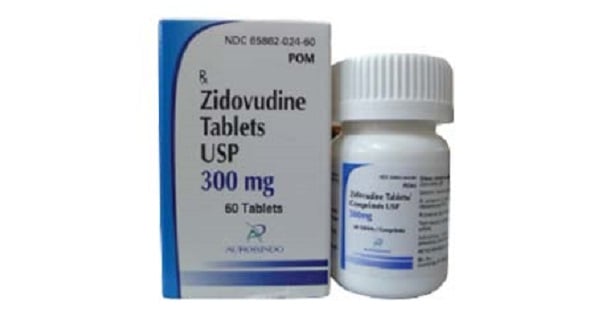
zidovudine
| A | A cesarean section can be planned to reduced HIV transmission to the newborn. |
|
| B | Breast feeding can be discouraged to reduce transmission to the new born | |
| C | Early identification of a new born at risk of HIV infection will improve survival | |
| D | Zidovudine therapy can be offered to reduce the chance of transmission of HIV to the newborn |
| A | A cesarean section can be planned to reduced HIV transmission to the newborn. |
|
| B | Breast feeding can be discouraged to reduce transmission to the new born | |
| C | Early identification of a new born at risk of HIV infection will improve survival | |
| D | Zidovudine therapy can be offered to reduce the chance of transmission of HIV to the newborn |
A randomized placebo controlled trial (ACTG 076) demonstrated that zidovudine (ZDV) given at the beginning of the second trimester, during labor and delivery, and to the newborn for 6 weeks significantly reduced the transmission of HIV to the newborn from 25.5 percent in the control group to 8.3 percent in the treatment group. Thus, ZDV can be highly effective for primary prevention in the newborn. Although a cesarean section has been shown to reduce vertical transmission, it is less effective than ZDV and is not a routinely recommended procedure for HIV-infected pregnant women. HIV can be transmitted by breast feeding, and in some studies, the risk is increased by 14 percent. However, breast feeding has no impact on the highest risk of transmission, which occurs during gestation, labor, and delivery. Early identification of newborns at risk of HIV infection will guide the medical management and improve outcomes. It has no impact on the primary prevention of the infection to the newborn. Finally, all HIV-infected women should be made aware of the benefit of ZDV so they can make informed choices.
| A | Admission to the neonatal intensive care unit for close cardiovascular monitoring | |
| B | HIV ELISA on the infant to determine if congenital infection has occurred | |
| C | A course of zidovudine for the infant | |
| D | Chest radiographs to evaluate for congenital Pneumocystis carinii |
| A | Admission to the neonatal intensive care unit for close cardiovascular monitoring | |
| B | HIV ELISA on the infant to determine if congenital infection has occurred | |
| C | A course of zidovudine for the infant | |
| D | Chest radiographs to evaluate for congenital Pneumocystis carinii |
The transmission of HIV from mother to infant has decreased in recent years, due in large part to perinatal administration of antiretroviral medications to the mother and a course of zidovudine to the exposed infant. Studies suggest that a better than 50% decrease in transmission can be seen with appropriate medications as outlined. An ELISA is an antibody test and will be positive in the infant born to an HIV-infected mother due to maternal antibodies that are passed through the placenta; it is not a useful test in the newborn infant to determine neonatal infection. IVIG has not been shown to have a role in decreasing perinatal transmission. Healthy asymptomatic term infants born to HIV-infected mothers do not need special monitoring nor do they need routine radiographs.
| A | Zidovudine for mother (36 weeks) and child (6 weeks) | |
| B | Zidovudine for 6 months to mother and 6 weeks to child | |
| C | Zidovudine for 6 Weeks | |
| D | Avoid zidovidine |
| A | Zidovudine for mother (36 weeks) and child (6 weeks) | |
| B | Zidovudine for 6 months to mother and 6 weeks to child | |
| C | Zidovudine for 6 Weeks | |
| D | Avoid zidovidine |
Zidovudine for mother (36 weeks) and child (6 weeks)
Which of the following drug does NOT cause myopathy as side effect?
| A |
Chloroquine |
|
| B |
Betamethasone |
|
| C |
Chloramphenicol |
|
| D |
Zidovudine |
Which of the following drug does NOT cause myopathy as side effect?
| A |
Chloroquine |
|
| B |
Betamethasone |
|
| C |
Chloramphenicol |
|
| D |
Zidovudine |
Adverse effects of chloramphenicol includes nausea, vomiting, diarrhea, aplastic anemia and gray baby syndrome.
- Cimetidine
- Penicillamine
- Statins
- Amiodarone
- Colchicine
- Chloroquine
- Cyclosporine
- Lithium
- Zidovudine
- Alcohol
All of the following interventions are recommended to prevent mother to child transmission of HIV, except:
| A |
Avoid Ergometrine in third stage of labour |
|
| B |
Highly Active Antiretroviral Therapy (HAART) |
|
| C |
Elective Caesarean section |
|
| D |
Intrapartum Zidovudine |
All of the following interventions are recommended to prevent mother to child transmission of HIV, except:
| A |
Avoid Ergometrine in third stage of labour |
|
| B |
Highly Active Antiretroviral Therapy (HAART) |
|
| C |
Elective Caesarean section |
|
| D |
Intrapartum Zidovudine |
All of the following interventions are recommended to prevent mother to child transmission of HIV, except:
| A |
Avoid breast feeding |
|
| B |
Highly Active Antiretroviral Therapy (HAART) |
|
| C |
Vaginal delivery |
|
| D |
Intrapartum Zidovudine |
All of the following interventions are recommended to prevent mother to child transmission of HIV, except:
| A |
Avoid breast feeding |
|
| B |
Highly Active Antiretroviral Therapy (HAART) |
|
| C |
Vaginal delivery |
|
| D |
Intrapartum Zidovudine |
For HIV-infected mothers, a scheduled cesarean delivery at 38 weeks can reduce the risk of mother – to – child transmission of the virus. If, before her scheduled cesarean delivery, rupture of membranes or she goes into labor, a cesarean delivery may not reduce the risk of mother to-child transmission of HIV.
Ref: Recommendations for Use of Antiretroviral Drugs in Pregnant HIV-1-Infected Women By Michael A. Stoto, Donna A. Almario, Institute of Medicine (U.S.). Committee on Perinatal Transmission of HIV, National Research Council (U.S.). Board on Children, Youth, and Families, Pages 358-360.
Transmission of HIV from mother to child is prevented by all the following methods, EXCEPT:
| A |
Oral zidovudine to mother at 3rd trimester along with oral zidovudine to infant for 6 weeks |
|
| B |
Vit A prophylaxis to mother |
|
| C |
Vaginal delivery |
|
| D |
Stopping breast feeding |
Transmission of HIV from mother to child is prevented by all the following methods, EXCEPT:
| A |
Oral zidovudine to mother at 3rd trimester along with oral zidovudine to infant for 6 weeks |
|
| B |
Vit A prophylaxis to mother |
|
| C |
Vaginal delivery |
|
| D |
Stopping breast feeding |
Severe hepatotoxicity associated with steatohepatitis, most likely a result of mitochondrial toxicity, is being recognized with:
| A |
Zidovudine |
|
| B |
Didanosine |
|
| C |
Indinavir |
|
| D |
All |
Severe hepatotoxicity associated with steatohepatitis, most likely a result of mitochondrial toxicity, is being recognized with:
| A |
Zidovudine |
|
| B |
Didanosine |
|
| C |
Indinavir |
|
| D |
All |
Severe hepatotoxicity associated with steatohepatitis, most likely a result of mitochondrial toxicity, is being recognized with increasing frequency with antiretroviral therapy with reverse transcriptase inhibitors (e.g., zidovudine, didanosine) or protease inhibitors (e.g., indinavir, ritonavir.
Harrisons Principles of Internal Medicine, 18th Edition, Page 2560
A resident doctor sustained a needlestick injury while sampling blood of a patient who is HIV positive. A decision is taken to offer him post-exposure prophylaxis. Which one of the following would be the best recommendation ?
| A |
Zidovudine + Lam ivudine for 4 weeks |
|
| B |
Zidovudine + Lamivudine + Nevirapine for 4 weeks |
|
| C |
Zidovudine + Lamivudine + Indinavir for 4 weeks |
|
| D |
Zidovudine + Stavudine + Nevirapine for 4 weeks. |
A resident doctor sustained a needlestick injury while sampling blood of a patient who is HIV positive. A decision is taken to offer him post-exposure prophylaxis. Which one of the following would be the best recommendation ?
| A |
Zidovudine + Lam ivudine for 4 weeks |
|
| B |
Zidovudine + Lamivudine + Nevirapine for 4 weeks |
|
| C |
Zidovudine + Lamivudine + Indinavir for 4 weeks |
|
| D |
Zidovudine + Stavudine + Nevirapine for 4 weeks. |
Ans. is ‘c’ i.e., Zidovudine + Lamivudin + Indinavir for 4 weeks
. Needle stick injury is the most common cause of HIV infection among health care workers.
The guidelines for post-exposure prophylaxis of HIV are
A) For routine exposures
- A combination of two nucleoside reverse transcriptase inhibitors for 4 weeks.
B) For high risk or complicated exposures
- A combination of two nucleoside reverse transcriptase inhibitors plus a protease inhibitor for 4 weeks.
- Inspite of the guidelines regimen B is given for all types of exposure.
Note -Anti-retroviral drugs
- Nucleoside reverse transcriptase inhibitors —> Zidovudin, Stavudine, Lamivudine, Abacavir, Didanosine, Zalcitabin.
- Nonnucleoside reverse transcriptase inhibitors –> Nevirapine, efavirenz, Delavirdine.
- Protease inhibitors —> Ritonavir, Indinavir, Nelfinavir, Saquinavir, Lopinavir.
Resistance to zidovudine develops due to-
| A |
Mutations at reverse transcriptase |
|
| B |
Increased efflux of the drug from inside the cell |
|
| C |
Increased metabolism of the drug |
|
| D |
Decreased zidovudine 5 triphosphate formation |
Resistance to zidovudine develops due to-
| A |
Mutations at reverse transcriptase |
|
| B |
Increased efflux of the drug from inside the cell |
|
| C |
Increased metabolism of the drug |
|
| D |
Decreased zidovudine 5 triphosphate formation |
Ans. is ‘a’ i.e., Mutations at reverse transcriptase
“Resistance to Zidovudine occurs by point mutation which alters reverse transcriptase enzyme. In the past when AZT was used alone, > 50% patients became nonresponsive to AZT within 1-2 years therapy due to growth of resistant mutants” – KDT
Zidovudine given for HIV in preganancy because –
| A |
Decreases the risk of vertical transmission |
|
| B |
Decrease severity of infection in mother |
|
| C |
Decrease severtiy of infection in newborn |
|
| D |
Causes no benefit |
Zidovudine given for HIV in preganancy because –
| A |
Decreases the risk of vertical transmission |
|
| B |
Decrease severity of infection in mother |
|
| C |
Decrease severtiy of infection in newborn |
|
| D |
Causes no benefit |
Ans. is ‘a’ i.e., Decreases the risk of vertical transmission
Treatment during Pregnancy
- HIV infected mother can transmit the virus to fetus/infant during pregnancy, during delivery or by breast feeding. o Early diagnosis and antiretroviral therapy to mother and infant significantly decrease the rate of intrapartum and perinatal transmission (vertical transmission) of HIV infection.
o Zidovudine treatment of HIV infected pregnant women from the beginning of second trimester through delivery and of infant for 6 weeks following birth decreases the rate of transmission from 22.6% to < 5%.
o Single dose of nevirapine given to the mother at the onset of labor followed by a single dose to the newborn within 72 hours of birth decreased transmission by 50%. This is the prefered regimen now in developing countries.
Treatment of HIV infection in general (HAART)
o It includes 3 or more drugs, of which one or two are always NRTIs.
o The combination may be 2 NRITs + 1 protease inhibitor or 1NRITs + 1NNRITs + 1PI.
For prophylaxis a combination of two NRTIs (regimen A) or a combination of two NRITs plus a protease inhibitor (regimen B) may be used – regimen B is preffered.
Drugs safe in pregnancy with HIV infection is ‑
| A |
Zidovudine |
|
| B |
Indinavir |
|
| C |
Lamivudine |
|
| D |
All of the above |
Drugs safe in pregnancy with HIV infection is ‑
| A |
Zidovudine |
|
| B |
Indinavir |
|
| C |
Lamivudine |
|
| D |
All of the above |
Ans. is ‘d’ i.e., All of the above
Antiretroviral agents in pregnancy
Recommended Alternative
NRTIs
o Zidovudin o Diadanosine
o Lamivudine o Emtricitabine
o Stavudine
o Abacavir
NNRTIs
o Nepirapine
Pis
o Nelfinavir o Indinavir
o Squinavir o Lopinavir/ritonavir
All of the following strategies are effective in preventing mother to child transmission of HIV, except-
| A |
Zidovudine to mother & baby |
|
| B |
Vaginal cleansing before delivery |
|
| C |
Stopping breast feeding |
|
| D |
Elective caesarean section |
All of the following strategies are effective in preventing mother to child transmission of HIV, except-
| A |
Zidovudine to mother & baby |
|
| B |
Vaginal cleansing before delivery |
|
| C |
Stopping breast feeding |
|
| D |
Elective caesarean section |
Ans. is ‘b’ i.e., Vaginal cleansing before delivery
Methods to prevent vertical transmission
a) Antiretroviral prophylaxis‑
Vertical transmission can be prevented substantially by giving antiretroviral therapy to mother and early prophylaxis to newborn.
b) Caesaren delivery –
- Elective caesarean section reduces the risk of transmission by 50% in women with or without ZDV treatment.
c) Breast feeding –
- Because breast milk can carry the virus, breast feeding by HIV infected mothers is contraindicated.
However Dutta/obs writes ‑
“In the developing world, where alternative forms of infant nutrition are not safe, minor risk associated with breast feeding may be accepted. Mother is counselled as regards the risk and benefits. She is helped to make an informed choice.”
|
|
HAV |
HBV |
HCV |
HDV |
BEV |
|
o Virology |
RNA |
DNA |
RNA |
RNA |
RNA |
|
o Incubation |
15-45 |
30-180 |
15-160 |
30-180 |
14-60 |
|
o Transmission |
|
|
|
|
|
|
i) Parentral |
Rare |
Yes |
Yes |
Yes |
No |
|
ii) Feco-oral |
Yes |
No |
No |
No |
Yes |
|
iii) Sexual |
No |
Yes |
Rare |
Yes |
No |
|
iv) Perinatal |
No |
Yes |
Rare |
Yes |
No |
|
o Chronic infection |
No |
Yes |
Yes |
Yes |
No |
|
o Fulminent disease |
Rare |
Yes |
Rare |
Yes |
Yes |
Which of the following drugs are supplied free of cost to the government Hospital by NACO‑
| A |
Nevaripinc |
|
| B |
Zidovudine |
|
| C |
Nevaripinc + Zidovudine |
|
| D |
Zidovudine + Lamivudine+Nevarapine |
Which of the following drugs are supplied free of cost to the government Hospital by NACO‑
| A |
Nevaripinc |
|
| B |
Zidovudine |
|
| C |
Nevaripinc + Zidovudine |
|
| D |
Zidovudine + Lamivudine+Nevarapine |
Ans. is ‘d’ i.e., Zidovudine + Lamivudine+Nevarapine
NACO centers providing ART (as of sept 2006)
3 The National AIDS control organization (NACO) has increased the numbers of centres providing ART from S4 to 91 centres with another 9 more centres also getting operational soon.
o MI the 9lcentres have specially appointed and trained doctors, counsellors and laboratory technicians to help initiate patients on ART and follow them regularly.
o At these 91 centres medicines for treating 85000 patients have been made available.
o The ART is a combination of three potent drugs, which is being given to the persons with advanced stage of AIDS.
o Apart from providing free treatment, all the ART centres are providing counselling to the infected persons so that they maintain regularly of their medication.
o NACO has branded the STIIRTI services as “Suraksha clinic” and has developed a communication strategy for generating demand for these services.
o Pre-packed colour coded STI/RT1 kits have been provided for free supply to all designated STI/RTI clinics.
Kit I —> Grey, for urethral discharge. ano-rectal discharge. cervicitis.
Kit 2 —> Green, for vaginitis
Kit 3 —› White, for genital ulcers
Kit 4 –> Blue, for genital ulcers
Kit 5 —> Red, for genital ulcers
Kit 6 —> Yellow, for lower abdominal pain
Kit 7 —> Black, for scortal swelling.
Co-administartion of which of the following drug with Zidovudine is not preferred:
March 2007
| A |
Indomethacin |
|
| B |
Aspirin |
|
| C |
Trimethoprim |
|
| D |
All of the above |
Co-administartion of which of the following drug with Zidovudine is not preferred:
March 2007
| A |
Indomethacin |
|
| B |
Aspirin |
|
| C |
Trimethoprim |
|
| D |
All of the above |
Ans. D: All of the above
Common side effects of AZT include nausea, headache, changes in body fat, and discoloration of fingernails and toenails. More severe side effects include anemia and neutropenia.
Myopathy, lactic acidosis, hepatomegaly, convulsions and encephalopathy are infrequent.
AZT has been shown to work additively or synergistically with many anti-HIV agents; however, acyclovir and ribavirin decrease the antiviral effect of AZT.
Drugs that inhibit hepatic glucuronidation, such as indomethacin, acetylsalicylic acid (Aspirin) and trimethoprim, decrease the elimination rate and increase the toxicity.
Other nephrotoxic drug and myelosuppressive drugs and probebecid enhances toxicity.
Stavudine and zidovudine exhibit mutual antagonism by competing for the same activation pathway.