module Test

Staphylococcus aureus: Virulence and Toxin

Staphylococcus aureus: Virulence and Toxin VIRULENCE FACTOR: Cell wall associated structures Techoic acid Adhesion Protection against complement mediated opsonization. Antitechoic acid antibodies found in the patients with active endocarditisndue to S. aureus’ Peptidoglycan   Inhibits inflammatory response Activates complement system Induce release of cytokines Endotoxin like activity   Capsule Adhere to host cell Resist phagocytosis […]

Staphylococcus aureus: Virulence and Toxin Read More »

Corynebacterium Diphtheria: Clinical manifestation, Complications, Diagnosis and Treatment

Corynebacterium Diphtheria: Clinical manifestation, Complications, Diagnosis and Treatment Introduction Most common in children of 2-5 years. Incubation period 2-5days Mode of transmission Droplet spread Types Faucial(commonest ) Laryngeal Nasal Conjunctival Otitic Vulvovaginal Cutaneous mainly around mouth and nose Respiratory Diphtheria MC type Tonsillopharyngeal (Faucial) Symptoms Fever sore throat Weakness Malignant or hypertoxic or bull neck

Corynebacterium Diphtheria: Clinical manifestation, Complications, Diagnosis and Treatment Read More »

Shigella : Clinical Findings, Pathogenesis, Lab Diagnosis and Treatment

Shigella : Clinical Findings, Pathogenesis, Lab Diagnosis and Treatment  Introduction: SOURCE: MAN: CASE OR CARRIER MODE OF SPREAD: CONTAMINATED FINGERS, FOOD, FLIES, FOMITES PERSON TO PERSON TRANSMISSION Gut pathology is due to toxin INFECTIVE DOSE: 10-100 VIABLE BACILLI HIGHEST CONCENTRATION IN STOOL DURING EARLY/ACUTE INFECTION: 103 TO 109 VIABLE BACILLI PER GRAM OF STOOL PATHOGENESIS

Shigella : Clinical Findings, Pathogenesis, Lab Diagnosis and Treatment Read More »

Clostridium tetani : Diagnosis, treatment and Prevention

Clostridium tetani : Diagnosis, treatment and Prevention Diagnosis of tetanus Based entirely on clinical findings:  History of an injury Particularly one in which either soil or fecal material has been introduced 6-12 days before the onset of typical clinical findings. Wound should be cultured in suspected cases. Other laboratory findings may be – Leukocytosis Muscle enzyme levels

Clostridium tetani : Diagnosis, treatment and Prevention Read More »

Treponema Pallidum: Diagnosis and Treatment

Treponema Pallidum: Diagnosis and Treatment Diagnosis: 1.Demonstration of Organism Darkfield microscopic examination of lesion exudate such as chancre of primary syphilis  Immunofluorescence or immunohistochemical method more reliable. 2. Serological tests for Syphilis: Serologic testing is considered the standard method of detection for all stages of syphilis.  (a) Non-treponemal tests  RPR (Rapid plasma reagin) VDRL VDRL principle:

Treponema Pallidum: Diagnosis and Treatment Read More »

Plasmodium: Clinical Features (Malaria)

Plasmodium: Clinical Features (Malaria)  Antimalarial defence Evolutionary – Survival Inherited alterations in RBCsHbS, HbC, lack of Duffy antigen Others – βThalasssaemia, G6PD, HLA Bw53 and HLA-DR Genetic factors protecting against Malaria Sickle cell anaemia –  Sickle celled RBCs are removed by the spleen before the development of schizonts Ovalocytosis –  RBCs are rigid and they resist parasitic

Plasmodium: Clinical Features (Malaria) Read More »

Classification Of Carbohydrates

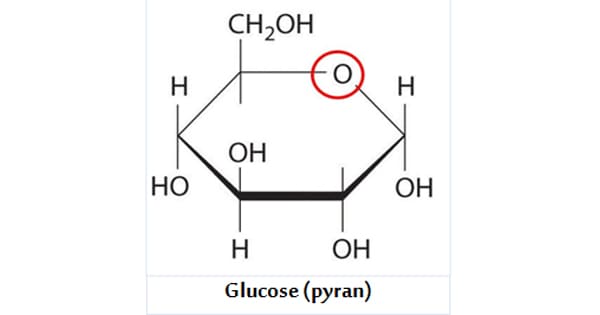
Classification Of Carbohydrates Carbohydrates are classified based on number of individual monosaccharides units into 4 groups- Monosaccharides Disaccharides Oligosaccharides Polysaccharides  1. Monosaccharides- General formula is Cn (H2O)n Monosaccharides cannot be hydrolyzed further into simple carbohydrates and called as Simple sugars. If ring structure formed by cyclization is six sided called as pyranose ring (pyran) If ring structure

Classification Of Carbohydrates Read More »

OROTIC ACIDURIA- Pyrimidine disorder

OROTIC ACIDURIA- Pyrimidine disorder OROTIC ACIDURIA It is a rare autosomal recessive condition. It is due to the deficiency of UMP synthase, a bifunctional enzyme having- Orotate phosphoribosyl transferase Orotic acid decarboxylase (orotidylate decarboxylase) It is characterized by excretion of uric acid in urine. Two types- Type I oroctic aciduria- deficiency of orotate phosphoribosyl transferase

OROTIC ACIDURIA- Pyrimidine disorder Read More »

Frenzel Glasses

Frenzel Glasses FRENZEL GLASSES Frenzel glasses are a diagnostic tool used for the medical evaluation of nystagmus(peripheral vestibular nystagmus). They are named after Frenzel, a German physician. PURPOSE OF FRENZEL GLASSES To disable the patient’s ability to visually fixate on an object which will suppress the Nystagmus Allowing the examiner to adequately visualize the eye.

Frenzel Glasses Read More »

Radioisotope scans

Radioisotope scans RADIO- ISOTOPE SCANS The gamma camera, also known as the scintillation or Anger camera is a device used in nuclear medicine. The radionuclide emits faint gamma ray signals from inside the body (after administration into body) which are measured by Gamma Camera. Tc-99 is the most common radionuclide used for imaging in nuclear

Radioisotope scans Read More »

👨‍⚕️
Chat Support ❌