


Question
Identify the condition of oral cavity shown in the photograph below ?

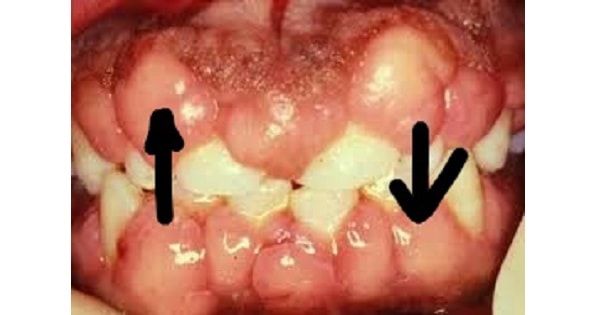
A. Reparative granuloma.
B. Gingival hyperplasia.
C. Epulis.
D. Papilloma.
Show Answer
|
Correct Answer » B Explanation |
 |

Ans : B. Gingival hyperplasia.
Gingival enlargement (also termed gingival overgrowth, hypertrophic gingivitis, gingival hyperplasia, or gingival hypertrophy)
- It is an increase in the size of the gingiva (gums).
- A closely related term is epulis, denoting a localized tumor (i.e. lump) on the gingiva.
Gingival enlargement has been classified according to cause into 5 general groups:
Inflammatory enlargement:
Gingivitis
- Accumulation and retention of plaque is the chief cause .
- Risk factors include poor oral hygiene, as well as physical irritation of the gingiva by improper restorative and orthodontic appliances.
Drug induced enlargement
- anticonvulsants (such as phenytoin, phenobarbital, lamotrigine, vigabatrin, ethosuximide, topiramate and primidone )
- calcium channel blockers (antihypertensives such as nifedipine, amlodipine, and verapamil)
- cyclosporine, an immunosuppresant.
- Of all cases , about 50% are attributed to phenytoin, 30% to cyclosporins and the remaining 10-20% to calcium channel blockers.
Enlargement associated with systemic diseases or conditions
- pregnancy
- puberty
- vitamin C deficiency
- nonspecific, such as a pyogenic granuloma
- granulolomatous diseases, such as granulomatosis with polyangiitis, sarcoidosis, or orofacial granulomatosis
Neoplastic enlargement
- leukemia
- benign neoplasms, such as fibromas, papillomas and giant cell granulomas
- malignant neoplasms, such as a carcinoma or malignant melanoma
False enlargement.
- such as when there is an underlying bony or dental tissue lesion.
Treatment:
- The first line management of gingival overgrowth is improved oral hygiene, ensuring that the irritative plaque is removed from around the necks of the teeth and gum.
- Gingivectomy:Situations in which the chronic inflammatory gingival enlargement include significant fibrotic components.