|
Paucibacillary (PB) |
Multibacillary (MB) |
| Previously called |
Tuberculoid Leprosy |
Lepromatous Leprosy |
| Severity |
Mild |
Can be extreme (Without treatment, the patient will die)
|
| Unique Signs and Symptoms |
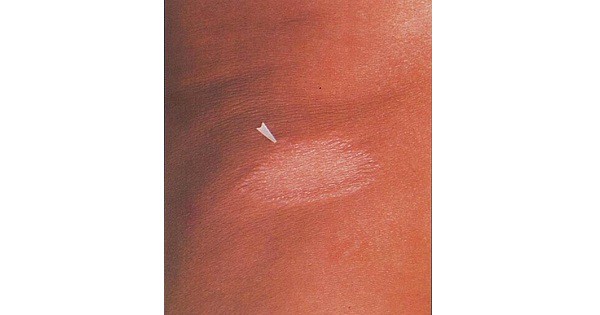
Few erythematous or hypopigmented plaques with flat centres and raised,demarcated borders;peripheral nerve damage with complete sensory loss;visible enlargement of nerves. |
Many erythematous macules,papules or nodules;extensive tissue destruction(e.g:nasal cartilage,bones,ears);diffuse nerve involvement with patchy sensory loss,lack of nerve enlargement. |
| Distribution of lesions |
Asymmetrical |
Symmetrical |
| Occurs When |
Infected person is able to mount a robust, cell-mediated immune response to the bacterium |
Infected person unable to mount a cell-mediated immune response to the bacterium |
| Defined by World Health Organization as |
1-5 patches associated with leprosy (Paucibacillary)
|
>5 patches associated with leprosy. (Multibacillary)
|
| Is the person Infectious? |
No |
Possibly; bacterium is found in high concentrations in respiratory secretions and organs |
| Prospects for Recovery |
Good |
Cure from disease possible, however, underlying disease complications (such as limb damage due to infection) may not be reversible or require reconstructive surgery |
| Lepromin test |
Positive |
Negative |
| Erythema Nodosum Leprosum |
Absent |
Usually present |