
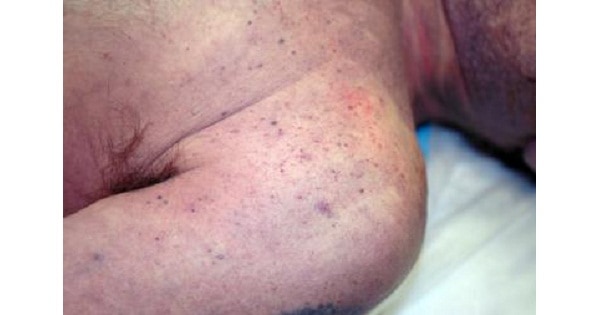
Color change and postmortem staining in poisoning.
- Evidence of poisoning will depend on postmortem examination, chemical analysis, experiments on suitable animals and circumstantial evidence.
- Irritation, ulceration and perforation or discoloration and change in colour or softening of the mucous membrane of the stomach.
- Corrosive acids, alkalis and Irritants damage the superficial epithelium.
- Carbolic acid causes hardening and shrinkage of mucous membrane.
- The perforation of stomach maybe found in strong acid such as sulphuric acid poisoning. The stomach is usually black in colour with extensively damaged mucosa.
All the poison and colour change can be explained in following table
|
Color change of skin and mucous membrane |
|||
| 1. |
Sulphuric acid,HCl, oxalic acid |
Grey, later turning into black. |
|
| Nitric acid | Mostly yellow sometimes brown | ||
| 3. | Hydrofluric acid | Reddish brown. | |
| 4. | Carbolic acid, caustic alkalies | Greyish white. | |
| 5. | Oxalic acid | Grey, later turning into black. | |
| 6. | Cresol | Brown leathery. | |
| 7. |
Chromic acid, potassium chromate |
Orange leathery. | |
| 8. | Reddish brown. | Reddish brown. | |
| 9. | Zinc chloride | Whitish | |
odour: Odour form the body cavity The substances detectable by their smell are alcohol, cyanide, carbolic acid, petroleum products, camphor, nicotine, opium, paraldehyde, phosphorus insecticides, pesticides etc. Many poisons have a characteristic smell that is peculiar to that particular poison.
|
Suspected substance |
Odour |
|
Cyanides |
Bitter almonds |
|
Carbolic Acid |
Hospital disinfectant |
|
Aluminium phosphide/ Zinc Phosphide |
Fishy smell |
|
Organophosphate pesticides |
Garlic like |
|
Ethanol/ Chloroform/ Nitrites |
Sweet or fruity smell |
- The normal mucous membrane of the stomach is pale and white.
- Due to the irritant action of the poison, there may be small haemorrhagic areas along with mucous secretion.
post mortem staining is as follows:
| 1 | Carbon monoxide(cold,burn) | Bright cherry red |
| 2. | Hydron cyanide (HCN) / cyanide) | Bright red or cherry red. |
| 3. | KCN / NaCN | Pink / brown. |
| 4. | Nitrates / nitrites | Chocolate or red brown| |
| 5. | Phosphorus | Dark brown or yellow |
| 6. | Hydrogen sulphide | Blue green |
| 7. | Opium | Black |
| 8. | Copper sulphate. | Blue |
Exam Important
|
Color change of skin and mucous membrane |
|||
| 1. | Sulphuric acid,HCl, oxalic acid | Grey, later turning into black. | |
| 2. | Nitric acid | Mostly yellow sometimes brown | |
| 3. | Hydrofluric acid | Reddish brown. | |
| 4. | Carbolic acid, caustic alkalies | Greyish white. | |
| 5. | Oxalic acid | Grey, later turning into black. | |
| 6. | Cresol | Brown leathery. | |
| 7. | Chromic acid, potassium chromate | Orange leathery. | |
| 8. | Reddish brown. | Reddish brown. | |
| 9. | Zinc chloride | Whitish | |

