
ENZYME INHIBITION
ENZYME INHIBITION
- Enzyme inhibitor binds with enzyme and decreases a catalytic activity.
Types of Enzyme Inhibition-
- Reversible
- Irreversible
- Allosteric
- Reversible Inhibition– binds through non-covalent bonds and activity of enzyme is restored. Divided into-
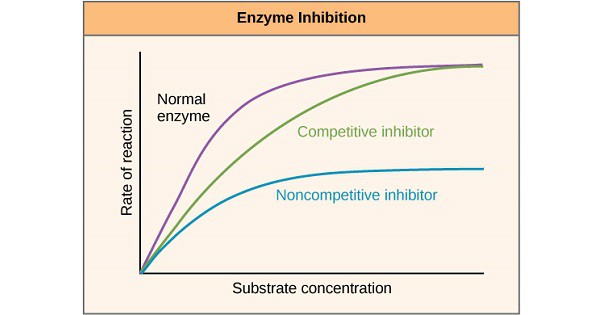
a) Competitive inhibitor– Km increased, Vmax unchanged.
- E.g.- Succinate dehydrogenase by melanate.
b) Non competitive inhibitor- Km unchanged, Vmax decrease, mostly irreversible.
- E.g.- Cyanide by Cytochrome C Oxidase.
- Carbonic anhydrase by Acetazolamide

2. Irreversible Inhibition– binds covalently with an enzyme.
a) Suicidal Inhibitor– irreversible binding to enzyme and inhibit enzyme.
- E.g. Allopurinol inhibit Xanthine oxidase, cyclooxygenase.
3. Feedback Inhibition- called as end product inhibition.
- E.g. AMP inhibits first step in purine synthesis.
Exam Important
- Reversible Inhibition- binds through non-covalent bonds and activity of enzyme is restored.
- Competitive inhibitor- Km increased, Vmax unchanged.
- Competitive inhibitor- Succinate dehydrogenase by melanate.
- Non competitive inhibitor- Km unchanged, Vmax decrease, mostly irreversible.
- Non competitive inhibitor- E.g.- Cyanide by Cytochrome C Oxidase.
- Suicidal Inhibitor- Allopurinol inhibit Xanthine oxidase.
| Type of inhibitor | Km | Vmax | |
| Reversible inhibbitor | Increased | No effect | |
| Competitive | No effect | Decreased | |
| Non-competitive | Decreased | Decreased | |
| Uncompititive | No effect | Decreased | |
| Irrversible inhibitor (same as reversible | Increased | No effect | |
Don’t Forget to Solve all the previous Year Question asked on ENZYME INHIBITION

