
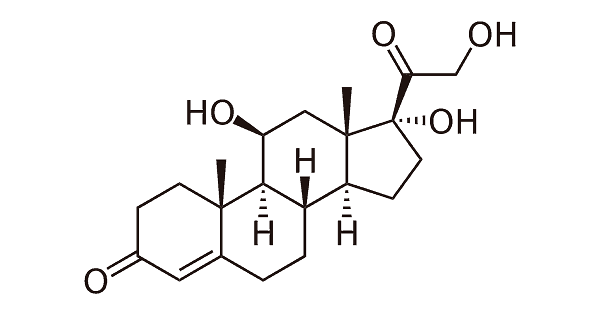
Glucocorticoids
TYPES:
Glucocorticoids are:
- Cortisol(short acting)
- Corticosterone
- Cortisone.
GLUCOCORTICOID DRUGS:
Short-acting
- Beclomethasone
- Budesonide
- Cortisone(least)
- Prednisone
- Hydrocortisone(maximum effect)
Intermediate-acting:
- Methylprednisolone
- Prednisolone
- Triamcinolone
Long-acting:
- Betamethasone(most potent)
- Dexamethasone
SOURCE OF SECRETION:
- Secreted mainly by zona fasciculata of adrenal cortex.
- A small quantity of glucocorticoids is also secreted by zona reticularis.
- Acts via Intracellular receptors.
- Pregnenolone- Common precursor of mineralocorticoid, glucocorticoids and sex steroids.
- Chemical process involved in conversion of progesterone to glucocorticoids is Hydroxylation
ACTION:
On Carbohydrate Metabolism
- Glucocorticoids increase the blood glucose level in two ways:
- By promoting gluconeogenesis in liver from amino acids
- By inhibiting the uptake and utilization of glucose by peripheral cells
On Protein Metabolism
- Glucocorticoids promote the catabolism of proteins Leading to:
- Decrease in cellular proteins
- Increase in plasma level of amino acids
- Increase in protein content in liver.
On Fat Metabolism
- Actions on fats are:
- Mobilization of fatty acids from adipose tissue
- Increasing the utilization of fat for energy.
- It leads to the formation of a large amount of ketone bodies
On Water Metabolism
- Glucocorticoids play an important role in the maintenance of water balance, by accelerating excretion of water.
On Mineral Metabolism
- Glucocorticoids enhance the retention of sodium and to lesser extent, increase the excretion of potassium.
- Glucocorticoids decrease the blood calcium by inhibiting its absorption from intestine and increasing the excretion through urine
On Bone
- Stimulate bone resorption (osteoclastic activity)
- Inhibit bone formation & mineralization (osteoblastic activity) causing osteoporosis
On Muscles
- Increase catabolism of proteins in muscle.
On Blood Cells
- Destruction of eosinophils in reticuloendothelial cells
- Decrease number of basophils & lymphocytes.
- Increase number of circulating neutrophils, RBCs & platelets.
On Vascular Response
- Presence of glucocorticoids is essential for the constrictor action of adrenaline and noradrenaline
On CNS:
- Insufficiency of these hormones causes personality changes like irritability and lack of concentration.
- Sensitivity to olfactory and taste stimuli increases in adrenal insufficiency.
Permissive Action of Glucocorticoids:
- Calorigenic effect of glucagon
- Lipolytic effect of catecholamines
- Vascular effects of catecholamines
- Bronchodilator effect of catecholamines
On Resistance to Stress:
- Increased glucocorticoid level is very essential for survival during stress conditions, as it offers high resistance to body against stress.
Anti-Inflammatory Effects:
- Prevent inflammatory changes by ↑ Lipocortin
- Anti-allergic Actions
USES:
- Autoimmune disorders
- Multiple sclerosis
- Rheumatoid arthritis: Suppression of inflammation.
- Inflammatory bowel disease
- Ulcerative colitis
- Psoriasis
- Eczema
- Allergies and asthma
Adrenal insufficiency:
- In adrenal insufficiency body can’t produce enough cortisol.
- This can be a result of a condition such as Addison’s disease or surgical removal of your adrenal glands.
- Glucocorticoids can be used to replace cortisol that your body can no longer make.
Heart failure
- Short-term use (less than 7 days) of glucocorticoids can help treat heart failure by increasing your body’s ability to respond to certain diuretics.
Cancer
- Glucocorticoids can be used in cancer therapy to reduce some of the side effects of chemotherapy.
- They may also be used to kill some cancer cells in some cancers, including:
- Acute lymphoblastic leukemia
- Chronic lymphoblastic leukemia
- Hodgkin lymphoma
- Non-Hodgkin lymphoma
- Multiple myelomas
Preterm Labour help in reducing,
- Respiratory distress syndrome
- Necrotising enterocolitis.
- Intraventricular hemorrhage.
- Induction of thymic involution
- Production of surfactant by type II alveolar cells & functional hypothalamo-pituitary axis depends on production of maternal or fetal glucocorticoid.
Skin conditions
- Skin conditions ranging from eczema to poison ivy are treated with glucocorticoids.
Surgery
- Glucocorticoids may be used during sensitive neurosurgeries.
- They reduce inflammation in delicate tissues.
- They are also administered right after an organ transplant to help prevent the immune system from rejecting the donor organ.
SIDE EFFECTS:
- Increase blood sugar level, which can trigger temporary and possibly long-term diabetes
- Suppress body’s ability to absorb calcium, which can lead to osteoporosis
- Increase cholesterol and triglyceride levels
- Increase risk of ulcers and gastritis
- Oral candidiasis -Inhaled glucocorticoids in bronchial asthma.
- Delay wound healing, which requires a certain amount of inflammation
- Suppress immune system and make more prone to infections
Long-term use:
- Fatty hump between shoulders
- Round face
- Weight gain
- Pink stretch marks
- Weakened bones
- Diabetes
- High blood pressure
- Thin skin
- Slow healing
- Acne
- Irregular menstrual cycles
- Decreased libido
- Fatigue
- Depression
Exam Question
- Drug causing hyperglycemia is Glucocorticoid
- Glucocorticoids causes Muscle wasting, Diabetes mellitus, Osteoporosis,Peptic ulceration, Cataracts
- Induction of thymic involution, Production of surfactant by type II alveolar cells & Functional hypothalamopituitary axis depends on production of maternal or fetal glucocorticoid
- Glucocorticoids given to a case of Preterm Labour help in reducing Respiratory distress syndrome, Intraventricular hemorrhage, Necrotising enterocolitis
- Stress-induced hyperglycemia is due to Glucocorticoids
- Oral candidiasis can occur as a side effect of inhaled glucocorticoids in bronchial asthma
- Glucocorticoids act in inflammation by ↑ Lipocortin
- Cortisone has least glucocorticoid activity
- Compared to hydrocortisone, maximum glucocorticoid activity is seen in Hydrocortisone
- Short acting glucocorticoid is Hydrocortisone
- Longest acting glucocorticoids is Dexamethasone
- The primary goal of glucocorticoid treatment in rheumatoid arthritis is Suppression of inflammation and improvement in functional capacity
- Glucocorticoids drug produce neutrophilia
- Betamethasone is the most potent glucocorticoid
- Glucocorticoids induces apoptosis in a cell
- Pregnenolone is Common precursor of mineralocorticoid, glucocorticoids and sex steroids
- Intracellular receptors are used by glucocorticoid
- Chemical process involved in conversion of progesterone to glucocorticoids is Hydroxylation
Don’t Forget to Solve all the previous Year Question asked on Glucocorticoids
