


Parvovirus
Parvovirus


- Smallest virus.
- Not a cultivable virus
- Nonenveloped icosahedral virus
- Roughly spherical, with surface protrusions
- Single stranded D.N.A.
Pathogenesis of parvovirus
- Affects erythroid progenitors.
- Cellular receptors for parvovirus
- Blood group P antigen
- P antigen is expressed on:
- mature erythrocytes
- erythroid progenitors
- megakaryocytes
- endothelial cells
- placenta
- fetal liver cells.
- Replicates primarily in erythroid progenitors:
- bone marrow
- fetal liver cells
- Primarily causes diseases of these organs.
Transmission
Vertical (transplacental) transmission rates are estimated to be :
- 30% or higher.
Transmission is primarily by :
- respiratory route
- Also through blood.
Clinical manifestations:
Erythema infectiosum (fifth disease)
The incubation period:
- between 4 and 21 days.
- Individuals with fifth disease are most infectious before the onset of symptoms.
Fifth of the Childhood Viral Rash:
- Measles
- Rubella
- Chicken Pox
- Roseola
- Parvovirus
- The main symptomatic manifestation
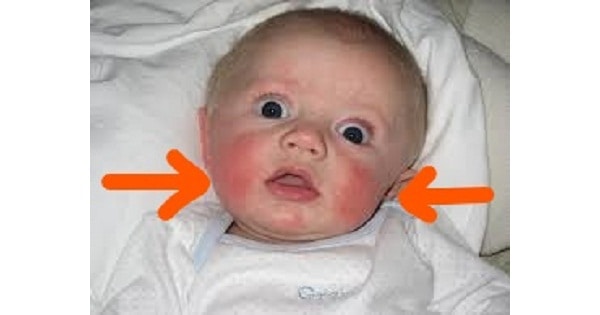
- Erythema infectiosum / slapped check disease.


- Child present with facial rash (slapped cheek appearance)
- Preceded by lowgrade fever.
Polyarthropathy syndrome
- Uncommon among children but occurs in 50% of adults.
- Small joints of the hands and ankles are involved symmetrically.
Aplastic crisis
- Asymptomatic transient reticulocytopenia occurs in most individuals with B19 infection..
In normal individuals:
- Normal erythropoiesis
- Few days of arrest of erythropoiesis
- Not cause detectable anemia.
But, in cases of chronic hemolytic anemias:
- e.g. sickle cell anemia, hereditary spherocytosis.
- Require continuous erythropoiesis.
- Life span of the R.B.C. is shortened.
- This leads to aplastic crisis in these patients.
- These patients can readily transmit B-19 infection to other people.
Pure red cell aplasia/chronic anemia
- Parvovirus causes established persistent infection in patients with iminunosuppression e.g. (AIDS, CLL).
- These patients have persistent anemia with reticulocytopenia.
Hydrops fetalis
- Hydrops fetalis refers to excessive accumulation of fluid in at least two fetal body cavities.
- Cause nonimmunohydrops fetalis if infection occur in first 20 weeks of pregnancy
- Parvovirus has tropism for, fetal liver and heart(abundant P receptors)
Pathogenesis:
- Decreased erythrocyte production leads to anemia
- High output cardiac failure
- Leads to fluid accumulation and hydrops fetalis
- Myocarditis leading to heart failure may also contribute to the development of fetal hydrops.
Characterised on ultrasound by :
- generalised skin oedema (skin thickness > 5mm)
- ascites
- pleural effusion
- large placenta (placental thickness > 4 cm)
- The fetus may be in Buddha position and there may be a halo around the head.
Risk:
- Transplacental infection is 30%
- Fetal loss (early in 2nd trimester) is 9%.
Diagnosis
- Done by the detection of B19 IgM and IgG antibodies.
- IgM is detected at the time of rash in erythema infectiosum
- IgG is detected on the 7th day.
Treatment
- No antiviral is effective against parvovirus.
Parvovirus
- Smallest virus.
- Not a cultivable virus
Pathogenesis of parvovirus
- Affects erythroid progenitors.
Transmission
Vertical (transplacental) transmission rates are estimated to be :
- 30% or higher.
Transmission is primarily by :
- respiratory route
- Also through blood.
Clinical manifestations:
Erythema infectiosum (fifth disease)
- Fifth of the Childhood Viral Rash
- The main symptomatic manifestation
- Erythema infectiosum also known as fifth disease or slapped check disease.
- Child present with facial rash (slapped cheek appearance)
- Preceded by lowgrade fever.
Polyarthropathy syndrome
- Uncommon among children but occurs in 50% of adults.
Aplastic crisis
- Asymptomatic Transient reticulocytopenia precipitated in certain cases of Ch Hemolytic Anemia
- Ex – Sickle Cell Anemia , Hereditary Spherocytosis
Pure red cell aplasia/chronic anemia
- chronic anemia with reticulocytopenia
Hydrops fetalis
- Cause nonimmunohydrops fetalis if infection occur in first 20 weeks of pregnancy
Maternal infection can result in:
- Hydrops fetalis
- Fetal death due to severe anemia.
Diagnosis
- Done by the detection of B19 IgM and IgG antibodies.
- IgM is detected at the time of rash in erythema infectiosum
- IgG is detected on the 7th day.
Treatment
- No antiviral is effective against parvovirus.