
Rhinosleroma
RHINOSCLEROMA
- Rhinoscleroma is a progressive granulomatous disease of the upper respiratory tract.
- It is caused by the gram-negative coccobacillus K rhinoscleromatis or Frish Bacillus.
- The disease probably begins in areas of epithelial transition such as the vestibule of the nose, the subglottic area of the larynx, or the area between the nasopharynx and oropharynx.
- It is a chronic infection of the nose characterised by sclerosis and stenosis of the nasal passage.
- Rhinoscleroma may be found in all age groups, but typically young adults 20–30 years old are most frequently affected.
- Both sexes are equally affected.
- The disease is endemic in several parts of world.
- In India, it is seen more often in northern than in the southern parts.
- Airborne transmission combined with poor hygiene, crowded living conditions, and poor nutrition contributes to its spread.
PATHOLOGY OF RHINOSLEROMA
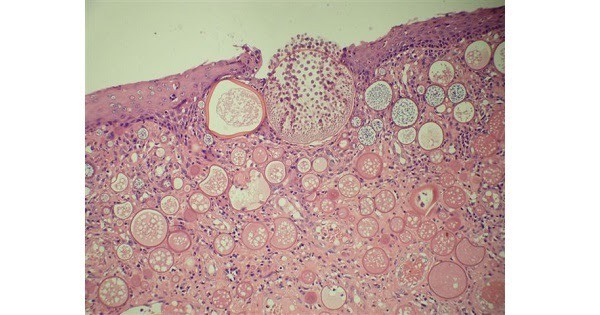
- The disease is characterized by presence of granulations which infiltrate the submucosa ,with scattered Mikulicz cells(large vacuolated foamy cells containing a central nucleus and acid fast Frisch bacilli),Rusell bodies(resmbling plasma cells with an eccentric nucleus and deep eosin staining cytoplasm) and lymphocytes in dense fibrous tissue.
CLINICAL FEATURES IN A CASE OF RHINOSCLEROMA
SYMPTOMS
- Blocking of the nose,Nasal Discharge,Headache,Epistaxis
SIGNS
- External nose is firm and woody to touch.
- Anterior Rhinoscopy:Throat:may show extension of the sclerosing process downwards from the nose to the oropharynx,larynx.
3 stages:
- Atrophic Stage:is present initially,with crusting ,roomy cavity and atrophic dry nasal mucosa.
- Nodular stage:Bluish red non-ulcerative polypoidal masses of rubbery consistency are formed.
- Fibrotic stage of stenosis:of the nasal passages varying from partial obstruction to total atresia .
TREATMENT IN A CASE OF RHINOSCLEROMA
- In rhinoscleromatosis, organism may be difficult to eradicate, despite aggressive therapy.Relapses may occur.
- A combination of conservative surgical debridement and long-term antibiotic coverage is the mainstay of therapy for rhinoscleroma.Tetracycline has been shown to be effective .
Fluoroquinolones may be used as an alternative, given their excellent gram-negative activity and convenient dosing regimen
Exam Question- Mikulicz cells and Russell bodies are seen in Rhinoscleroma.
- A roomy nasal cavity and atrophic dry nasal mucosa with thick crust formation and woody hard external nose is seen in Rhinoscleroma.
- Rhinoscleroma is caused by Klebsiella Rhinoscleromatis.
- Rhinoscleroma is a slowly progressing granulomatous disease.
- Rhinoscleroma is most common in young adults 20–30 years old.
- Poor nutrition contributes to the spread of Rhinosleroma.
- Drug of choice in Rhinoscleromatosis is Tetracycline.
- Frish bacillus causes Rhinoscleroma.
Don’t Forget to Solve all the previous Year Question asked on Rhinosleroma
