
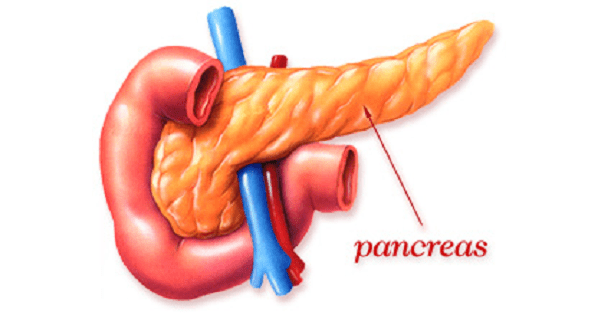
DIGESTION AND ABSORPTION OF PROTEIN
Which of the following has a stable enzymatic activity at a PH of 1.8?
| A |
Pepsin |
|
| B |
Trypsin |
|
| C |
Chymotrypsin |
|
| D |
Carboxypeptidase |
Which of the following has a stable enzymatic activity at a PH of 1.8?
| A |
Pepsin |
|
| B |
Trypsin |
|
| C |
Chymotrypsin |
|
| D |
Carboxypeptidase |
All of the following statements are correct about stomach, EXCEPT:
| A |
Pylorus has more acid secreting cells |
|
| B |
A high number of goblet cells are present in mucous lining |
|
| C |
Chief cells secrete pepsinogen |
|
| D |
Parietal cells secrete intrinsic factor |
All of the following statements are correct about stomach, EXCEPT:
| A |
Pylorus has more acid secreting cells |
|
| B |
A high number of goblet cells are present in mucous lining |
|
| C |
Chief cells secrete pepsinogen |
|
| D |
Parietal cells secrete intrinsic factor |
In the cardiac and pyloric regions, these are called the cardiac and pyloric glands, respectively, secrete mucus only.Parietal cells secrete hydrochloric acid and intrinsic factor; chief cells secrete rennin and lipase in infancy and pepsinogen throughout life; and enteroendocrine cells secrete hormones and paracrine messengers that regulate digestion.
All are true regarding activation of trypsin, EXCEPT:
| A |
Enterokinase helps in the activation |
|
| B |
Activated autocatalytically by trypsin |
|
| C |
It takes place in the small intestine |
|
| D |
Mg is also required |
All are true regarding activation of trypsin, EXCEPT:
| A |
Enterokinase helps in the activation |
|
| B |
Activated autocatalytically by trypsin |
|
| C |
It takes place in the small intestine |
|
| D |
Mg is also required |
Trypsin is a proteolytic enzyme, secreted by the pancreas. It is secreted in the inactive form trypsinogen. It is activated to the active form, trypsin in the small intestine. Its activation is brought about by enterokinase, autocatalytically by trypsin and calcium is also required.
Ref: Ganong’s Review of Medical Physiology, 22nd Edition, Page 468
A 35 year old female, hospitalized after a motor vehicle accident, develops acute gastric stress ulcers. Increases in which of the following normal physiological parameters may have contributed to this condition?
| A |
Bicarbonate transport |
|
| B |
Epithelial regenerative capacity |
|
| C |
Mucosal blood flow |
|
| D |
Pepsin production |
Pepsin production is a normal physiologic activity of the stomach that, in conditions of stress, may overwhelm the stomach’s weakened defenses and result in gastric ulceration. Gastric acid production is another condition that may increase and cause acute ulceration. Furthermore, these two factors may remain unchanged and still result in gastric ulcers if the gastric defenses are weakened by stress. All of the other choices represent normal defensive forces in the stomach.
A young boy presents with failure to thrive. Biochemical analysis of a duodenal aspirate after a meal reveals a deficiency of enteropeptidase (enterokinase). The levels of which of the following digestive enzymes would be affected?
| A |
Amylase |
|
| B |
Colipase |
|
| C |
Lactase |
|
| D |
Trypsin |
Enteropeptidase, formerly called enterokinase, activates trypsinogen by limited proteolytic digestion to give trypsin. Trypsin is itself capable of activating trypsinogen, which produces a positive feedback effect. Trypsin also activates chymotrypsinogen (and several other proteolytic enzymes), so deficiency of enteropeptidase results in a severe deficiency of enzymes that digest protein.
Amylase aids in the breakdown of starches to oligosaccharides, maltose, and maltotriose.
Colipase, along with other lipases, functions to digest fats.
Lactase is a brush-border disaccharidase that hydrolyzes the bond between galactose and glucose in lactose.
Ref: Barrett K.E., Barman S.M., Boitano S., Brooks H.L. (2012). Chapter 25. Overview of Gastrointestinal Function & Regulation. In K.E. Barrett, S.M. Barman, S. Boitano, H.L. Brooks (Eds), Ganong’s Review of Medical Physiology, 24e.
A patient undergoes a total gastrectomy because of a proximally located gastric cancer. After the surgery, which of the following digestive enzymes will be produced in inadequate amounts?
| A |
Amylase |
|
| B |
Chymotrypsin |
|
| C |
Lipase |
|
| D |
Pepsin |
A patient undergoes a total gastrectomy because of a proximally located gastric cancer. After the surgery, which of the following digestive enzymes will be produced in inadequate amounts?
| A |
Amylase |
|
| B |
Chymotrypsin |
|
| C |
Lipase |
|
| D |
Pepsin |
Pepsin is secreted (in an inactive or zymogen form as pepsinogen) by the chief cells of the stomach. Pepsinogen is activated by contact with stomach acid. Although protein digestion usually begins with the actions of hydrochloric acid and pepsin, pancreatic enzymes complete the job as the food passes into the small intestine.
Amylases hydrolyze 1->4 glycosidic linkages of starches to produce oligosaccharides, maltose, maltotriose, and limit dextrins. These enzymes are produced by the pancreas and salivary glands.
Chymotrypsin is a proteolytic enzyme released by the pancreas as the inactive proenzyme, chymotrypsinogen.
Lipases are mostly released by the pancreas, and serve to digest various lipids, including triacylglycerols.
Ref: Barrett K.E., Barman S.M., Boitano S., Brooks H.L. (2012). Chapter 25. Overview of Gastrointestinal Function & Regulation. In K.E. Barrett, S.M. Barman, S. Boitano, H.L. Brooks (Eds), Ganong’s Review of Medical Physiology, 24e.
Which of the following enzymes is stable at acidic pH:
| A |
Pepsin |
|
| B |
Trypsin |
|
| C |
Chymotrypsin |
|
| D |
Carboxypeptidase |
Which of the following enzymes is stable at acidic pH:
| A |
Pepsin |
|
| B |
Trypsin |
|
| C |
Chymotrypsin |
|
| D |
Carboxypeptidase |
A i.e. Pepsin
- Pepsin is formed from pepsinogen in stomach by HC1 activation. Optimal pH for pepsin is 1.6 – 3.2 (acidic) at which it is stableQ. But its action is terminated when acidic gastric content is mixed with alkaline pancreatic juice in duodenum
- Pancreatic enzymes – trypsin , chymotrypsin & carboxy peptidase are stable in alkaline pHQ
Pepsinogen is activated by :
| A |
Enterokinase |
|
| B |
Low pH |
|
| C |
Trypsin |
|
| D |
Chymotrypsin |
Pepsinogen is activated by :
| A |
Enterokinase |
|
| B |
Low pH |
|
| C |
Trypsin |
|
| D |
Chymotrypsin |
B i.e. Low pH
Chymotrypsinogen in activated into chymotrypsin by
| A |
Trypsin |
|
| B |
Pepsin |
|
| C |
Fatty acids |
|
| D |
Bile salts |
Chymotrypsinogen in activated into chymotrypsin by
| A |
Trypsin |
|
| B |
Pepsin |
|
| C |
Fatty acids |
|
| D |
Bile salts |
A i.e. Trypsin
Pancreatic secretion contain –
| A |
Trypsin |
|
| B |
Lipase |
|
| C |
Enteropeptidase |
|
| D |
A & B |
Pancreatic secretion contain –
| A |
Trypsin |
|
| B |
Lipase |
|
| C |
Enteropeptidase |
|
| D |
A & B |
A i.e. Trypsin; B i.e Lipase
Chymotrypsinogen is a
| A |
Zymogen |
|
| B |
Carboxypeptidase |
|
| C |
Transaminase |
|
| D |
Elastase |
Chymotrypsinogen is a
| A |
Zymogen |
|
| B |
Carboxypeptidase |
|
| C |
Transaminase |
|
| D |
Elastase |
A i.e. Zymogen
Chymotrypsinogen or prochymotrypsin is a proprotein/ proenzyme / or zymogen.
Proproteins (Proenzymes or Zymogens)
- Zymogen is an inactive precursor of enzyme / protein that require selective proteolysis for activation. Selective proteolysis involves one or more highly specific proteolytic clips that may or may not be accompanied by separation of resulting peptide. So selective proteolysis often result in conformational changes that create the catalytic site of an enzyme or it unmasks the active site of an enzyme by removing small region of peptide chain (by hydrolysis of specific peptide bond).
- Enzymes needed intermittently but rapidly often are secreted in an initially inactive form since new synthesis and secretion of required proteins might be insufficiently rapid to respond to a pressing pathophysiological demand such as clot formation, clot dissolution, tissue repair etc. So proenzymes facilitate rapid mobilization of activity in response to physiological need.
Proteolytic digestive enzymes are known as proteases. These are secreted as inactive zymogens. The synthesis of enzymes as Zymogens protects the cell from being digested by its own product (autodigestion). Proteases are of two types
The mechanism that protects normal pancreas from autodigestion is :
| A |
Secretion of biocarbonate |
|
| B |
Protease inhibitors present in plasma. |
|
| C |
Proteolytic enzymes secreted in inactive form |
|
| D |
The resistance of pancreatic cells. |
The mechanism that protects normal pancreas from autodigestion is :
| A |
Secretion of biocarbonate |
|
| B |
Protease inhibitors present in plasma. |
|
| C |
Proteolytic enzymes secreted in inactive form |
|
| D |
The resistance of pancreatic cells. |
C i.e. Proteolytic enzymes secreted in inactive form
Chymotrypsinogen is activated into chymotrypsin by:
March 2007
| A |
Trypsin |
|
| B |
Pepsin |
|
| C |
Renin |
|
| D |
HCl |
Chymotrypsinogen is activated into chymotrypsin by:
March 2007
| A |
Trypsin |
|
| B |
Pepsin |
|
| C |
Renin |
|
| D |
HCl |
Ans. A: Trypsin
Trypsin is secreted into the duodenum, where it hydrolyses peptides into its smaller building blocks, namely amino acids. Trypsin catalyses the hydrolysis of peptide bonds.
Trypsins have an optimal operating pH of about 8.
Trypsins are considered endopeptidases, i.e., the cleavage occurs within the polypeptide chain rather than at the terminal amino acids located at the ends of polypeptides.
Trypsin is produced in the pancreas in the form of inactive trypsinogen.
It is then secreted into the small intestine, where the enzyme enteropeptidase activates it into trypsin by proteolytic cleavage. The resulting trypsins themselves activate more trypsinogens (autocatalysis), chymotrypsinogen, Elastase/ proelastase, Carboxypeptidase A and B, Colipase and Phospholipase A2.
Pepsinogen is activated by ‑
| A |
Enterokinase |
|
| B |
Enteropeptidase |
|
| C |
H+ |
|
| D |
Trypsin |
Pepsinogen is activated by ‑
| A |
Enterokinase |
|
| B |
Enteropeptidase |
|
| C |
H+ |
|
| D |
Trypsin |
Ans. is c i.e.,H+
Pepsin is secreted by chief cells of stomach in an inactive (zymogen) form called pepsinogen.
Acid (IF) in lumen of stomach converts pepsinogen to active pepsin.
Pepsin once formed also attacks pepsinogen producing more pepsin molecules by autocatalysis.
Which of the following is serine protease ‑
| A |
Pepsin |
|
| B |
Trypsin |
|
| C |
Carboxypeptidase |
|
| D |
None |
Which of the following is serine protease ‑
| A |
Pepsin |
|
| B |
Trypsin |
|
| C |
Carboxypeptidase |
|
| D |
None |
Ans. is ‘b’ i.e., Trypsin
All are endopeptidases except ‑
| A |
Trypsin |
|
| B |
Chymotripsin |
|
| C |
Carboxypeptidase |
|
| D |
None |
All are endopeptidases except ‑
| A |
Trypsin |
|
| B |
Chymotripsin |
|
| C |
Carboxypeptidase |
|
| D |
None |
Ans. is ‘c’ i.e., Carboxypeptidase
- Trypsin, chymotrypsin and elastase are endopeptidases, which means that they split peptide linkages in the middle of the amino acid chain, not at either end.
- Carboxypeptidases (A and B), on the other hand, are exopeptidases, i.e., They split the peptide linkage at the carboxyl end of amino acid chain.

