
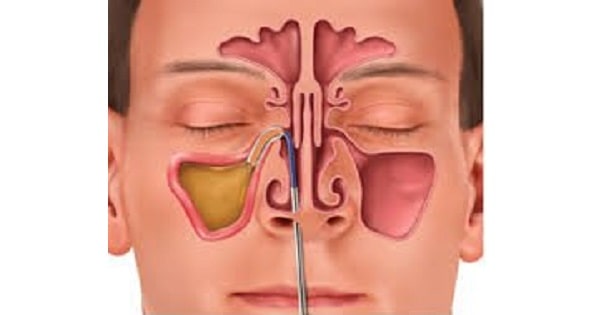
FESS
In FESS surgery structure preserved is?
| A |
Ethmoid sinus |
|
| B |
Sphenoid sinus |
|
| C |
Maxillary sinus |
|
| D |
None |
In FESS surgery structure preserved is?
| A |
Ethmoid sinus |
|
| B |
Sphenoid sinus |
|
| C |
Maxillary sinus |
|
| D |
None |
TYPES OF FUNCTIONAL ENDOSCOPIC SINUS SURGERY:
|
Type 1 |
Nasal endoscopy and uncinectomy with or without agger nasi cell exenteration. |
|
Type 2 |
Nasal endoscopy, uncinectomy, bulla ethmoidectomy, removal of sinus lateralis mucous membrane and exposure of frontal recess/ frontal sinus |
|
Type 3 |
Type 2 plus maxillary sinus antrostomy through the natural sinus ostium |
|
Type 4 |
Type 3 plus complete posterior ethmoidectomy |
|
Type 5 |
Type 4 plus sphenoidectomy & stripping of mucous membrane |
Which of the following surgery is not contraindicated below 12 years of age?
| A |
Rhinoplasty |
|
| B |
FESS |
|
| C |
SMR |
|
| D |
Septoplasty |
Which of the following surgery is not contraindicated below 12 years of age?
| A |
Rhinoplasty |
|
| B |
FESS |
|
| C |
SMR |
|
| D |
Septoplasty |
FESS is the only surgery which can be perform before 17 years.
In rarest circumstances, septal surgery is performed in children, septoplasty is also done and never SMR.
Treatment for recurrent atrochoanal polyp:
| A |
Caldwell Luc operation |
|
| B |
FESS |
|
| C |
Simple polypectomy |
|
| D |
Both a and b |
Treatment for recurrent atrochoanal polyp:
| A |
Caldwell Luc operation |
|
| B |
FESS |
|
| C |
Simple polypectomy |
|
| D |
Both a and b |
The current treatment of choice for a large antrochoanal polyp in a 10 year old is:
| A |
Intranasal polypectomy |
|
| B |
Caldwell Luc operation |
|
| C |
FESS |
|
| D |
Lateral rhinotomy and excision |
The current treatment of choice for a large antrochoanal polyp in a 10 year old is:
| A |
Intranasal polypectomy |
|
| B |
Caldwell Luc operation |
|
| C |
FESS |
|
| D |
Lateral rhinotomy and excision |
The current treatment of choice for a large antrochoanal polyp in a 30-year-old man is:
| A |
Intranasal polypectomy |
|
| B |
Caldwell-Luc operation |
|
| C |
FESS (Functional Endoscopic Sinus Surgery) |
|
| D |
Lateral rhinotomy and excision |
The current treatment of choice for a large antrochoanal polyp in a 30-year-old man is:
| A |
Intranasal polypectomy |
|
| B |
Caldwell-Luc operation |
|
| C |
FESS (Functional Endoscopic Sinus Surgery) |
|
| D |
Lateral rhinotomy and excision |
- Current treatment of choice of antrochoanal polyp is endoscopic sinus surgery which has superceded other modes of polyp removal in all age groups.
- In this procedure all polyps are removed under endoscopic control especially from the key area of the osteomeatal complex. This procedure helps to preserve the normal function of the sinuses. FESS can be done under local anesthesia although general anesthesia is preferred
- Caldwell-Luc operation is avoided these days.
Orbital cellulitis is a complication of:
| A |
Parasinusitis |
|
| B |
Faciomaxillary trauma |
|
| C |
Endoscopic sinus surgery |
|
| D |
All of these |
Orbital cellulitis is a complication of:
| A |
Parasinusitis |
|
| B |
Faciomaxillary trauma |
|
| C |
Endoscopic sinus surgery |
|
| D |
All of these |
The best surgical treatment for chronic maxillary sinusitis is:
| A |
Repeated antral washout |
|
| B |
Fibreoptic endoscopic sinus surgery |
|
| C |
Caldwell-Luc’s operation |
|
| D |
Horgan’s operation |
The best surgical treatment for chronic maxillary sinusitis is:
| A |
Repeated antral washout |
|
| B |
Fibreoptic endoscopic sinus surgery |
|
| C |
Caldwell-Luc’s operation |
|
| D |
Horgan’s operation |
FESS means:
| A |
Factual endoscopic sinus surgey |
|
| B |
Functionl endonasal sinus surgery |
|
| C |
Factual endonasal sinus surgery |
|
| D |
Functionl endoscopic sinus surgery |
FESS means:
| A |
Factual endoscopic sinus surgey |
|
| B |
Functionl endonasal sinus surgery |
|
| C |
Factual endonasal sinus surgery |
|
| D |
Functionl endoscopic sinus surgery |
Endoscopic nasal surgery is indicated in:
| A |
Chronic sinusitis |
|
| B |
Epistaxis |
|
| C |
Both |
|
| D |
None |
Endoscopic nasal surgery is indicated in:
| A |
Chronic sinusitis |
|
| B |
Epistaxis |
|
| C |
Both |
|
| D |
None |
Ans. is c i.e. Both
indications of FESS:
| A |
Inverted papilloma |
|
| B |
Orbital abscess |
|
| C |
Nasal polyposis |
|
| D |
All |
indications of FESS:
| A |
Inverted papilloma |
|
| B |
Orbital abscess |
|
| C |
Nasal polyposis |
|
| D |
All |
Ans. is all
[indications of Function) endoscopic Endoscopic Surgery (FESS)
Nasal conditions:
Indian = Inflammation of sinus (sinusitis – chronic and fungal)
Prime = Polyp removal
Minister = Mucocelea of frontal and ethmoid sinus
Can = Choanal atresia repair Speak = Septoplasty
Fluent = Foreign body removal English = Epistaxis
Other conditions: Nose is separated from orbit by lamina papyracea, anterior cranal fossa by cribriform plate and pituitary by sphenoid.
Hence FESS can be used in:
- Orbital conditions
– Orbital decompression
– Optic nerve decompression
– Blow out of orbit
– Drainage of periorbital abscess
– Dacryocystorhinostomy
- CSF leak
- Pituitary surgery like trans sphenoid hypophysectomy
A patient presents with antrochoanal polyp arising from the medial wall of the maxilla. Which of the following would be the best management for the patient?
| A |
FESS with polypectomy |
|
| B |
Medial maxillectomy (TEMM) |
|
| C |
Caldwell-Luc procedure |
|
| D |
Intranasal polypectomy |
A patient presents with antrochoanal polyp arising from the medial wall of the maxilla. Which of the following would be the best management for the patient?
| A |
FESS with polypectomy |
|
| B |
Medial maxillectomy (TEMM) |
|
| C |
Caldwell-Luc procedure |
|
| D |
Intranasal polypectomy |
A patient presents with antrochoanal polyp arising from the medial wall of the maxilla. FESS with polypectomy would be the best management for the patient.
FESS (Functional Endoscopic Sinus Surgery):
- Current treatment of choice of antrochoanal polyp is endoscopic sinus surgery, which has superseded other modes of polyp removal.
- In this procedure, all polyps are removed under endoscopic control especially from the the key area of the osteomeatal complex. This procedure helps to preserve the normal function of the sinuses. FESS can be done under local anesthesia although general anesthesia is preferred.

