
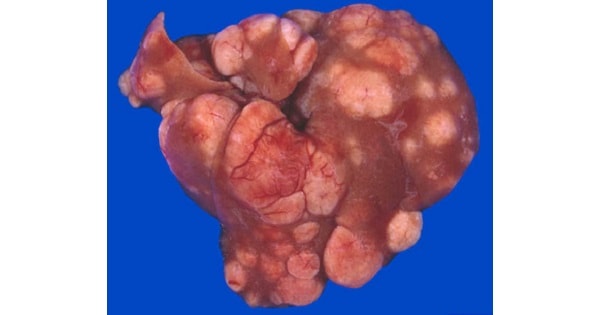
Hepatocellular Carcinoma
Tumor marker for primary hepatocellular carcinoma are all except
| A |
Alpha feto protein |
|
| B |
Alpha 2 macroglobulin |
|
| C |
PIVKA-2 |
|
| D |
Neurotensin |
Tumor marker for primary hepatocellular carcinoma are all except
| A |
Alpha feto protein |
|
| B |
Alpha 2 macroglobulin |
|
| C |
PIVKA-2 |
|
| D |
Neurotensin |
Alpha 2 macroglobulin Ref Devita’s Oncology S/e chapter 39 (7/e p994, 1004)] Serological markers for Henatocellular Carcinoma
a) AFP- It is the most imp. tumor marker for HCC. AFP level is elevated in approximately 70% of individuals in Asian countries bearing HCC and only 50% of patients in US & Europe.
b) des-gamma-carboxy prothrombin (DCP),a protein induced by vitamin K abnormality (PIVKA-2)- this is the other most widely used assay. The level of this protein is increased in as many as 80% of patients with HCC but may also be elevated in patients with vitamin K deficiency, it is always elevated after use of warfarin.
c) Neurotensin- is a tumor marker for fibrolamellar variant of hepatocellular carcinoma
d) Vit B12 binding globulin- is another marker for fibrolamellar variant of HCC
Yttrium 90 microspheres are used in treatment of:
| A |
Wilm’s tumour |
|
| B |
Teratoma |
|
| C |
Hepatocellular carcinoma |
|
| D |
All of the above |
Yttrium 90 microspheres are used in treatment of:
| A |
Wilm’s tumour |
|
| B |
Teratoma |
|
| C |
Hepatocellular carcinoma |
|
| D |
All of the above |
All of the following are TRUE about hepatocellular carcinoma, EXCEPT:
| A |
It has a high incidence in East Africa and South east Asia |
|
| B |
Its worldwide incidence parallels the prevalence of hepatitis B |
|
| C |
Over 80% of tumors are surgically resected |
|
| D |
Liver transplantation offers the only chance of cure in those with unresectable disease |
“Because of multicentricity, bilobar involvement, portal vein invasion, and lymphatic metastasis only 15-20% of hepatocellular carcinoma are resectable”
Ref: Sabiston 18/e, Page 1500; CSDT 13/e, Page 520,1206; Harrison 17/e, Page 580
Which of the following is the MOST unlikely feature of hepatocellular carcinoma?
| A |
Hepatomegaly |
|
| B |
Raised a- fetoprotein levels |
|
| C |
Raised alkaline phosphatase |
|
| D |
Jaundice |
Which of the following is the MOST unlikely feature of hepatocellular carcinoma?
| A |
Hepatomegaly |
|
| B |
Raised a- fetoprotein levels |
|
| C |
Raised alkaline phosphatase |
|
| D |
Jaundice |
Jaundice is rare, unless significant deterioration of the liver function or obstruction of the bile duct occurs.
- Most common symptom of hepatocellular carcinoma is abdominal pain.
- Most common sign of hepatocellular carcinoma is hepatomegaly.
Which of the following is a tumor markers for Hepatocellular carcinoma?
| A |
AFP |
|
| B |
CEA |
|
| C |
HCG |
|
| D |
CA-125 |
Which of the following is a tumor markers for Hepatocellular carcinoma?
| A |
AFP |
|
| B |
CEA |
|
| C |
HCG |
|
| D |
CA-125 |
AFP is the most important tumor marker for HCC.
AFP level is elevated in approximately 70% of individuals in Asian countries bearing HCC and 50% of patients in US and Europe.
Ref: Sabiston 18/e, Page 582; CSDT 13/e, Page 519.
Which of the following condition has a propensity to invade the portal or hepatic vein?
| A |
Cavernous hemangioma |
|
| B |
Hepatocellular carcinoma |
|
| C |
Focal nodular hyperplasia |
|
| D |
Hepatic adenoma |
Which of the following condition has a propensity to invade the portal or hepatic vein?
| A |
Cavernous hemangioma |
|
| B |
Hepatocellular carcinoma |
|
| C |
Focal nodular hyperplasia |
|
| D |
Hepatic adenoma |
Hepatocellular carcinoma has a propensity to invade portal or hepatic veins.
Neo vascularity within the thrombus in the portal or hepatic veins on Doppler US is considered diagnostic of hepatocellular carcinoma.
- Common factors associated with increased risk of developing HCC:
- Cirrhosis from any cause
- Hepatitis B or C chronic infection
- Chronic ethanol consumption
- NASH/NAFLD
- Aflatoxin B1 or other mycotoxins
Which of the following is not commonly seen in Hepatocellular carcinoma?
| A |
Raised AFP |
|
| B |
Raised ALP |
|
| C |
Hepatomegaly |
|
| D |
Jaundice |
Which of the following is not commonly seen in Hepatocellular carcinoma?
| A |
Raised AFP |
|
| B |
Raised ALP |
|
| C |
Hepatomegaly |
|
| D |
Jaundice |
Among the common presenting symptoms of patients with HCC, jaundice is not commonly seen.
It is seen only when there is mechanical obstruction of the bile duct.
Most of the patients presents with abdominal pain or are completely asymptomatic and are detected on routine laboratory investigation.
Hepatomegaly is the most common physical sign. AFP levels are elevated in more than half of the cases.
Reference:
Harrison’s Principles of Internal Medicine 18e chapter 92.
Sorafenib a tyrosine kinase inhibitor is used to treat which of the following?
| A |
Myeloproliferative disorder |
|
| B |
Follicular lymphoma |
|
| C |
Medullary carcinoma thyroid |
|
| D |
Hepatocellular carcinoma |
Sorafenib a tyrosine kinase inhibitor is used to treat which of the following?
| A |
Myeloproliferative disorder |
|
| B |
Follicular lymphoma |
|
| C |
Medullary carcinoma thyroid |
|
| D |
Hepatocellular carcinoma |
Sorafenib is used to treat hepatoma which are not resectable as a palliative measure.
Transarterial chemoembolization (TACE) is used in the treatment of unresectable hepatocellular carcinoma without portal vein thrombosis. The drug commonly used for TACE is:
| A |
Doxorubicin |
|
| B |
Sorafenib |
|
| C |
Tamoxifen |
|
| D |
Carboplatin |
Transarterial chemoembolization (TACE) is used in the treatment of unresectable hepatocellular carcinoma without portal vein thrombosis. The drug commonly used for TACE is:
| A |
Doxorubicin |
|
| B |
Sorafenib |
|
| C |
Tamoxifen |
|
| D |
Carboplatin |
There are different treatment modalities for HCC. Curative treatments are resection, liver transplantation, Radiofrequency ablation (RFA), Percutaneous ethanol injection etc. Palliative treatments are TACE, Sorafenib etc.
All are curative treatment modalities for hepatocellular carcinoma, EXCEPT:
| A |
Trans Arterial Chemoembolization (TACE) |
|
| B |
Radiofrequency ablation |
|
| C |
Percutaneous Ethanol Injection |
|
| D |
Resection |
All are curative treatment modalities for hepatocellular carcinoma, EXCEPT:
| A |
Trans Arterial Chemoembolization (TACE) |
|
| B |
Radiofrequency ablation |
|
| C |
Percutaneous Ethanol Injection |
|
| D |
Resection |
Hepatic artery obstruction is performed during an angiographic procedure and is known as transarterial, or transcatheter arterial embolization (TAE). When TAE is combined with the prior injection into the hepatic artery of chemotherapeutic agents, usually mixed with lipiodol, the procedure is known as transarterial chemoembolization (TACE). TACE is a palliative therapy for HCC.
Ref: 2011 AASLD practice guidelines, Management of hepatocellular carcinoma.
The MOST commonly used chemotherapeutic agent in trans arterial chemoembolisaion for hepatocellular carcinoma is:
| A |
Doxorubicin |
|
| B |
Cisplatin |
|
| C |
Mitomycin C |
|
| D |
5 FU |
The MOST commonly used chemotherapeutic agent in trans arterial chemoembolisaion for hepatocellular carcinoma is:
| A |
Doxorubicin |
|
| B |
Cisplatin |
|
| C |
Mitomycin C |
|
| D |
5 FU |
Doxorubicin, Cisplatin and Mitomycin all are used in TACE. However the most commonly used agent is Doxorubicin.
Ref: Quality-Improvement Guidelines for Hepatic Transarterial Chemoembolization: Cardiovasc Intervent Radiol
Most common cause of malignant portal vein thrombosis is:
| A |
Renal cell carcinoma |
|
| B |
Carcinoma prostate |
|
| C |
Hepatocellular carcinoma |
|
| D |
Carcinoma colon |
Most common cause of malignant portal vein thrombosis is:
| A |
Renal cell carcinoma |
|
| B |
Carcinoma prostate |
|
| C |
Hepatocellular carcinoma |
|
| D |
Carcinoma colon |
Malignancies are responsible for 21%-24% of overall cases of PVT. Among them hepatoma accounts for majority followed by pancreatic malignancy. PVT is common in patients affected by liver cirrhosis.
A chronic alcoholic has an elevated serum alpha fetoprotein levels. Which of the following neoplasms is most likely –
| A |
Prostatic adenocarcinoma |
|
| B |
Multiple myeloma |
|
| C |
Hepatocellular carcinoma |
|
| D |
Glioblastoma multiforme |
A chronic alcoholic has an elevated serum alpha fetoprotein levels. Which of the following neoplasms is most likely –
| A |
Prostatic adenocarcinoma |
|
| B |
Multiple myeloma |
|
| C |
Hepatocellular carcinoma |
|
| D |
Glioblastoma multiforme |
Ans. is ‘c’ i.e., Hepatocellular carcinoma
Mallory hyaline is seen in –
| A |
Alcoholic liver disease |
|
| B |
Hepatocellular carcinoma |
|
| C |
Wilson’s disease |
|
| D |
All |
Mallory hyaline is seen in –
| A |
Alcoholic liver disease |
|
| B |
Hepatocellular carcinoma |
|
| C |
Wilson’s disease |
|
| D |
All |
Ans. is ‘a’ i.e., Alcoholic liver disease; ‘b’ i.e., Hepatocellular carcinoma; ‘c’ i.e., Wilson’s disease
AFP is raised in –
| A |
Hepatic adenoma |
|
| B |
Hepatocellular carcinoma |
|
| C |
Focal nodular hyperplasia |
|
| D |
None |
AFP is raised in –
| A |
Hepatic adenoma |
|
| B |
Hepatocellular carcinoma |
|
| C |
Focal nodular hyperplasia |
|
| D |
None |
Ans. is ‘b’ i.e., Hepatocellular carcinoma
- “High levels of serum AFP in an adult with liver disease and without an obvious gastrointestinal tumour strongly suggests hepatocellular carcinoma”. — Harrison
Hepatic adenoma
o Hepatic adenoma occur almost exclusively in women and appear to be related to the widespread use of oral contraceptive.
o These tumours regress on discontinuation of oral contraceptives. They do not have any elevation in alpha feto proteins.
o Liver cell adenomas have clinical significance for three reasons.
When they present as an intrahepatic mass, they may be mistake for the more ominous hepatocellular carcinoma.
Subcapsular adenomas have a tendency to rupture, particularly during pregnancy (under estrogen stimulation) causing severe intraperitoneal hemorrhage.
Rarely, they may harbour hepatocellular carcinoma.
Focal nodular h _perplasia
- Mass lesion presenting most frequently in young to middle aged adults with female preponderance.
- Most patients with focal nodular hyperplasia are asymptomatic, few patients present with right upper quadrant mass or both.
o Hepatic function and AFP levels are usually normal.
o The use of oral contraceptive agents may stimulats, the development or growth of this tumour. o Unlike hepatic adenomas these lesions rarely grow or bleed and have no malignant potential.
All are features of hepatocellular carcinoma, except‑
| A |
Not common in Asian |
|
| B |
Liver biopsy is diagnostic |
|
| C |
Raised titre of HBV and HCV antibodies |
|
| D |
Fibrolameller type is having good prognosis |
All are features of hepatocellular carcinoma, except‑
| A |
Not common in Asian |
|
| B |
Liver biopsy is diagnostic |
|
| C |
Raised titre of HBV and HCV antibodies |
|
| D |
Fibrolameller type is having good prognosis |
Ans. is ‘a’ i.e., Not common in Asians
Hepatocellular carcinoma
- Primary hepatocellular carcinoma is especially prevalent in regions of Asia and Africa. The largest number of cases are found in Asia followed by Africa.
o More than 85% of cases of HCC occurs in countries with high rates of chronic HBV infection. In these regions HBV carrier state begins in infancy following vertical transmission of virus from infected mothers, conferring a 200 fold increased risk for HCC by adulthood.
Other major etiological associations for liver carcinoma are ‑
o Chronic alcoholism
o Tyrosinemia
o Food contaminants (primarily aflatoxins derived from Aspergillus flavus) o Hereditary hemochromatosis Clinical features of hepatocellular carcinoma ‑
o The clinical manifestations of hepatocellular carcinoma are not characteristic of hepatocellular carcinoma. The
symptoms of hepatocellular carcinoma are often masked by symptoms of chronic hepatitis or cirrhosis.
o In most cases hepatocellular carcinoma presents as an ill defined upper abdominal pain and an abdominal mass. o Elevated level of serum alphafetoproteins are seen in 50 – 75% cases.
o Hepatocellular carcinomas have a strong propensity for invasion of vascular channels. Extensive intrahepatic metastasis occurs and the tumour occasionally invades the portal vein or inferior venacava.
o Unresected hepatocellular carcinoma has a very poor prognosis. Patients rarely survive beyond 4 months after the diagnosis. The 5 year survival rate after curative resection is 35% to 50%.
o The fibrolamellar variant of the HCC is associated with a more favourable prognosis. It arises in otherwise healthy young adults and may be discovered while still amenable to surgical resection.
38 year old man Babbu, a chronic alcoholic, presents with pain in abdomen. On examination his liver is enlarged and serum a fetoprotein is elevated. The most likely diagnosis is –
| A |
Hepatocellular carcinoma |
|
| B |
Liver cell hyperplasia |
|
| C |
Hepatic adenoma |
|
| D |
Hepatitis |
38 year old man Babbu, a chronic alcoholic, presents with pain in abdomen. On examination his liver is enlarged and serum a fetoprotein is elevated. The most likely diagnosis is –
| A |
Hepatocellular carcinoma |
|
| B |
Liver cell hyperplasia |
|
| C |
Hepatic adenoma |
|
| D |
Hepatitis |
Ans. is ‘a’ i.e., Hepatocellular carcinoma
o Increase in a feta protein is associated with hepatocellular carcinoma and chronic alcoholism is a well known and common predisposing factor.
Clinical Feature
o In most cases hepatocellular carcinoma presents as an ill defined upper abdominal pain, malaise, fatigue and weakness and sometimes awareness of an abdominal mass or abdominal fullness.
o On palpation, the enlarged liver may be felt as a
Unifocal usually large mass
Multifocal widely distributed nodules of variable size.
Diffuse infiltrative cancer.
Which virus causes hepatocellular carcinoma ‑
| A |
Arbo |
|
| B |
Herpes |
|
| C |
Hepatitis-A |
|
| D |
Hepatitis-B |
Which virus causes hepatocellular carcinoma ‑
| A |
Arbo |
|
| B |
Herpes |
|
| C |
Hepatitis-A |
|
| D |
Hepatitis-B |
Ans. is ‘d’ i.e., Hepatitis-B
Hepatitis-B and hepatitis-C can cause hepatocellular carcinoma.
Which of the following is not correct about fibrolamellar variant of Hepatocellular carcinoma?
| A |
Occurs in young males and females |
|
| B |
Hepatitis B virus is an important risk factor |
|
| C |
Often has a better prognosis |
|
| D |
Is a hard scirrhous tumour |
Which of the following is not correct about fibrolamellar variant of Hepatocellular carcinoma?
| A |
Occurs in young males and females |
|
| B |
Hepatitis B virus is an important risk factor |
|
| C |
Often has a better prognosis |
|
| D |
Is a hard scirrhous tumour |
Ans. is ‘b’ i.e., Hepatitis B virus is an important risk factor
The following are true about Hepatocellular carcinoma except –
| A |
It has a high incidence in East Africa and Southeast Asia. |
|
| B |
Its worldwide incidence parallels the prevalence of Hepatitis B |
|
| C |
Over 80% of tumours are surgically resectable |
|
| D |
Liver transplantation offers the only chance of cure in those with irresectable disease. |
Ans. is (c) i.e. Over 80% tumours are surgically resectable
Sabiston 18/e p1500 (17/e, p1548); C.S.D.T 13/e p520, 1206 (11/e p.573, 1349)]
“Because of multicentricity, bilobar involvement, portal vein invasion, and lymphatic metastasis only 15-20% of hepatocellular carcinomas are resectable”
About other options
- Option a : “The highest incidence of disease (>10-20 per 100,000) is found in Southeast Asia and tropical Africa, and the lowest incidence (1-3 per 100,000) is found in Australia, North America, and Europe. “- Sabiston I8/e
- Option b : “The geographic distribution of HCC is clearly related to the incidence of hepatitis B virus (HBV) infection.”
-Sabiston 18/e
- Option ‘d’
Treatment options for unresectable disease are limited. The liver cannot tolerate high doses of radiations and the disease is not responsive to chemotherapy. Investigative immunotherapy and gene therapy techniques have not yet been successful.
Liver transplantation offers the only chance of cure for unresectable disease.
Other important points about HCC
- HCC is more common in males (about 4 times)
- 75-85% arise in cirrhotic liver
|
Risk Factors for Hepatocellular Carcinoma |
|
|
Common |
Unusual |
|
Cirrhosis from any cause |
Primary biliary cirrhosis |
|
Hepatitis B or C chronic infection |
Hemochromatosis |
|
Ethanol chronic consumption |
1 Antitrypsin deficiency |
|
Nonalcoholic steatohepatitis (NASH) |
Glycogen storage diseases |
|
Aflatoxin B, or other mycotoxins |
Citrullinemia |
|
|
Porphyria cutanea tarda |
|
|
Hereditary tyrosinemia |
|
|
Wilson’s disease |
The most unlikely clinical feature of Hepatocellular carcinoma is –
| A |
Hepatomegaly |
|
| B |
Raised a-fetoprotein levels |
|
| C |
Raised alkaline phosphatase |
|
| D |
Jaundice |
The most unlikely clinical feature of Hepatocellular carcinoma is –
| A |
Hepatomegaly |
|
| B |
Raised a-fetoprotein levels |
|
| C |
Raised alkaline phosphatase |
|
| D |
Jaundice |
Ans. is ‘d’ i.e., Jaundice
“Jaundice is rare, unless significant deterioration of liver function or obstruction of bile ducts occurs.Serum elevations of alkaline phosphatase and alpha fetoprotein are common” – Harrison 16/e (not mentioned in 17`” edition)
HCC tends to present at late stages because it occurs in patients with underlying cirrhosis and the symptoms and signs may suggest progression of the underlying disease.
Symptoms at this advanced stage are
– vague rt upper qudrant abd. pain
– nonspecific sym. of advanced malignancy (i.e. anorexia, wt. loss, lethargy)
- Hepatomegaly or a mass is palpable in many patients.
- Serum elevation of alkaline phosphatase and afeto-protein are common.
- Most common symptom- abdominal pain.
- Most common physical sign- hepatomegaly
In hepatocellular carcinoma, risk factor most important is –
| A |
Alcoholic hepatitis |
|
| B |
Schistosomiasis |
|
| C |
Cirrhosis |
|
| D |
Fasciolepsis bush infestation |
In hepatocellular carcinoma, risk factor most important is –
| A |
Alcoholic hepatitis |
|
| B |
Schistosomiasis |
|
| C |
Cirrhosis |
|
| D |
Fasciolepsis bush infestation |
Answer is ‘c’ i.e. Cirrhosis
Cirrhosis is the most important risk factor for HCC.
“75-85% of HCC occur in patients with macronodular cirrhosis” – Harrison
True about Hepatocellular carcinoma –
| A |
Most common tumor of liver |
|
| B |
Resectable only in 1% cases |
|
| C |
>70% of cases shows increased AFP |
|
| D |
All |
True about Hepatocellular carcinoma –
| A |
Most common tumor of liver |
|
| B |
Resectable only in 1% cases |
|
| C |
>70% of cases shows increased AFP |
|
| D |
All |
Answer is ‘c’ i.e. > 70% of cases shows increased AFP
Tumour marker of Hepatocellular carcinoma ‑
| A |
AFP |
|
| B |
CEA |
|
| C |
HCG |
|
| D |
CA-19 |
Tumour marker of Hepatocellular carcinoma ‑
| A |
AFP |
|
| B |
CEA |
|
| C |
HCG |
|
| D |
CA-19 |
Ans. is ‘a’ i.e. AFP
Tumor marker for primary hepatocellular carcinoma are all except
| A |
Alpha feto protein |
|
| B |
Alpha 2 macroglobulin |
|
| C |
PIVKA-2 |
|
| D |
Neurotensin |
Tumor marker for primary hepatocellular carcinoma are all except
| A |
Alpha feto protein |
|
| B |
Alpha 2 macroglobulin |
|
| C |
PIVKA-2 |
|
| D |
Neurotensin |
Ans. is ‘b’ i.e. Alpha 2 macroglobulin
Serological markers for Hepatocellular Carcinoma
a) AFP- It is the most imp. tumor marker for HCC. AFP level is elevated in approximately 70% of individuals in Asian countries bearing HCC and only 50% of patients in US & Europe.
b) des-gamma-carboxy prothrombin (DCP), a protein induced by vitamin K abnormality (PIVKA-2)- this is the other most widely used assay. The level of this protein is increased in as many as 80% of patients with HCC but may also be elevated in patients with vitamin K deficiency, it is always elevated after use of warfarin.
c) Neurotensin- is a tumor marker for fibrolamellar variant of hepatocellular carcinoma
d) Vit B12 binding globulin- is another marker for fibrolamellar variant of HCC
True about Hepatocellular Carcinoma ‑
| A |
Most prevalent malignancy |
|
| B |
Commonest liver tumor |
|
| C |
HBV predisposes |
|
| D |
Patient present in early stage |
True about Hepatocellular Carcinoma ‑
| A |
Most prevalent malignancy |
|
| B |
Commonest liver tumor |
|
| C |
HBV predisposes |
|
| D |
Patient present in early stage |
Ans. is ‘c’ i.e. HBV predisposes
- Most common cancers in the world are —> Lung > Breast > Colorectal.
- As already stated before, HCC presents quite late and thus only 15-20% cancers are resectable. Most patients with unresectable lesions die within a year after diagnosis.
All of the following are modalities of therapy for hepatocellular carcinoma except
| A |
Radiofrequency ablation |
|
| B |
Transarterial catheter embolization |
|
| C |
Percutaneous acetic acid |
|
| D |
Nd YAG laser ablation |
All of the following are modalities of therapy for hepatocellular carcinoma except
| A |
Radiofrequency ablation |
|
| B |
Transarterial catheter embolization |
|
| C |
Percutaneous acetic acid |
|
| D |
Nd YAG laser ablation |
Ans. is ‘d’ i.e. Nd Yag laser ablation
- There are large number of treatment options for patients with hepatocellular carcinoma:
- The only t/t modality with curative potential is-“Complete excision of hepatocellular carcinoma either by partial hepatectomy or by total hepatectomy and transplant”
- Radiofrequency ablation and surgical resection have been equally effective for potentially resectable hepatocellular carcinoma in some studies so some consider radiofrequency ablation as potentially curative.
|
TIt options for hepatocellular carcinoma: |
|
|
|
a) Surgical |
c) |
Transarterial |
|
– Resection |
|
– Embolization |
|
– Orthotopic liver transplant |
|
– Chemoembolization |
|
b) Ablative |
|
– Radiotherapy |
|
– Percutaneous ethanol injection |
d) |
Combination transarterial/ablative |
|
– Percutaneous acetic acid injection |
e) |
External beam radiation |
|
Thermal ablation (cryotherapy, radiofrequency ablation, microwave) |
f) |
Systemic – Chemotherapy – Hormonal therapy |
|
|
|
– Immunotherapy |
Which of the following liver tumour has a propensity to invade the portal or hepatic vein ‑
| A |
Cavernous hemangioma |
|
| B |
Hepatocellular carcinoma |
|
| C |
Focal nodular hyperplasia |
|
| D |
Hepatic adenoma |
Which of the following liver tumour has a propensity to invade the portal or hepatic vein ‑
| A |
Cavernous hemangioma |
|
| B |
Hepatocellular carcinoma |
|
| C |
Focal nodular hyperplasia |
|
| D |
Hepatic adenoma |
Ans. is ‘b’ i.e., Hepatocellular carcinoma
- Robbins states “All patterns of hepatocellular carcinoma have a strong propensity for invasion of vascular channels. Extensive intrahepatic metastasis ensues and occasionally long snake like masses of tumour invade the portal vein or inferior venacava, extending even into the right side of the heart”.
- All other options given in the question are benign tumours of the liver and they neither invade the adjacent structures, nor do they metastasize to distant sites.
Ramu, 40 year old male, chronic alcoholic, diagnosed as cirrhosis, presents with a lump in the right lobe of liver. Serum AFP level is normal. Most probable diagnosis is –
| A |
Fibrohyperplasia |
|
| B |
Hepatocellular carcinoma |
|
| C |
Secondaries |
|
| D |
Hepatocellular adenoma |
Ramu, 40 year old male, chronic alcoholic, diagnosed as cirrhosis, presents with a lump in the right lobe of liver. Serum AFP level is normal. Most probable diagnosis is –
| A |
Fibrohyperplasia |
|
| B |
Hepatocellular carcinoma |
|
| C |
Secondaries |
|
| D |
Hepatocellular adenoma |
Ans. is ‘b’ ie. Hepatocellular carcinoma.
Hepatocellular Carcinoma
- Hepatocellular carcinoma (HCC) is a primary malignancy of the liver and occurs predominantly in patients with underlying chronic liver disease and cirrhosis.
Risk Factors:
- It occurs in the setting of chronic liver inflammation, and is most closely linked to chronic viral hepatitis infection (hepatitis B or C) or exposure to toxins such as alcohol or aflatoxin. Certain diseases, such as hemochromatosis and alpha 1-antitrypsin deficiency, markedly increase the risk of developing HCC. Metabolic syndrome and NASH are also increasingly recognized as risk factors for HCC.
Presentation:
- Tumors may present as a single mass lesion or as diffuse growth, which can be difficult to differentiate from the surrounding cirrhotic liver tissue and the regenerating liver nodules on imaging studies. The presentation may be caused in part by mass effect that can lead to obstruction of the biliary system or anywhere affecting the liver vasculature.
- AFP is generally elevated in Hepatocellular Carcinoma.But a normal value of AFP does not rule out HCC.
In which of the following tumors alpha-feto protein is elevated
| A |
Choriocarcinoma |
|
| B |
Neuroblastoma |
|
| C |
Hepatocellular carcinoma |
|
| D |
Seminoma |
In which of the following tumors alpha-feto protein is elevated
| A |
Choriocarcinoma |
|
| B |
Neuroblastoma |
|
| C |
Hepatocellular carcinoma |
|
| D |
Seminoma |
Ans. is ‘c’ i.e. Hepatocellular carcinoma
All of the following are risk factors for Hepatocellular carcinoma except:
| A |
Hepatitis C infection |
|
| B |
Alcoholism |
|
| C |
Alfatoxins |
|
| D |
Animal fat in diet |
All of the following are risk factors for Hepatocellular carcinoma except:
| A |
Hepatitis C infection |
|
| B |
Alcoholism |
|
| C |
Alfatoxins |
|
| D |
Animal fat in diet |
Answer is D (Animal fat in diet)
Animal fat in diet is a known risk factor for development of colorectal cancer.
It has not been mentioned as a risk for hepatocelhdar carcinoma.
Risk factors for hepatocellular carcinoma:
Major etiological factors
- Viral infection
- Hepatitis C infection
- Hepatitis B infection
- Chronic alcoholism
Other etiological factors
- Alpha antitrypsin deficiency
- Hemochromatosis
- Tyrosinemia
- Primary biliary cirrhosis
Food contaminants:
Al fatoxins Exposure to thoriumdioxide or vinyl chloride Long term androgenic steroid administration Exposure to estrogen
All of the following are important clinical manifestations of hepatocellular carcinoma except:
| A |
Jaundice |
|
| B |
Abdominal pain |
|
| C |
Abdominal mass |
|
| D |
Ascitis |
All of the following are important clinical manifestations of hepatocellular carcinoma except:
| A |
Jaundice |
|
| B |
Abdominal pain |
|
| C |
Abdominal mass |
|
| D |
Ascitis |
Answer is A (Jaundice):
Jaundice is rare in hepatocellular carcinoma- Harrison
Clinical manifestations of hepatocellular carcinoma:
- Abdominal pain and Abdominal mass
– The most common presenting features are abdominal pain with detection of an abdominal mass I the right upper quadrant‑
- Ascites
– Blood tinged ascites occur in about 20% of cases – Harrison 16th/534
Friction rub or brui
– A friction rub or brui may be over the liver
- Malaise, fatigue, weight loss
Uncommon / inconstant features
- Jaundice
– Jaundice is rare, unless significant deterioration of liver function or mechanical obstruction of bile duct occurs-Harrison 16th/534
- Esophageal variceal bleeding
– Gastrointestinal or esophageal variceal bleeding are inconstant findings – Robbins
38 year old man Babbu, a chronic alcoholic, presents with pain in abdomen.
On examination his liver is enlarged and serum a fetoprotein is elevated.
The most likely diagnosis is:
| A |
Hepatocellular carcinoma |
|
| B |
Liver cell hyperplasia |
|
| C |
Hepatic adenoma |
|
| D |
Hepatitis |
38 year old man Babbu, a chronic alcoholic, presents with pain in abdomen.
On examination his liver is enlarged and serum a fetoprotein is elevated.
The most likely diagnosis is:
| A |
Hepatocellular carcinoma |
|
| B |
Liver cell hyperplasia |
|
| C |
Hepatic adenoma |
|
| D |
Hepatitis |
Answer is A (Hepatocellular carcinoma)
Presence of elevated serum a fetopotein in the background of chronic history of alcohol consumption (risk factor for HCC) leads us to the diagnosis pf hepatocellular carcinoma.
AFP is the most specific and an ideal tumor marker for primary Ca of the liver i.e, Hepatocellular Carcinoma
The presence and persistence of high levels of serum AFP (Over 500 to 1000mg/L) in an adult with liver disease, and liithmit an obvious gastrointestinal tumor strongly suggests Hepatocellular CA.
AFP levels as tumor marker
- Liver cell carcinoma: Hepatocellular carcinoma Hepatoblastoma
- Non seminomatous germ cell tumors of testes and ovary:
- Choriocarcinoma Embryonal carcinoma
- Yolk sac tumors Teratoma
- Teratocarcinoma
Gastrointestinal tumors
AFP levels mar also he increased in non neoplastic conditions like cirrhosi & hepatitis.
All are features of hepatocellular carcinoma, except:
| A |
Not common in Asian |
|
| B |
Liver biopsy is diagnostic |
|
| C |
Raised titre of HBV and HCV antibodies |
|
| D |
Fibrolameller type is having good prognosis |
All are features of hepatocellular carcinoma, except:
| A |
Not common in Asian |
|
| B |
Liver biopsy is diagnostic |
|
| C |
Raised titre of HBV and HCV antibodies |
|
| D |
Fibrolameller type is having good prognosis |
Answer is A (Not common in Asians):
Primary hepatocellular carcinoma is specially prevalent in regions of Asia and Sub-Saharan Africa.
- Primary hepatocellular carcinoma is specially prevalent in regions of Asia and Sub-Saharan Africa.
- The principal reason for high incidence of HCC in parts of Asia and Africa is the frequency of chronic infection with hepatitis B virus and hepatitis C virus.
- Raised titres of HBV and HBC markers are thus important etiological predictors.
- Percutaneous liver biopsy is diagnostic provided the sample is taken from an area localized by ultrasound or CT -Harrison
- Fibromellar variant grows slowly and is associated with a longer survival if treated – Harrison (It has thus a better prognosis)
Patient with cirrhosis is positive HBs Ag+ and has increased levels of alpha feto protein. What is the most probable diagnosis ‑
| A |
Submassive hepatic necrosis |
|
| B |
Hepatocellular carcinoma |
|
| C |
Massive hepatic necrosis |
|
| D |
None of the above |
Patient with cirrhosis is positive HBs Ag+ and has increased levels of alpha feto protein. What is the most probable diagnosis ‑
| A |
Submassive hepatic necrosis |
|
| B |
Hepatocellular carcinoma |
|
| C |
Massive hepatic necrosis |
|
| D |
None of the above |
Ans. is `b’ i.e., Hepatocellular carcinoma
Cirrhosis, hepatitis B positive and alpha fetoprotein strongly suggests hepatocellular carcinoma.
Which of the following most significantly increases the risk of hepatocellular carcinoma
| A |
Hepatitis B virus |
|
| B |
Hepatitis A virus |
|
| C |
Cytomegala virus |
|
| D |
Epstein-Barr virus |
Which of the following most significantly increases the risk of hepatocellular carcinoma
| A |
Hepatitis B virus |
|
| B |
Hepatitis A virus |
|
| C |
Cytomegala virus |
|
| D |
Epstein-Barr virus |
Ans.a. Hepatitis B virus

