


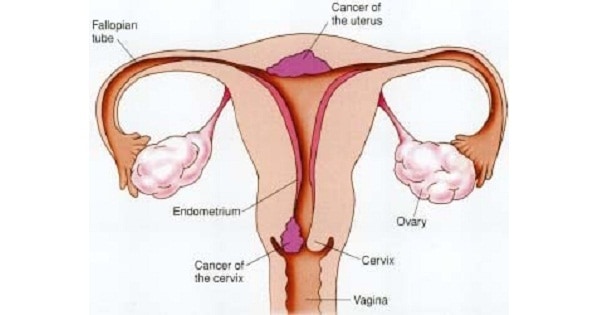
Management of CA of cervix
A case of carcinoma cervix who earlier received radiotherapy, relapses with new lesion, what should be the next line of management?
| A | Repeat radiotherapy | |
| B |
Chemotherapy |
|
| C | Pelvic exenteration | |
| D | Complete hysterectomy |
A case of carcinoma cervix who earlier received radiotherapy, relapses with new lesion, what should be the next line of management?
| A | Repeat radiotherapy | |
| B |
Chemotherapy |
|
| C | Pelvic exenteration | |
| D | Complete hysterectomy |
Pelvic exenteration REF: Danforth’s Obstetrics and Gynecology, 10th Edition P.983
Treatment of Recurrent Cervical Cancer:
- Cervical cancer detected within the first 6 months after primary therapy is often termed persistent cancer, while that diagnosed later is referred to as recurrent disease.
- Appropriate treatment of recurrent cervical cancer is dictated by both the site of recurrence and the modality of primary therapy.
- In general, patients in whom locally recurrent disease develops following primary surgery should be considered for salvage radiation therapy.
- Conversely, surgical treatment should be considered for those patients with recurrent central disease who initially received irradiation.
- Distantly metastatic recurrent tumor is not amenable to either modality alone and is an indication for palliative chemotherapy and possibly radiation therapy for local control.
- Pelvic exenteration is usually the procedure of choice for centrally recurrent cervical cancer.
Management of stage 11B cancer cervix is?
| A |
Radiotherapy |
|
| B |
Radiotherapy with combination with chemotherapy |
|
| C |
Chemotherapy |
|
| D |
Hysterectomy |
Management of stage 11B cancer cervix is?
| A |
Radiotherapy |
|
| B |
Radiotherapy with combination with chemotherapy |
|
| C |
Chemotherapy |
|
| D |
Hysterectomy |
Radiotherapy with combination with chemotherapy
REF: Shaw’s 13th ed p. 390 TRETMENT OF CERVICAL CANCER:
|
Stage |
Treatment |
|
1AI |
Cone or simple hysterectomy with life long follow up |
|
LA2 , 1B , Ila |
Radical hysterectomy with b/l pelvic lymphadenectomy (wetheim’s operation , schauta’s radical vaginal hysterectomy , mitra’s modification ) |
|
IIB , III , IV |
Radiation with or without chemotherapy |
A lady undergoes total radical hysterectomy for stage Ib Ca cervix. It was found that Ca extends to lower pail of body of uterus and upper part of cervix. Next step of management will be
| A |
Chemotherapy |
|
| B |
Radiotherapy |
|
| C |
Chemoradiation |
|
| D |
Follow-up |
A lady undergoes total radical hysterectomy for stage Ib Ca cervix. It was found that Ca extends to lower pail of body of uterus and upper part of cervix. Next step of management will be
| A |
Chemotherapy |
|
| B |
Radiotherapy |
|
| C |
Chemoradiation |
|
| D |
Follow-up |
Follow up [Ref: Novak’s Gynecology I4/e, p 1436, 1426, 1418-1421, 1408; Danfroth’s Obs & Gynae 10/e, p 981, 982, 975, 977]
- This patient has stage Ib Ca cervix (i.e. clinical lesion confined to cervix).
- Management of Ca cervix consists of Primary management and Post-op management. Primary Mx of Ib Radical hysterectomy + lymphadenectomy
(detailed Mx of Ib described ahead)
Post surgical management depends on presence or absence of risk factors.


- So here this patient has stage Ib Ca cervix
– She has undergone total radical hysterectomy, which is the appropriate primary management.
- Post-op it is found that carcinoma is extending to lower part of body of uterus.
- This is the tricky part of the question.
– an extension to uterus is given no consideration in FIGO clinical staging of Ca Cervix.
Furthermore Novak writes – “After a clinical stage is assigned and treatment has been initiated the stage must not be changed because of subsequent findings of either extended clinical staging or surgical staging”.
- So a finding of uterus involvement is not going to change the stage or the management.
- Post op. management (i.e. either follow up, radiotherapy or chemoradiation) is going to be determined by presence or absence of risk factors. In the question, no risk factor has been mentioned (uterine involvement is not a risk factor). So we assume that none are present and hence further management would be –> ‘follow up’
Management of Ca Cervix Primary Management of

Note – Radiotherapy can also be used for stages la to Ila if patient is medically inooperable.
Trachelectomy or cervicectomy refers to surgical removal of cervix. In radical trachelectomy parametria and vaginal cuff are also excised along with removal of cervix. This is a fertility preserving alternative to radical hysterectomy in younger patients with early stage carcinoma.
Types of hysterectomy
Type I – Simple (extrafascial) hysterectomy routinely done for benign conditions for e.g. fibroid.
Type II – (Wertheim’s or modified radical hysterectomy) In type II along with hysterectomy, medial half of the cardinal and uterosacral ligaments and proximal 1-2 cm of vagina are also removed.
Type III – (Meigs radical hysterectomy) It includes removal of most of the uterosacral and cardinal ligaments and the upper one third of the vagina.
Both type II & type III hysterectomy includes pelvic lymph node dissection.
Type IV – (extended radical hysterectomy) In type IV, the periureteral tissue, superior vesical artery, and as much as 3/4th of vagina in addition are removed.
Type V (partial exenteration) – Portions of the distal ureter and bladder are resected. Type IV & V are rarely performed because radiotherapy is more adequate treatment in extensive disease.

These factors are seen during histopathological examination of specimens (uterus, cervix, parametria, vaginal cuff, lymph nodes etc.) of radical hysterectomy and lymphadenectomy.
Let’s also have a revision of Ca Cx staging
|
FIGO Staging of Carcinoma of the Cervix |
|
|
Preinvasive Carcinoma 0 Carcinoma in situ |
|
|
Invasive Carcinoma |
|
|
I |
Carcinoma is strictly confined to the cervix |
|
lA |
Invasive cancer identified only microscopically. All gross lesions even with superficial invasion are stage lB cancers. Invasion is limited to measured stromal invasion = 5 mm deep and < 7 mm wide. |
|
IA1 |
Measured invasion of stroma <3 mm deep and <7 mm wide |
|
IA2 |
Measured invasion of stroma >3-5 mm deep and <7 mm wide |
|
IB |
Clinical lesions confined to the cervix or microscopic lesions greater than stage IA |
|
M1 |
Clinical lesions <4 cm in size |
|
1B2 |
Clinical >4 cm in size |
|
II |
Carcinoma extends beyond the cervix but has not extended to the pelvic wall or lower third of the vagina. |
|
IIA |
No obvious parametrial involvement |
|
IIB |
Obvious parametrial involvement |
|
III |
Carcinoma has extended to the pelvic wall. On rectal examination, there is no cancer free space between the tumor and the pelvic wall. The tumor involves the lower third of the vagina. All cases of hydronephrosis or nonfunctioning kidney are included unless known to be due to another cause. |
|
IIIA |
No extension to the pelvic wall |
|
IIII3 |
Extension to the pelvic wall, hydronephrosis, or nonfunctioning kidney |
|
IV |
Carcinoma has extended beyond the true pelvis or has clinically involved the mucosa of the bladder or rectum. Bullous edema does permit a case to be allocated to stage IV. |
|
IVA |
Spread of growth to adjacent organs |
|
IVB |
Spread to distant organs |
A 50 year old normal looking lady, Sita has Ca cervix of stage between II – III. What is the MOST appropriate next step in management?
| A |
Surgery and radiotherapy |
|
| B |
Radiotherapy and chemotherapy |
|
| C |
Radiotherapy alone |
|
| D |
Chemotherapy |
A 50 year old normal looking lady, Sita has Ca cervix of stage between II – III. What is the MOST appropriate next step in management?
| A |
Surgery and radiotherapy |
|
| B |
Radiotherapy and chemotherapy |
|
| C |
Radiotherapy alone |
|
| D |
Chemotherapy |
Best method of management of cervical cancer stage IIb and above (advanced stage) includes use of external radiation, brachytherapy implants and concurrent chemosensitization. Cisplatin based chemotherapy along with radiotherapy is the best treatment of choice in advanced stage cervical cancer.
FIGO Stage IA-1: Is managed conservatively with cone biopsy for preservation of fertility or with simple hysterectomy when fertility is not preferred.
Stage IA 2, IB, IIA: Preferred treatment of choice is radical hysterectomy with bilateral pelvic lymph node dissection.
An elderly female is diagnosed to have Ca cervix stage III B. What is the management of choice in this patient?
| A |
Wertheims hysterectomy |
|
| B |
Shautas procedure |
|
| C |
Chemotherapy |
|
| D |
Intracavitary brachytherapy with external beam radiation |
An elderly female is diagnosed to have Ca cervix stage III B. What is the management of choice in this patient?
| A |
Wertheims hysterectomy |
|
| B |
Shautas procedure |
|
| C |
Chemotherapy |
|
| D |
Intracavitary brachytherapy with external beam radiation |
In stage IIIB cervical carcinoma the cancer has extended beyond ther cervix to the pelvic wall with/ without causing hydronephrosis.
Cervical carcinoma of stage IIB to IVA is considered to be advanced stage cervical cancer.
Current evidence states that chemotherapy given along with radiation therapy significantly improves the outcome in such cases. Of the chemotherapeutic agents used, cisplatin is associated with better survival rates.
A 43 year old female is diagnosed of having carcinoma of cervix with obstruction of both ureters on imaging studies. What is the treatment of choice in this patient?
| A |
Wertheim’s hysterectomy |
|
| B |
Schauta operation |
|
| C |
Chemotherapy |
|
| D |
Intracavitary brachytherapy followed by external beam radiotherapy |
A 43 year old female is diagnosed of having carcinoma of cervix with obstruction of both ureters on imaging studies. What is the treatment of choice in this patient?
| A |
Wertheim’s hysterectomy |
|
| B |
Schauta operation |
|
| C |
Chemotherapy |
|
| D |
Intracavitary brachytherapy followed by external beam radiotherapy |
Carcinoma of cervix:
-
Stage III A – Involvement of the lower third of the vagina.
Stage III B – Involvement of a parametria to the sidewall or obstruction of one or both ureters on imaging
-
Chemoradiation is the treatment of choice for this stage.
- Class II hysterectomy is also referred to as a modified radical hysterectomy or Wertheim’s hysterectomy and is well suited for patients with stage IA2 and small lesions that do not distort the anatomy.
- Schauta operation is for all cases of stage I A cervical cancer.
- Chemotherapy with palliative radiation is indicated for stage IV B.
Ref: Cain J., ElMasri W.M., Gregory T., Kohn E.C. (2010). Chapter 41. Gynecology. In F.C. Brunicardi, D.K. Andersen, T.R. Billiar, D.L. Dunn, J.G. Hunter, J.B. Matthews, R.E. Pollock (Eds), Schwartz’s Principles of Surgery, 9e.
A lady presented with stage IB Ca cervix. It was found that Ca extends to lower part, of body of uterus and upper part of cervix. Next step of management will be:
| A |
Chemotherapy |
|
| B |
Surgery followed by chemotherapy |
|
| C |
Surgery |
|
| D |
Surgery followed by radiotherapy |
A lady presented with stage IB Ca cervix. It was found that Ca extends to lower part, of body of uterus and upper part of cervix. Next step of management will be:
| A |
Chemotherapy |
|
| B |
Surgery followed by chemotherapy |
|
| C |
Surgery |
|
| D |
Surgery followed by radiotherapy |
An absolute indication for Classical cesarean section is :
| A |
Carcinoma cervix |
|
| B |
Multi-fibroid uterus |
|
| C |
Breech presentation |
|
| D |
Central Placenta Previa |
An absolute indication for Classical cesarean section is :
| A |
Carcinoma cervix |
|
| B |
Multi-fibroid uterus |
|
| C |
Breech presentation |
|
| D |
Central Placenta Previa |
Carcinoma cervix
Point B in treatment of Ca cervix corresponds to
| A |
Mackenrodts ligament |
|
| B |
Obturator Lymph node |
|
| C |
Isheal tuberosity |
|
| D |
Round ligament |
Point B in treatment of Ca cervix corresponds to
| A |
Mackenrodts ligament |
|
| B |
Obturator Lymph node |
|
| C |
Isheal tuberosity |
|
| D |
Round ligament |
B i.e. Obturator Lymph node
The element used for intracavitary RT in carcinoma cervix:
| A |
Caesium |
|
| B |
Cobalt-60 |
|
| C |
Strontium |
|
| D |
Radio iodine |
The element used for intracavitary RT in carcinoma cervix:
| A |
Caesium |
|
| B |
Cobalt-60 |
|
| C |
Strontium |
|
| D |
Radio iodine |
Ans. Caesium
What is the maximum radiation dose to point A for early and advanced Ca cervix?
| A |
80-85 and 85-90 gy. |
|
| B |
85-90 and 90-95 gy |
|
| C |
75-80 and 80-85 gy |
|
| D |
70-75 and 75-80 gy |
What is the maximum radiation dose to point A for early and advanced Ca cervix?
| A |
80-85 and 85-90 gy. |
|
| B |
85-90 and 90-95 gy |
|
| C |
75-80 and 80-85 gy |
|
| D |
70-75 and 75-80 gy |
Ans. 80-85 and 85-90 gy
Treatment of carcinoma Cervix stage IIIB include:
| A |
Wertheim’s hysterectomy |
|
| B |
Schuata’s hysterectomy |
|
| C |
Chemotherapy |
|
| D |
Concurrent chemoradiation |
Treatment of carcinoma Cervix stage IIIB include:
| A |
Wertheim’s hysterectomy |
|
| B |
Schuata’s hysterectomy |
|
| C |
Chemotherapy |
|
| D |
Concurrent chemoradiation |
Ans. d. Concurrent chemoradiation

