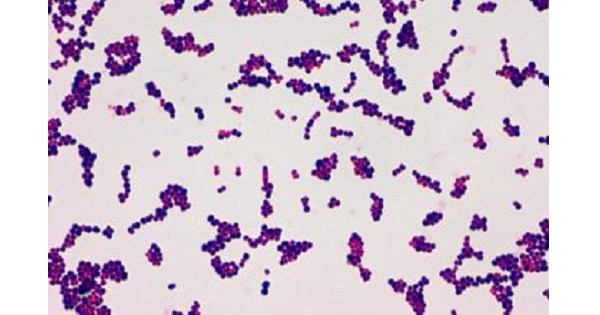
Streptococcus
Streptococcus all are true except :
| A |
Streptodornase cleaves DNA |
|
| B |
Streptolysin 0 is active in reduced state |
|
| C |
Streptokinase is produced from serotype A,C,K |
|
| D |
Pyrogenic toxin A is plasmid mediated |
Streptococcus all are true except :
| A |
Streptodornase cleaves DNA |
|
| B |
Streptolysin 0 is active in reduced state |
|
| C |
Streptokinase is produced from serotype A,C,K |
|
| D |
Pyrogenic toxin A is plasmid mediated |
Pyrogenic exotoxin
- Most strains of streptococcus pyogenes produce one or more toxins
- that are called pyrogenic exotoxins because of their ability to induce fever.
- Three types of streptococcal pyrogenic exotoxins have been identified, i.e. A, B, and C.
– “The genes of SPE “A” and SPE ‘C’ are transmitted between the strains of streptococcus by bacteriophage° and stable production depends on lysogenic conversion”.
– “The genes for SPE B are coded by chromosomesQ“.(not plasmids)
- SPE A and SPE C’ are also called erythrogenic toxins as they are responsible .for rash observed in patients with scarlatina.
– They have superantigen activity which causes massive release of inflammatory gtokines from T lymphocytes causing fever, shock and tissue damage.
- Pyrogenic exotoxin A Gene transmitted by /3 phase
- Pyrogenic extoxin B Gene transmitted by chromosome
- Pyrogenic exotoxin C Gene transmitted by fi phase
FALSE statement about the Streptococcus is:
| A |
M protein is responsible for production of mucoid colonies |
|
| B |
M protein is the major surface protein of group A streptococci |
|
| C |
Mucoid colonies are virulent |
|
| D |
Endotoxin causes rash of scarlet fever |
FALSE statement about the Streptococcus is:
| A |
M protein is responsible for production of mucoid colonies |
|
| B |
M protein is the major surface protein of group A streptococci |
|
| C |
Mucoid colonies are virulent |
|
| D |
Endotoxin causes rash of scarlet fever |
Strains with well marked capsules produce mucoid colonies. Streptococcus pyogenes can be typed based on surface proteins to M,T,R. M protein is most important of these. It act as a virulence factor by inhibiting phagocytosis. It is antigenic and antibody to this promotes phagocytosis of coccus.
Staphylococcus differes from streptococcus by ‑
| A |
Coagulase test |
|
| B |
Catalase test |
|
| C |
Phasphatase |
|
| D |
Gram negative |
Staphylococcus differes from streptococcus by ‑
| A |
Coagulase test |
|
| B |
Catalase test |
|
| C |
Phasphatase |
|
| D |
Gram negative |
. Coagulase test is used to differentiate the different species of staphylococci (staph aureus, staph. epidermidis).
. Catalase test is used to differentiate staphylococci from streptococci.
. Coagulase test cannot be used to differentiate streptococci from staphylococci because certain species of staphylococci are coagulase negative (coagulase negative staphylococci) as streptococci.
. But you should keep in mind that staphylococcus aureus (not all specises of staphylococci) can be differentiated from streptococci by coagulae test also as staph. aureus is coagulase positive while streptococci are coagulase negative.
C-carbohydrate in Streptococcus hemolyticus is important for –
| A |
Lancefield classification |
|
| B |
Phagocytic inhibition |
|
| C |
Toxin production |
|
| D |
Haemolysis |
C-carbohydrate in Streptococcus hemolyticus is important for –
| A |
Lancefield classification |
|
| B |
Phagocytic inhibition |
|
| C |
Toxin production |
|
| D |
Haemolysis |
Ans. is ‘a’ i.e., Lancefield classification
Which of the following factor is mainly responsible for virulence in Streptococcus –
| A |
Carbohydrate |
|
| B |
Streptokinase |
|
| C |
Streptodornase |
|
| D |
M protein |
Which of the following factor is mainly responsible for virulence in Streptococcus –
| A |
Carbohydrate |
|
| B |
Streptokinase |
|
| C |
Streptodornase |
|
| D |
M protein |
Ans. is ‘d’ i.e., M protein
Virulence factors of str. pyogenes
Str. pyogenes forms several exotoxins and enzymes which contribute to its virulence, but M protein is the most important of these.
Which toxin of streptococcus causes hemolysis
| A |
Streptolysin O |
|
| B |
Streptolysin S |
|
| C |
Streptodornanse |
|
| D |
a and b |
Which toxin of streptococcus causes hemolysis
| A |
Streptolysin O |
|
| B |
Streptolysin S |
|
| C |
Streptodornanse |
|
| D |
a and b |
Ans. is D.) ‘a’ i.e., Streptolysin 0; ‘b’ i.e., Streptolysin S.
List of Streptococcal hemolysins:
- Streptolysin S
- Streptolysin O
- Pneumolysin
- β-Haemolysin/cytolysin
- Intermedilysin.
List of Streptococcal Toxins:
• Streptolysin O
- 1. Oxygen and heat labile
- 2. Antigenic
- 3. ASO titres used in retrospective diagnosis Rheumatic fever (ASO titres > 200 significant)
- 4. ASO titres – low after skin infection
• Streptolysin S
- 1. Oxygen stable, soluble in serum
- 2. Not antigenic
• Pyrogenic exotoxin/Erythrogenic/Dick/Scarlational toxin – Superantigen
- 1. Associated with streptococcal toxic shock syndrome Et scarlet fever
- 2. Dick test – intradermal test to identify children susceptible to scarlet fever
- 3. Schultz-Charlton reaction – diagnostic test for scarlet fever
• Streptokinase(Fibrinolysin)
- 1. Facilitates spread of infection
- 2. Used in retrospective diagnosis
• DNAase or Streptodornase
- 1. Liquefies thick pus and responsible for thin serous character of streptococcal exudates Anti-DNAse,
- Anti-hyaluronidase: retrospective diagnosis of pyoderma & glomerulonephritis
• Hyaluranidase – Spreading factor
True about streptococcus –
| A |
Lancefield classification is based on M protein |
|
| B |
Group `G’ not found in human |
|
| C |
Group ‘B’ causes neonatal meningitis |
|
| D |
Group ‘C’ can be isolated from vaginal flora |
True about streptococcus –
| A |
Lancefield classification is based on M protein |
|
| B |
Group `G’ not found in human |
|
| C |
Group ‘B’ causes neonatal meningitis |
|
| D |
Group ‘C’ can be isolated from vaginal flora |
Ans. is `c i.e. Group ‘B’ causes neonatal meningitis
- Lancefield classification is based on carbohydrate ‘C’ antigen not on M protein.
- Besides Str. pyogenes, streptococci belonging to group B, C, D, F, G and rarely H, K, 0 and R may also cause human infections.
- Group B streptococcus is the single most common cause of neonatal meningitis.
- Group C streptococci are part of normal flora of throat (not of vaginal flora)
- Group D streptococci ie enterococci can cause urinary tract infection.
Which group of streptococcus grow at > 60°C
| A |
A |
|
| B |
B |
|
| C |
C |
|
| D |
D |
Which group of streptococcus grow at > 60°C
| A |
A |
|
| B |
B |
|
| C |
C |
|
| D |
D |
Ans. is ‘d’ i.e., D
Among streptococci, enterococcus (group D streptococcus) is heat resistant.
Pneumococcus can be differentiated from streptococcus by –
| A |
Type of hemolysis |
|
| B |
Gram staining |
|
| C |
Growth characteristics |
|
| D |
Bile solubility |
Pneumococcus can be differentiated from streptococcus by –
| A |
Type of hemolysis |
|
| B |
Gram staining |
|
| C |
Growth characteristics |
|
| D |
Bile solubility |
Ans. is ‘d’ i.e., Bile solubility
After 18 hrs of incubation both Str. viridans and pneumococcus produce similar colonies with alpha hemolysis but on further incubation the colonies of pneumococcus become flat with raised edges and central umbonation, so that concentric rings are seen on the surface when viewed from above (draughtsman or carrom coin appearance).
Differentiation between Stn pneumoniae and Sir. viridans
Streptococcus and pneumococcus are differentiated by-
| A |
Bile salt solubility |
|
| B |
Growth characteristic |
|
| C |
Gram staining |
|
| D |
all |
Streptococcus and pneumococcus are differentiated by-
| A |
Bile salt solubility |
|
| B |
Growth characteristic |
|
| C |
Gram staining |
|
| D |
all |
Ans. is ‘a’ i.e., Bile salt solubility
. Pneumococcus is bile soluble, while streptococcus is insoluble.
- Pneumococcus ferments inulin, streptococcus does not.
Streptococcus is classified based on –
| A |
M protein |
|
| B |
Cultural characteristics |
|
| C |
Bile solubility |
|
| D |
Cell wall carbohydrate |
Streptococcus is classified based on –
| A |
M protein |
|
| B |
Cultural characteristics |
|
| C |
Bile solubility |
|
| D |
Cell wall carbohydrate |
Ans. is ‘d’ i.e., Cell wall carbohydrate
Group A streptococcus causes all except –
| A |
Scarlet fever |
|
| B |
Erysipelas |
|
| C |
Impetigo |
|
| D |
Epidermolysis bullae |
Group A streptococcus causes all except –
| A |
Scarlet fever |
|
| B |
Erysipelas |
|
| C |
Impetigo |
|
| D |
Epidermolysis bullae |
Ans. is ‘d’ i.e., Epidermolysis bullae
True about streptococcus are all except –
| A |
Group C causes no human infection |
|
| B |
Classification by lancefield based on carbohydrate antigen |
|
| C |
Group B causes neonatal meningitis |
|
| D |
Group B lives in female genital tract |
True about streptococcus are all except –
| A |
Group C causes no human infection |
|
| B |
Classification by lancefield based on carbohydrate antigen |
|
| C |
Group B causes neonatal meningitis |
|
| D |
Group B lives in female genital tract |
Ans. is ‘a’ i.e., Group C causes no human infection
Which of the following does not cause meningitis ‑
| A |
Listeria |
|
| B |
Pneumococcus |
|
| C |
β – Streptococci |
|
| D |
Streptococcus type A |
Which of the following does not cause meningitis ‑
| A |
Listeria |
|
| B |
Pneumococcus |
|
| C |
β – Streptococci |
|
| D |
Streptococcus type A |
Ans. is ‘d’ i.e., Streptococcus type A
Which is not true of carbuncle –
| A |
Infective gangrene of subcutaneous tissue |
|
| B |
Caused by staphylococcus |
|
| C |
Diabetics are more prone |
|
| D |
Caused by streptococcus |
Which is not true of carbuncle –
| A |
Infective gangrene of subcutaneous tissue |
|
| B |
Caused by staphylococcus |
|
| C |
Diabetics are more prone |
|
| D |
Caused by streptococcus |
Ans. is ‘d’ i.e., Caused by streptococcus
Commonest cause of cellulitis is ‑
| A |
Staphylococcus |
|
| B |
Streptococcus |
|
| C |
E. coli |
|
| D |
Hemophilus |
Commonest cause of cellulitis is ‑
| A |
Staphylococcus |
|
| B |
Streptococcus |
|
| C |
E. coli |
|
| D |
Hemophilus |
Ans. is ‘b’ i.e., Streptococcus
“The most common organisms associated with cellulitis are group A streptococci and S. aureus.”- Schwartz
The organism causing destruction of skin grafts is ‑
| A |
Streptococcus |
|
| B |
Staphylococcus |
|
| C |
Pseudomonas |
|
| D |
Clostridium |
The organism causing destruction of skin grafts is ‑
| A |
Streptococcus |
|
| B |
Staphylococcus |
|
| C |
Pseudomonas |
|
| D |
Clostridium |
Ans. is ‘a’ i.e., Streptococcus
Pseudomembranous conjunctivitis is caused by:
| A |
Gonococcus |
|
| B |
Staphylococcus |
|
| C |
Streptococcus |
|
| D |
Keratoconjunctivitis sicca |
Pseudomembranous conjunctivitis is caused by:
| A |
Gonococcus |
|
| B |
Staphylococcus |
|
| C |
Streptococcus |
|
| D |
Keratoconjunctivitis sicca |
Ans. Streptococcus
The most frequent bacterial agent causing nongranulomatous uveitis is:
| A |
Staphylococcus |
|
| B |
Streptococcus |
|
| C |
Pneumococcus |
|
| D |
Influenza bacillus |
The most frequent bacterial agent causing nongranulomatous uveitis is:
| A |
Staphylococcus |
|
| B |
Streptococcus |
|
| C |
Pneumococcus |
|
| D |
Influenza bacillus |
Ans. Streptococcus
Uveitis is caused by all except:
| A |
T.B. |
|
| B |
Staphylococcus |
|
| C |
Streptococcus |
|
| D |
Klebsiella |
Uveitis is caused by all except:
| A |
T.B. |
|
| B |
Staphylococcus |
|
| C |
Streptococcus |
|
| D |
Klebsiella |
Ans. Klebsiella
Most common cause of cellulitis ‑
| A |
Streptococcus |
|
| B |
Staphylococcus |
|
| C |
Pseudomonas |
|
| D |
E. coli |
Most common cause of cellulitis ‑
| A |
Streptococcus |
|
| B |
Staphylococcus |
|
| C |
Pseudomonas |
|
| D |
E. coli |
Ans. is ‘a’ i.e., Streptococcus
CAMP test is positive for‑
| A |
Group A streptococcus |
|
| B |
Group B streptococcus |
|
| C |
Group C streptococcus |
|
| D |
Group D streptococcus |
CAMP test is positive for‑
| A |
Group A streptococcus |
|
| B |
Group B streptococcus |
|
| C |
Group C streptococcus |
|
| D |
Group D streptococcus |
Ans. is ‘b’ i.e., Group B streptococcus