
Question
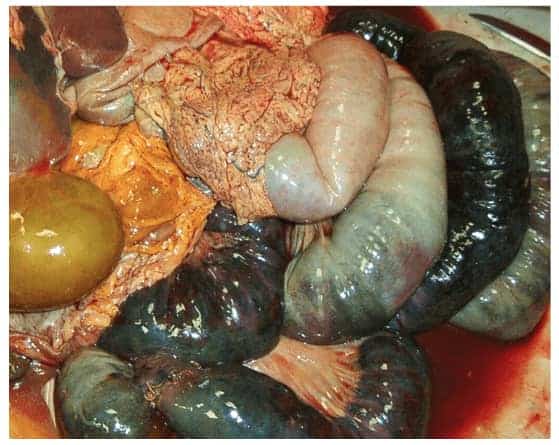
From the following given options,which staement is false regarding the pathological process shown in the image?
A. Septicemia may result
B. Diabetic Foot is an example of this pathological process
C. Occurs commonly due to venous occlusion
D. Puterfaction is limited due to limited blood supply
Show Answer

|
Correct Answer » D Explanation |
 |
Ans:D. Puterfaction is limited due to limited blood supply
Wet Gangrene is shown in the image.
GANGRENE
- Gangrene is a form of necrosis of tissue with superadded putrefaction.
- The type of necrosis is usually coagulative due to ischaemia (e.g. in gangrene of the bowel, gangrene of limb).
- There are 2 main forms of gangrene—dry and wet, and a variant form of wet gangrene called gas gangrene.
Wet Gangrene
- Wet gangrene occurs in naturally moist tissues and organs such as the mouth, bowel, lung, cervix, vulva etc.
- Diabetic foot is another example of wet gangrene due to high sugar content in the necrosed tissue which favours growth of bacteria.
- Bed sores occurring in a bed-ridden patient due to pressure on sites like the sacrum, buttocks and heels are the other important clinical conditions included in wet gangrene.
- Wet gangrene usually develops rapidly due to blockage of venous, and less commonly, arterial blood flow from thrombosis or embolism.
- The affected part is stuffed with blood which favours the rapid growth of putrefactive bacteria.
- The toxic products formed by bacteria are absorbed causing profound systemic manifestations of septicaemia, and finally death.
- The spreading wet gangrene generally lacks clear-cut line of demarcation and may spread to peritoneal cavity causing peritonitis.
- MORPHOLOGIC FEATURES. Grossly, the affected part is soft, swollen, putrid, rotten and dark.
- The classic example is gangrene of bowel, commonly due to strangulated hernia, volvulus or intussusception.
- The part is stained dark due to the same mechanism as in dry gangrene .
- Histologically, there is coagulative necrosis with stuffing of affected part with blood.
- There is ulceration of the mucosa and intense inflammatory infiltration.
- Lumen of the bowel contains mucus and blood.
- The line of demarcation between gangrenous segment and viable bowel is generally not clear-cut

