HYT Module

Order Of Kinetics

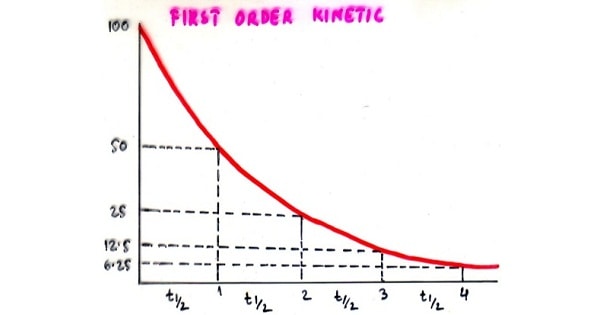
Order Of Kinetics FIRST ORDER KINETICS: Absorption, distribution, biotransformation and excretion processes are mostly occurring at rates proportional to plasma drug concentration. A constant fraction of drug is absorbed, distributed, biotransformed and excreted per unit time. These processes increase in rate with increase in conc. and decrease with falling conc. A constant fraction of drug in body is eliminated per unit […]

Order Of Kinetics Read More »

Amoxicillin

Amoxicillin AMOXICILLIN Close congener of ampicillin (but not a prodrug). Component of most triple drug H. pylori eradication regimens. More active against penicillin-resistant Strep. pneumoniae. It is less active against Shigella and H. influenzae. PHARMACOKINETICS: Absorption: Rapidly and well absorbed from GI tract.  Bioavailability: Approx 70%.  Time to peak plasma concentration: Within 1-2.5 hr. Distribution:  It crosses placental barrier

Amoxicillin Read More »

Ethambutol

Ethambutol ETHAMBUTOL INTRODUCTION: One of the first-line anti-tubercular drug. Given in combination with Isoniazid, Rifampin & Pyrazinamide. MECHANISM OF ACTION: Selectively bacteriostatic active against Mycobacterial group including Mycobacterium avium complex (MAC). Inactive against other bacterial types. Inhibits mycobacterial arabinosyl transferases (Encoded by embAB gene). Arabinosyl transferases essential for polymerization reaction of arabinogalactan, an essential component of mycobacterial cell wall.

Ethambutol Read More »

Penicillin

Penicillin PENICILLIN MOA: Are bactericidal antibiotics. Bacterial cell wall synthesis completely depends on transpeptidase enzyme.  Penicillin inhibits bacterial cell wall synthesis by blocking transpeptidase after binding to penicillin-binding protein (PBP). CLASSIFICATION: SOURCE  NATURAL(Endrin plant Penicillin) Penicillin-G  Penicillin-V  SEMI-SYNTHETIC  Oxacillin  Cloxacillin  Dicloxacillin  Methicillin  Nafcillin  Ampicillin  Amoxycillin  Carbenicillin  Piperacillin  ROUTE OF ADMINISTRATION: ORAL  Ampicillin  Amoxycillin  Penicillin-V  Oxacillin  Cloxacillin  Dicloxacillin  PARENTERAL Ticarcillin  Penicillin-G  Methicillin  Nafcillin  Carbenicillin  Piperacillin(anti-pseudomonal drug)  (Methicillin is Acid

Penicillin Read More »

Rifampicin

Rifampicin RIFAMPICIN INTRODUCTION: Semisynthetic derivative of rifamycin B obtained from Streptomyces mediterranei. Included in macrolide antibiotic group. Eventually, 7 types were developed they are Rifamycin A, B, C, D, E, S, SV. MECHANISM OF ACTION: Bactericidal at 0.005-0.2micrograms/ml. Inhibits gram-positive bacteria. Works by binding non-covalently to β-subunits of DNA-dependent RNA polymerase (DDRP) —> Inhibiting RNA synthesis initiation. DNA-dependent RNA polymerases in eukaryotic cells are unaffected. Because of

Rifampicin Read More »

Dapsone

Dapsone DAPSONE Leprostatic drug. Acedapsone – Repository form of dapsone. Single IM injection maintains inhibitory levels of dapsone in tissues for up to 3 months. MECHANISM OF ACTIONS: PHARMACOKINETICS: Dose of Dapsone 1-2 mg/kg Absorption: Completely absorbed after oral administration. Distribution:  Approximately 70% bound to plasma protein.  main metabolite, monoacetyl dapsone, is nearly 100% protein

Dapsone Read More »

Cotrimoxazole

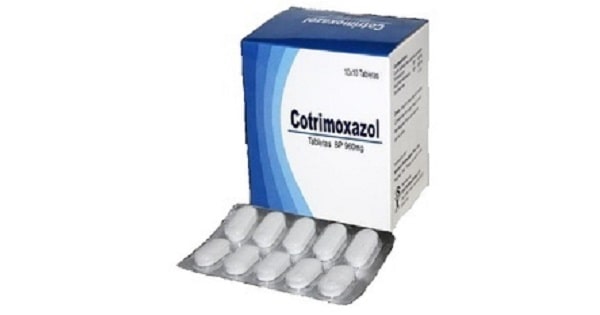
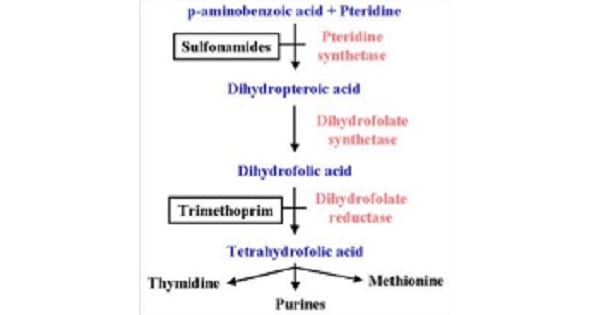
Cotrimoxazole Fixed drug combination of Sulfamethoxazole and Trimethoprim MOA: INTRODUCTION Both bacteriostatic (Individually) Bactericidal – Combination  Both drugs have almost similar half-lives (10 Hrs) Maximum synergism for sensitive organism. Optimal synergism obtained at 5:1 dose ratio (e.g. 800 mg:160 mg) TMP crosses BBB and placenta  SMZ doesn’t cross. TMP – more rapidly absorbed than SMZ TMP – 45% plasma protein

Cotrimoxazole Read More »

Sulphonamide

Sulphonamide SULPHONAMIDE CLASSIFICATION: Short-acting: Sulfadiazine(oral), Sulfadimidine, Sulfacetamide Intermediate-acting: Sulfamethoxazole Long-acting: Sulfadoxine, Sulfamethoxypyrazine, Sulfadimethoxine Topically used: Mafenide, Silver sulfadiazine and Sulfacetamide Ulcerative colitis: Sulfasalazine ANTIBACTERIAL PROPERTY: Bacteriostatic against gm +ve and gm –ve bacteria Bactericidal in urine Susceptible organisms: Chlamydiae: trachoma, Str. pyogens, H. influenzae, H. ducreyi, Calymmatobacterium granulomatosis, V. cholerae, Chlamydia, Actinomyces etc. Few strains of Staph

Sulphonamide Read More »

Aminoglycoside

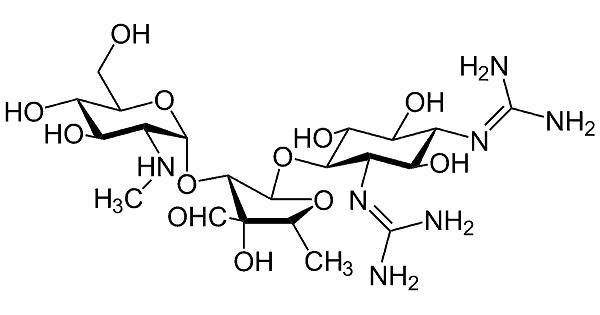
Aminoglycoside AMINOGLYCOSIDES CLASSIFICATION: Systemic Streptomycin (tuberculocidal aminoglycoside). Gentamicin. Kanamycin. Amikacin (outstanding feature of being little or not affected by majority of inactivating enzymes). Sisomicin. Tobramycin. Netilmicin. Topical Neomycin. Framycetin. MECHANISM OF ACTION : Passive diffusion into bacterial cell wall reaching periplasmic space through porin channels. Further transport across cytoplasmic membrane by active transport by proton pump

Aminoglycoside Read More »

Metronidazole

Metronidazole ANTI-AMOEBIC DRUGS Tissue Amoebiasis   Both intestinal & extraintestinal Nitroimidazoles – Metronidazole, Tinidazole, Secnidazole, Ornidazole Alkaloids – Emetine, Dehydroemetine Extraintestinal amoebiasis only – Chloroquine  Luminal amoebiasis Amide –Diloxanide furoate 8-Hydroxy quinolones –Quinidochlor Antibiotics – Tetracycline, Paromomycin METRONIDAZOLE: Best drug against anaerobic infection. Bactericidal against,  Giardia lamblia,  Anaerobic bacteria – Bacteroides fragilis, Fusobacterium, Clostridium perfringes/difficile, Helicobacter pylori & Anaerobic

Metronidazole Read More »

👨‍⚕️
Chat Support