module Test

Vegetables, Cantharides and Scorpion Poisons

Vegetables, Cantharides and Scorpion Poisons VEGETABLE  POISONS Abrus  precatorius  (Ratti) Abrus  seeds  are odourless,  tasteless,  oval  (egg  shaped),  bright  red coloured  with a black spot at  one  pole.  They  contain abrin  a toxalbumin  as its  active  principle,  which  is  similar  to  viper  snake  venom. Raw  or cooked  seeds,  when  swallowed  are  non-poisonous.  But  if  extract  […]

Vegetables, Cantharides and Scorpion Poisons Read More »

Laws of poisoning

Laws of poisoning The  laws  related  to  poisoning  are  : (A) The drugs  and  cosmetic  act  1940: The main aim  is  to  control  quality,  purity  and strength  of drugs.  The act  has  been further  amended  by  drugs (Amendment) act  1964to  include  ayurvedic  and  unani  drugs. The  label  or container of medicine  should  display  the  formula 

Laws of poisoning Read More »

Hair: Examination, Importance, & difference between Human Hair Vs. Animal Hair

Hair: Examination, Importance, & difference between Human Hair Vs. Animal Hair Introduction: Hair Examination Importance Identification: Identification  of  individual  which may  be  accused, mutilated body etc. Source:  Source of origin, whether  animal  or human. Sexual  offences: Rape and  unnatural  sexual  offences. Crimes: Hair or fibers  found  at  the  scene  on  weapons  or clothes  helps in

Hair: Examination, Importance, & difference between Human Hair Vs. Animal Hair Read More »

Seminal stains.

Seminal stains. Introduction. Sensabaugh in 1977 reported the event of isolation of p30 in human seminal  fluid.  It is a glycoprotein of prostate origin. Detection  of seminal  stains  becomes  important  in cases  of  rape, attempted  rape, sexual  murders of  female, kidnapping, sodomy, bestiality, adultery  and  indecent  assault  etc. Seminal  stains  are  generally found  on  the 

Seminal stains. Read More »

Thermal injuries: chemical, electric and Lightening burns.

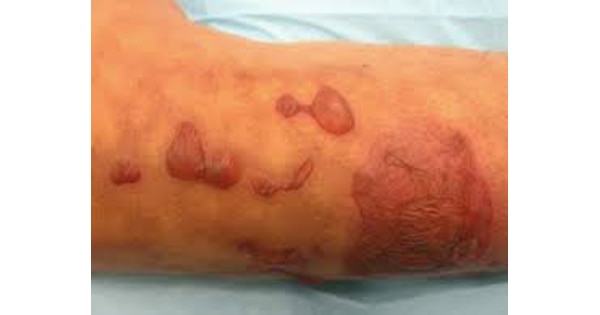
Thermal injuries: chemical, electric and Lightening burns. Introduction: Chemical burns:- Chemical burns are produced by corrosive acids and alkalis. Acids with a pH less than 2 precipitate proteins causing coagulation necrosis. Nitric acid gives a yellow-brown scab, sulphuric (vitriol) a black-brown scab, Hydrochloric acid (spirit of salt) a white to grey scab, and carbolic acid

Thermal injuries: chemical, electric and Lightening burns. Read More »

Hanging: Postmortem findings,Strangulation,Medico-legal aspects of hanging.

Hanging: Postmortem findings,Strangulation,Medico-legal aspects of hanging. Introduction Postmortem findings Ligature  mark is  above  thyroid  cartilage,  inconplete,  bitaterally  symmetrial  and  directed  obliquely  upward extending  to  the  angles  of  mandible,  then  to  mastoid  and  finally  to  occipital protuberance.  Ligature  mark is  an example  of  imprinted/pressure/patterned  abrasion. There is  dribbling of saliva  from  the  angle  of the  mouth 

Hanging: Postmortem findings,Strangulation,Medico-legal aspects of hanging. Read More »

Antemortem VS Postmortem Wound

Antemortem VS Postmortem Wound Differences between Antemortem and postmortem wounds  FEATURES ANTEMORTEM WOUND POST MORTEM WOUND Haemorrhage -Arterial -Blood clotted and the clot is    ~laminated    ~firmly adherent to       the lining of endothelium    ~firm, rubbery and       variegated -Copious amount -Deep staining of edges    which can’t be     washed away -Venous -Blood

Antemortem VS Postmortem Wound Read More »

Determination of Age- Introduction and Medico-legal Importance

Determination of Age- Introduction and Medico-legal Importance Identification of Age Age can be identified by Physical development Teeth Ossification centres- appearance & fusion Age-related changes a) Age in intrauterine life Developing morphology Ossification centres appear Germination of teeth b)  From birth to 25 years Physical features Teeth Ossification of bones Wrist & Hand in children Elbow,

Determination of Age- Introduction and Medico-legal Importance Read More »

Anti-Tubercular Treatment Regime

ANTI-TUBERCULAR TREATMENT REGIME ANTI-TUBERCULAR REGIME Based on RNTCP (2010 guidelines). RNTCP (Revised National Tuberculosis Control Programme) is an application of WHO. This recommends strategy of DOTS in India.  It is largely based on the research done at National Tuberculosis Institute, Bangalore and Tuberculosis Research Centre, Chennai. OBJECTIVES: Detecting at least 70% of sputum positive tuberculosis

Anti-Tubercular Treatment Regime Read More »

👨‍⚕️
Chat Support ❌